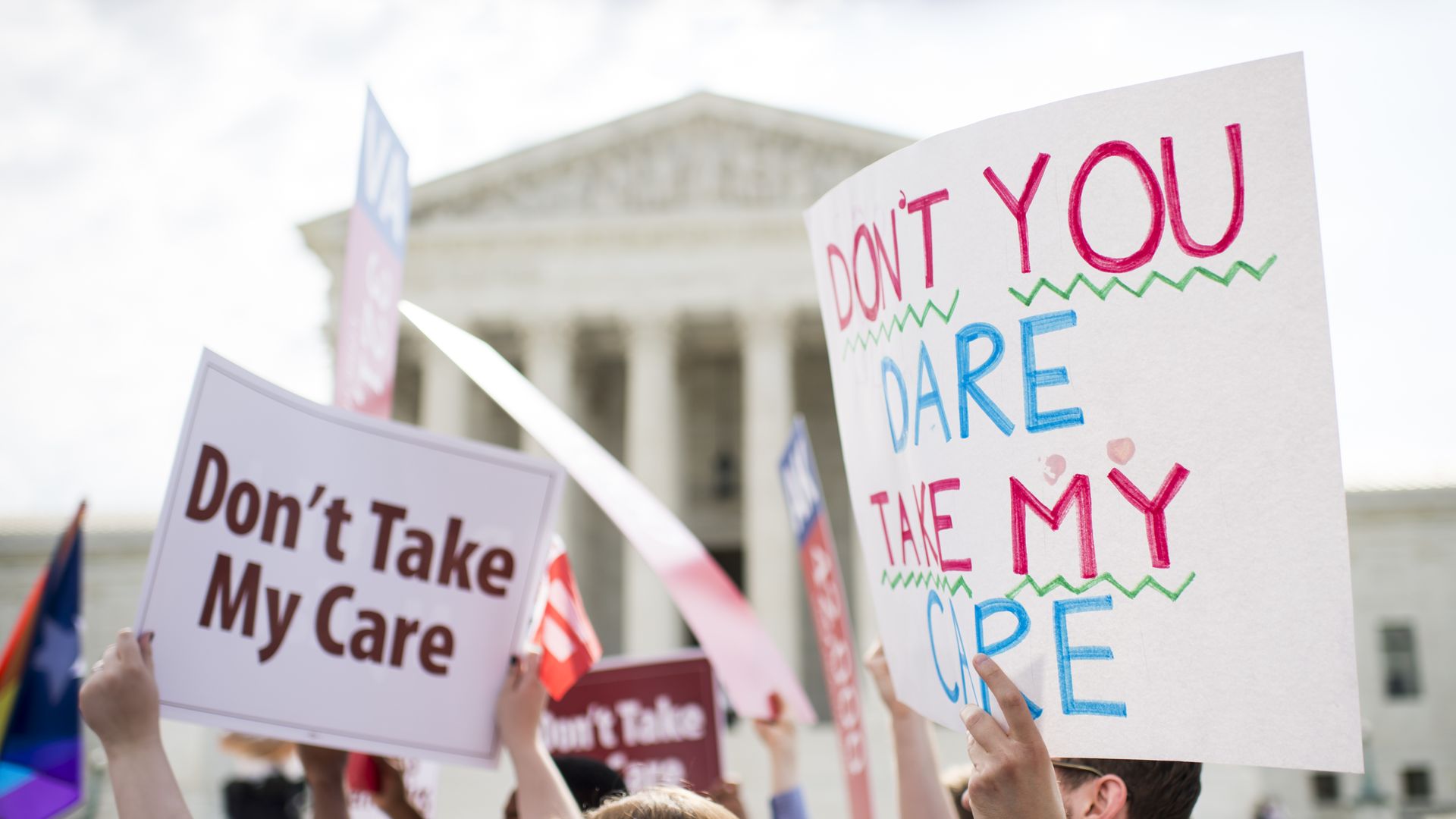
The Supreme Court agreed on Friday to take up yet another case involving the Affordable Care Act's contraception mandate, which requires most employers to cover birth control in their workers' health care plans.
Where it stands: The court has already said that employers must be able to get an exemption from the contraception mandate if they have a religious objection to the policy. Broadly, the question the court is taking up now is whether the Trump administration has been too permissive with those exemptions. The court will likely rule in early summer.
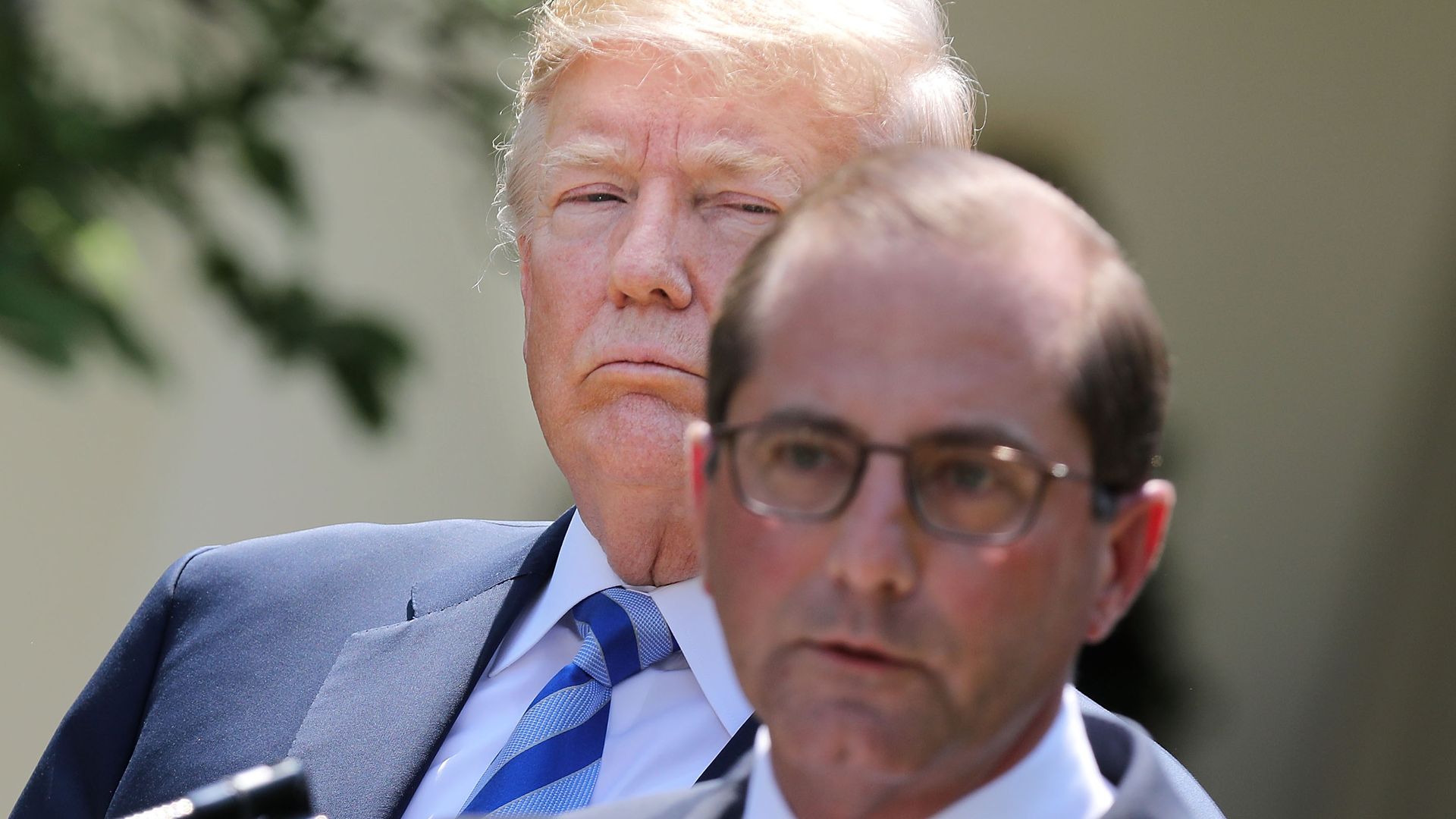
President Trump told his health secretary yesterday that he regrets getting involved in the administration's policy on vaping, according to two sources familiar with the conversation. "I should never have done that f***ing vaping thing," Trump said during an impromptu call on speakerphonein an Oval Office meeting.
Why it matters: The administration's ban on flavored vapes is one of its most prominent health policy decisions, but trying to find a compromise between public health groups and the pro-vaping community caused massive political headaches.
The U.S. will begin screening Friday night for the novel coronavirus, originally found in Wuhan, China, for flights arriving directly or indirectly from there to three American airports — San Francisco, New York and Los Angeles, public health officials announced.
Why it matters: Researchers still don't know the source of the "2019-nCoV" virus or how it's transmitted, but coronavirus' ability to evolve means the outbreak could quickly turn from "worrisome to extremely worrisome," and "proactive measures" should be taken, Nancy Messonnier told a press conference.
TikTok: It's for teens. It's for memes. And sometimes, it's for getting help with a surprise medical bill.
The state of play: The New York Times spotlights Shaunna Burns, who posts videos on the popular social-media app offering life advice and encouragement — including one on hospital billing that garnered thousands of replies about "how baffling the American health care system can be."
Private health insurance is a conduit for exploding health care spending, and there's no end in sight.
The big picture: Most politicians defend this status quo, even though prices are soaring. And as the industry's top executives and lobbyists gathered this week in San Francisco, some nodded to concerns over affordability — but then went on to tell investors how they plan to keep the money flowing.
Humira will control the market for many autoimmune conditions in the U.S. until 2023, and AbbVie executives already have a plan for when cheaper alternatives roll out.
Driving the news: AbbVie CEO Richard Gonzalez said at the J.P. Morgan Healthcare Conference that two newly approved drugs — Skyrizi and Rinvoq — that treat the same conditions as Humira could hit or surpass $20 billion in combined sales in the future (they generated $153 million in the first nine months of 2019). Gonzalez revealed Skyrizi's net price is "roughly the same as Humira," which is around $40,000 annually.
The Affordable Care Act reduced racial disparities in health insurance, but that progress has stalled since 2016, a new Commonwealth Fund analysis says.
Between the lines: The uninsured rate among people of color leveled off in 2016, and racial disparities in actual care still persist, even with lower uninsured rates.