Sutter Health has agreed to settle a lawsuit accusing the hospital system of price-gouging, the San Francisco Chronicle reports. Spokespeople for California's attorney general and Sutter told Axios the terms of the settlement are confidential, and they could not comment further until the court approved the deal.
The big picture: Hospital systems have never been more concentrated, and this is now the second major settlement in the past 12 months involving a state going after alleged anticompetitive activity from dominant hospitals. The first involved Atrium Health.
The opioid epidemic cost the U.S. economy at least $631 billion from 2015 to 2018, and it'll cost another $172–$214 billion this year, according to a new analysis by the Society of Actuaries.
Why it matters: There's a serious financial incentive to address the opioid crisis, as well as a moral one.
Three major drug distributors — McKesson, AmerisourceBergen and Cardinal Health — are discussing an $18 billion settlement to resolve opioid litigation brought by state and local governments, the Wall Street Journal reports.
The big picture: The distributors, along with drug manufacturers and pharmacies, have been accused of contributing to the country's opioid epidemic through aggressive marketing and inadequate distribution oversight.
The average launch prices for new brand-name drugs have skyrocketed over the past decade, according to an analysis from drug research firm 46brooklyn.
Why it matters: The U.S. prescription drug market increasingly has thrived on high initial price tags and subsequent increases. That has resulted in higher premiums and out-of-pocket costs for new drugs, as well as more expensive generics.
Democrats aren't debating small differences in health policy — a public option would be radically different than a shift to a single payer system, and a new analysis by the Urban Institute and the Commonwealth Fund illustrates just how big those differences are.
By the numbers: A public option — even a robust one — would cost the federal government an additional $1.5 trillion over 10 years. Full-blown single payer would result in a federal spending increase of $34 trillion.
A mother is suing Juul, claiming the e-cigarette maker's nicotine cartridges were a significant factor in causing the death of her 18-year-old son over a year ago, Bloomberg Law reports.
Why it matters: It's the first wrongful-death vaping suit against a major e-cigarette company, as the country's death toll from the illness reaches 26.
Voters want to hear more from the Democratic candidates about health care topics that they believe have been neglected during the debates, according to a new poll by the Kaiser Family Foundation.
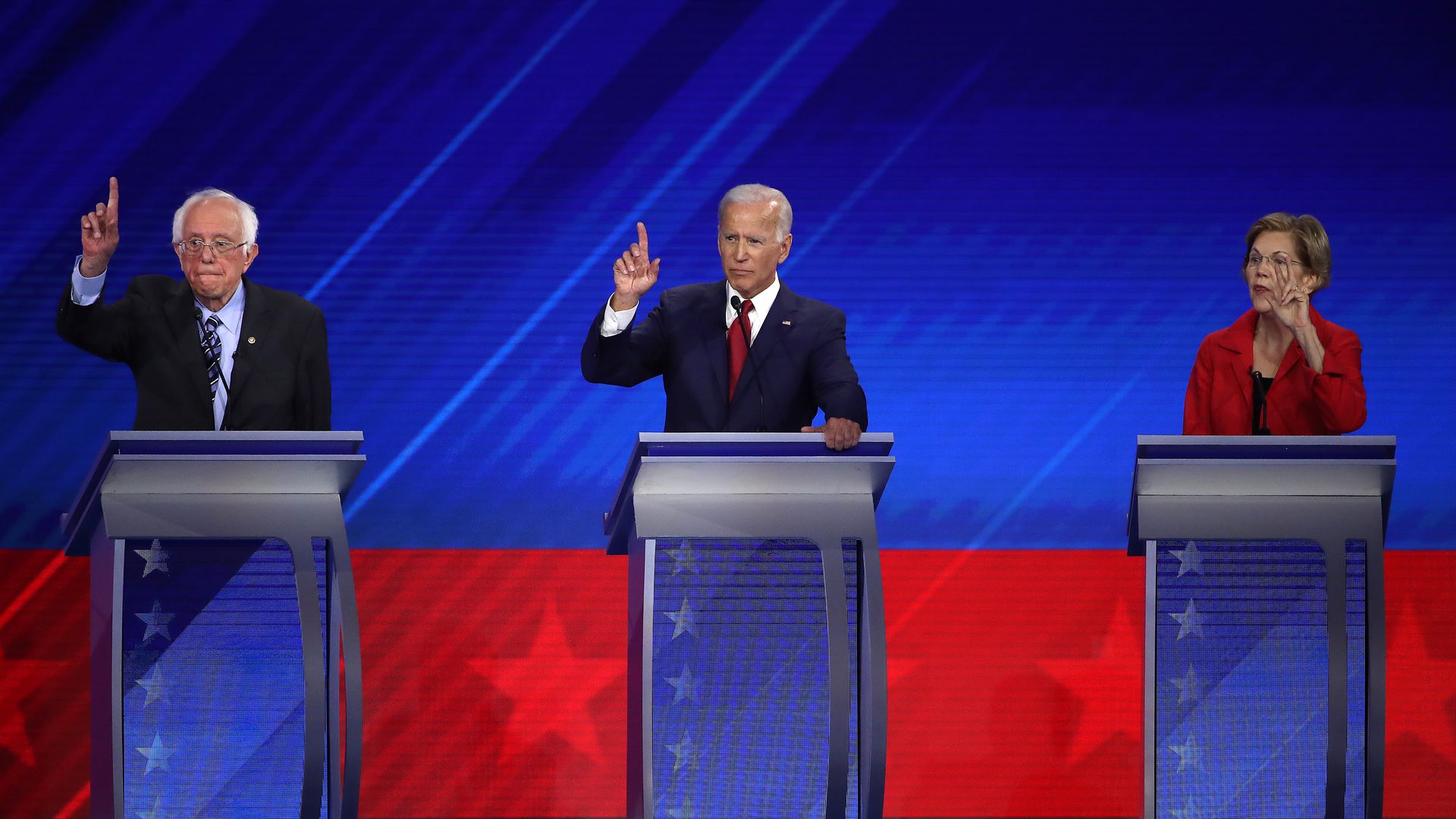
If tonight’s Democratic debate is anything like the earlier ones, it will feature an extended back-and-forth about whether to eliminate private health insurance, and then move on from health care. But there’s a whole lot more that’s also worth asking about.
The big picture: We basically know what the candidates will say about the question of private insurance, because they’ve said it all before. So here are four other questions that might also help illuminate the choice voters face on such a deeply personal, wildly complex topic.