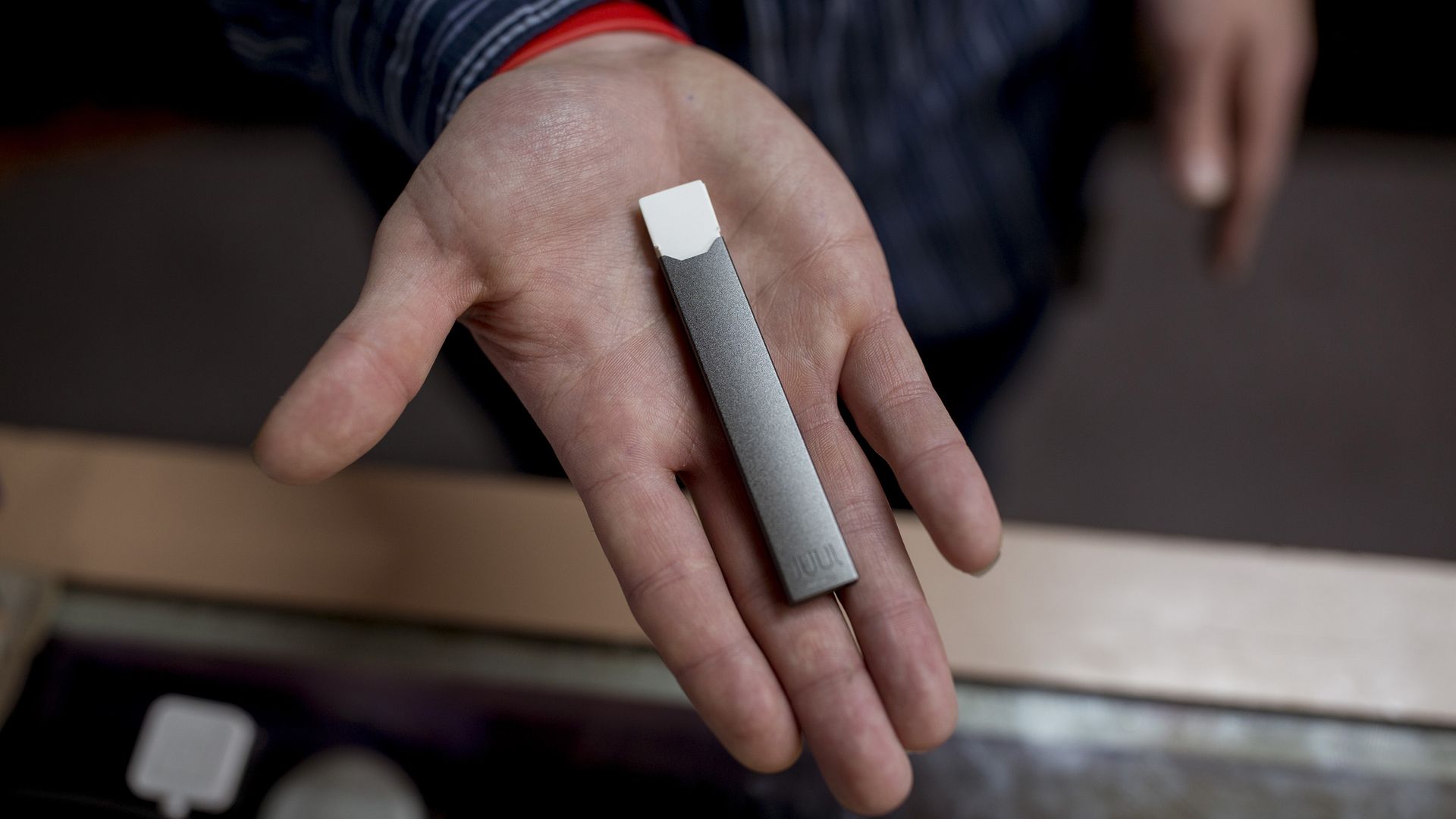
The Food and Drug Administration is investigating 127 cases of people, particularly children and young adults, who experienced seizures after using e-cigarettes, CNBC reports.
What's happening: The FDA began this investigation in spring, but has recently received about 92 new reports of seizures after vaping. The agency says the evidence has has not established if e-cigarettes directly caused the seizures, and stressed that the 127 cases occurred over 10 years.
For years, death rates from drug overdoses surged in rural America. But now, overdose death rates are rising faster in cities, according to a newly released data analysis from the Centers for Disease Control.
What's happening: The opioid crisis has devastated many rural areas while heroin deaths are climbing in urban centers.
The stock prices of AmerisourceBergen, Cardinal Health and McKesson plummeted yesterday after Bloomberg reported the drug distributors made an opening offer of $10 billion to settle their portion of the national opioids lawsuit.
Between the lines: That figure was a lot higher than Wall Street had expected for those companies, indicating that other defendants — including opioid manufacturers — likely would pay tens of billions of dollars to avoid going to trial.
The 3 major prescription drug distributors — AmerisourceBergen, Cardinal Health and McKesson — have proposed paying a combined $10 billion to settle the national lawsuit alleging they fueled the opioid crisis through negligent shipping and monitoring of painkillers, Bloomberg reports. States countered with $45 billion.
Why it matters: This is the first look into what the health care industry is willing to pay to make this lawsuit go away. Drug wholesalers operate large cash flows, making a settlement of this size rather manageable for them, but it'd still be a hit to shareholders' pockets because the companies run on low net profit margins.
Mallinckrodt said Tuesday morning that it will suspend the planned spin-off of its specialty generics unit, which primarily makes opioid drugs, due to ongoing litigation.
Why it matters: It reflects how those who (allegedly) contributed to a public health crisis are now facing a public markets crisis.
Drug companies are increasingly trying to maximize their profits by creating generics to compete with their own brand-name products, Kaiser Health News reports.
Why it matters: "Authorized generics" can be just as profitable, if not more profitable, than the branded drug. They also can stifle competition from other generics, leading to higher prices for patients.