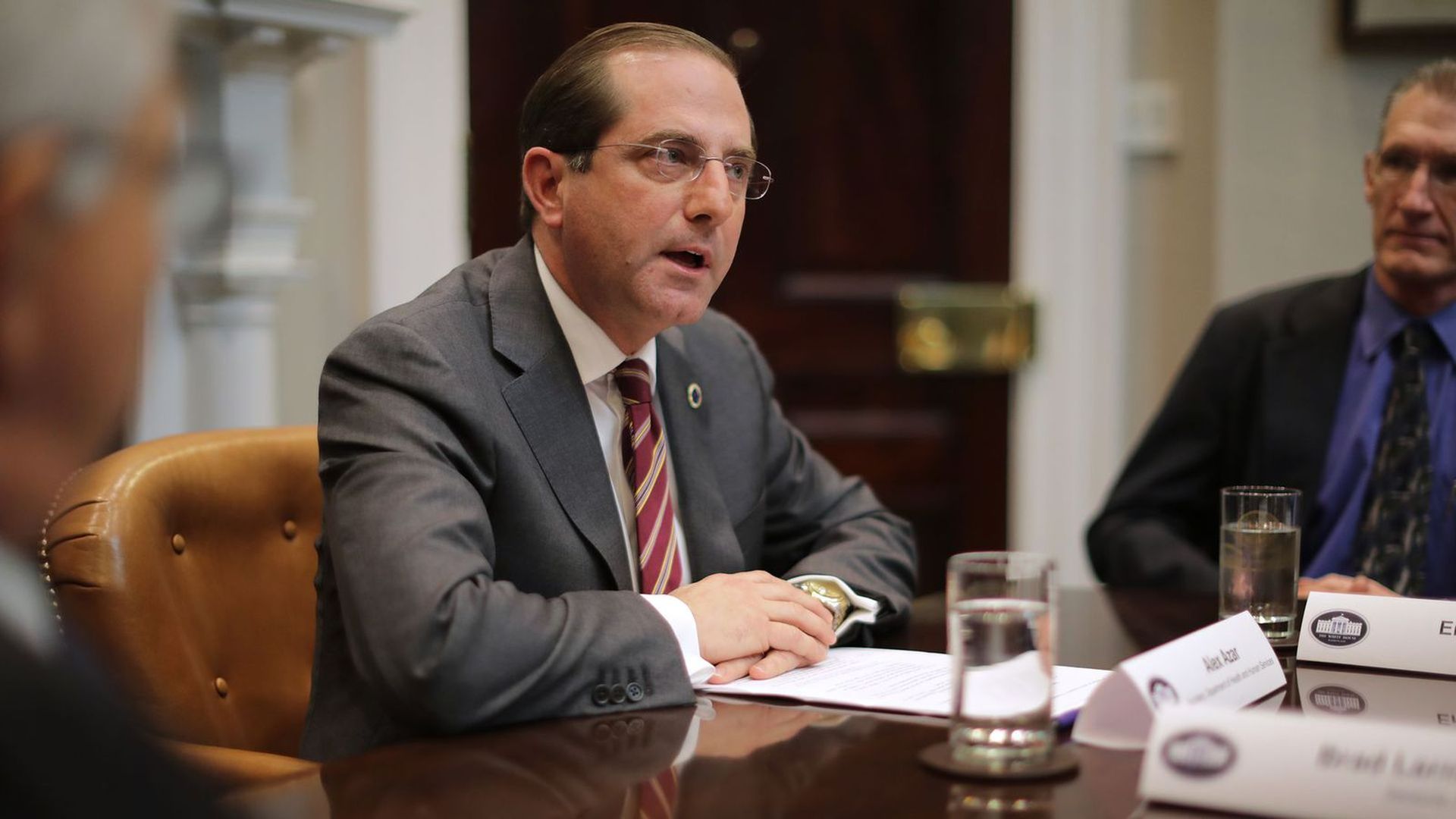
A federal judge blocked the Trump administration Monday from implementing a new rule that would require pharmaceutical firms to include the wholesale prices of their drugs in TV advertising, Reuters reports.
The big picture: The Department of Health and Human Services (HHS) Secretary Alex Azar announced the new rule in May and it was due to take effect on Tuesday. But U.S. District Judge Amit Mehta in Washington, D.C., sided with drugmakers Merck & Co, Eli Lilly and Co and Amgen to halt the HHS rule.
A growing number of insurers and health systems are offering tools that give doctors drug pricing information in real time, but the uptake has been slow, NPR reports with Kaiser Health News.
Between the lines: The pricing tool, which shows how much patients will pay out of pocket for a given drug, aims to help them avoid sticker shock once they go to fill their prescriptions.
Germany — the European country whose health care system is most similar to the U.S. system — seems to have found a way to regulate prescription drug prices without curbing its citizens' access to new, effective medicines.
Why it matters: While German-style drug pricing would be highly disruptive to the U.S. health system, the country's use of private insurers and its resistance to outright price-setting provides an illuminating case study.