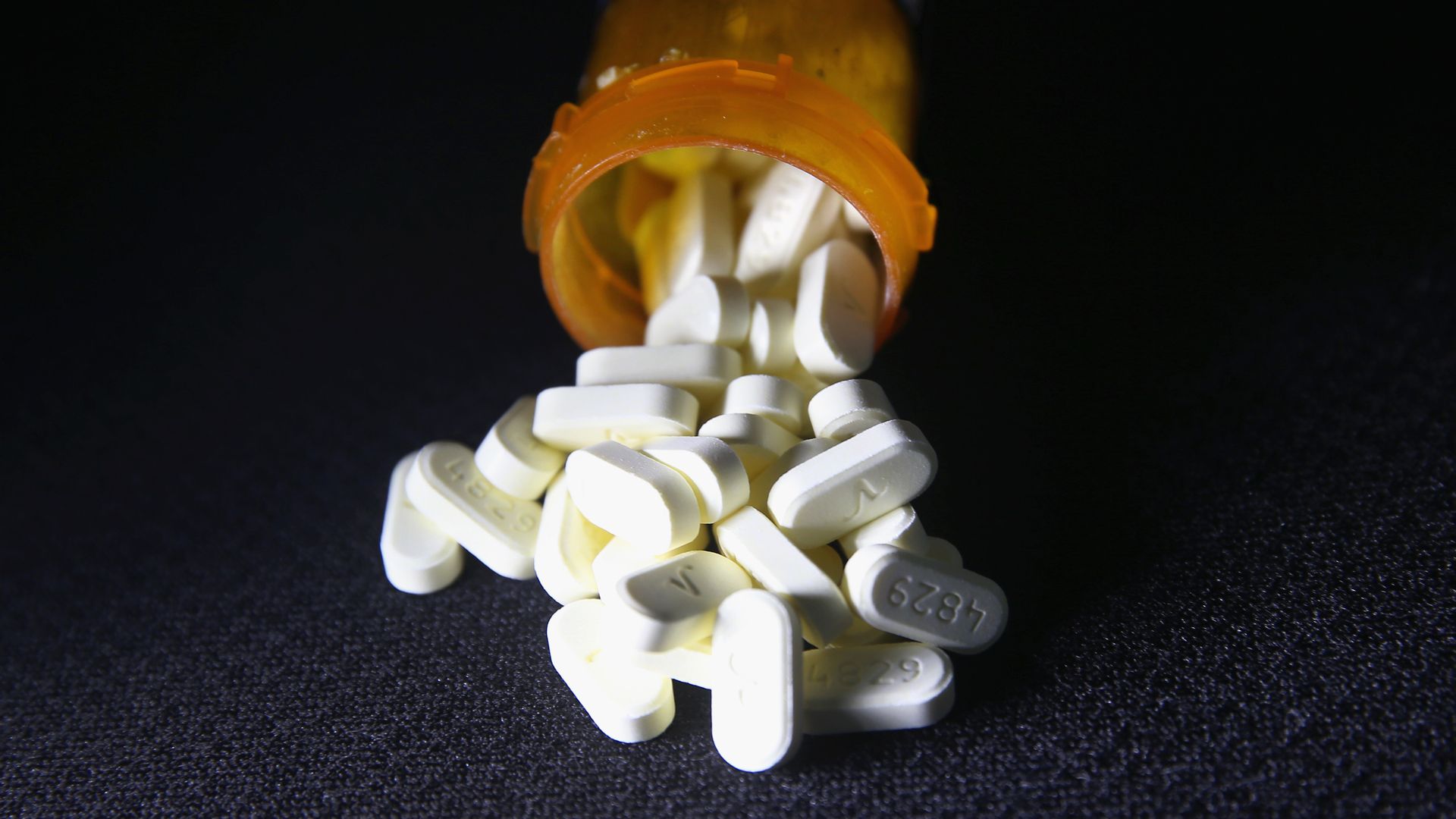
Federal regulators and fentanyl manufacturers didn't take action when it became clear that highly potent fentanyl products were being inappropriately prescribed to as many as half of the patients taking them, according to a new study in the Journal of the American Medical Association.
How it works: The type of fentanyl in question is approved by the Food and Drug Administration only for adult cancer patents who have already built up a tolerance to less potent opioids.
We know childbirth is wildly expensive in the U.S. The Philadelphia Inquirer has a very depressing related story: The cost of a failed pregnancy can also be unexpectedly large, leaving women or couples to sort through and challenge medical bills on top of an enormous emotional loss.
Details: One woman profiled by the Inquirer, Jodi Laughlin, had to have an emergency C-section. Her baby then lived only 32 minutes, due to a buildup of fluid in her body.
Ohio Attorney General Dave Yost has formally demanded that OptumRx, one of the country's largest pharmacy benefit managers, pay back $16 million in "overcharges" related to handling drug benefits for a state agency.
Why it matters: This isn't a lot of money in the grand scheme of things, but it's a forceful step that shows states are actively looking to claw back money from a PBM if they think the company is skimming too much profit from the drug pricing process.
The Affordable Care Act's cost-sharing reduction payments saga continues: The Trump administration ended the payments in 2017, Congress failed to fund them, and now 3 judges have said the government is still on the hook for the payments.
The big picture: "If their decisions stand, insurers could recover roughly $12 billion a year, every year, until Congress intervenes to stop the bleeding," Nicholas Bagley writes in the Incidental Economist.
Some of the best-selling drugs in the U.S. have stacked up extra federal protections that were initially intended to spark research into drugs that couldn’t make money on their own.
Why it matters: Some experts fear that these additional protections could help shield blockbuster drugs from cheaper competitors.