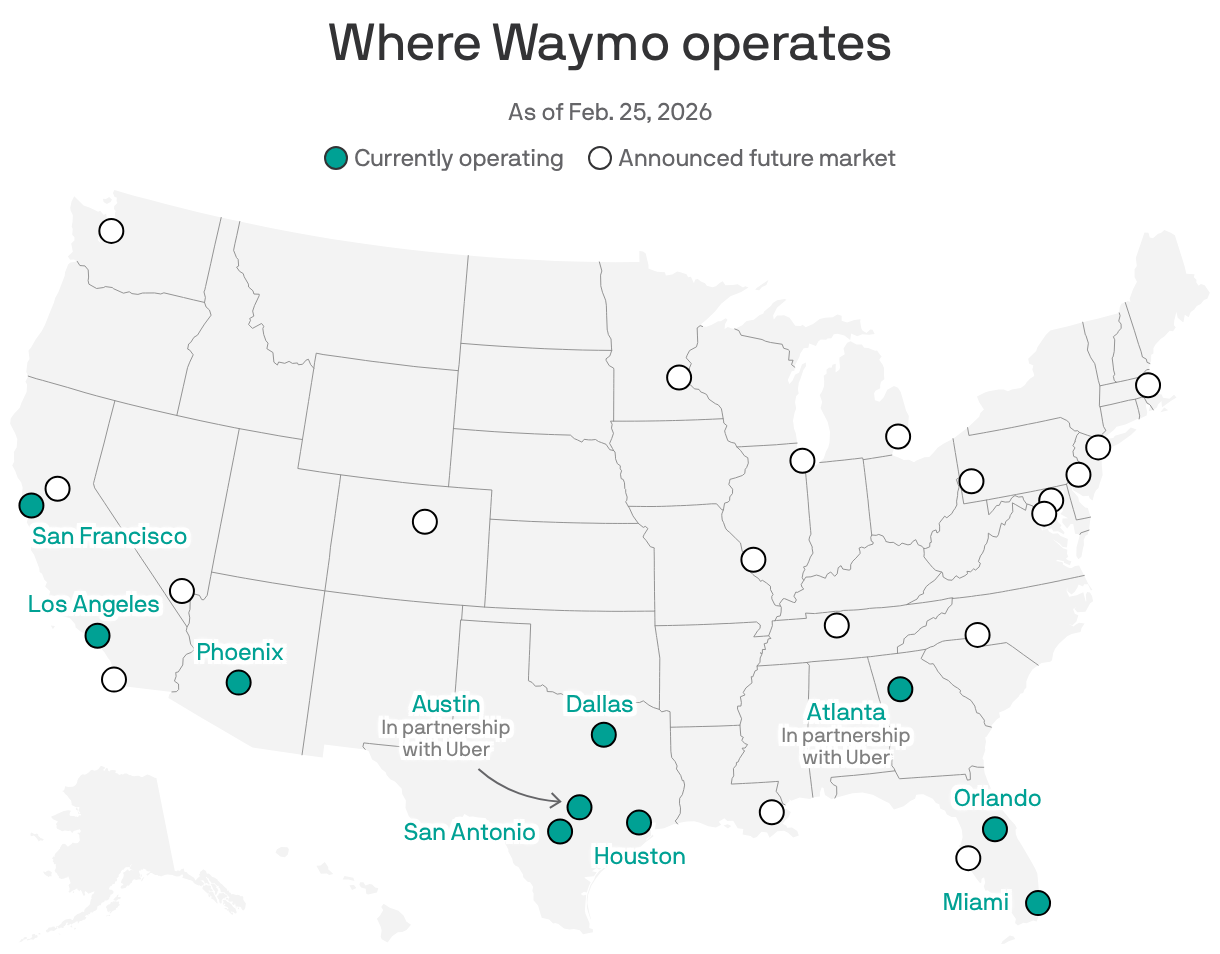
Waymo is accelerating its rollout of robotaxis in the U.S., adding four new cities in Texas and Florida this week as self-driving technology begins to penetrate mainstream America.
Why it matters: Armed with $16 billion in fresh capital from parent Alphabet and others, Waymo is quickly extending its lead over other players like Tesla and Amazon-owned Zoox, which are still mostly in testing mode.
Amid the current AI obsession, local opposition is the one thing that has the potential to slow the AI boom — and arguably already has.
By the numbers: According to the most recent report from Data Center Watch, 20 projects representing some $96 billion in investments were blocked or delayed in the second quarter of 2025 alone amid local opposition.
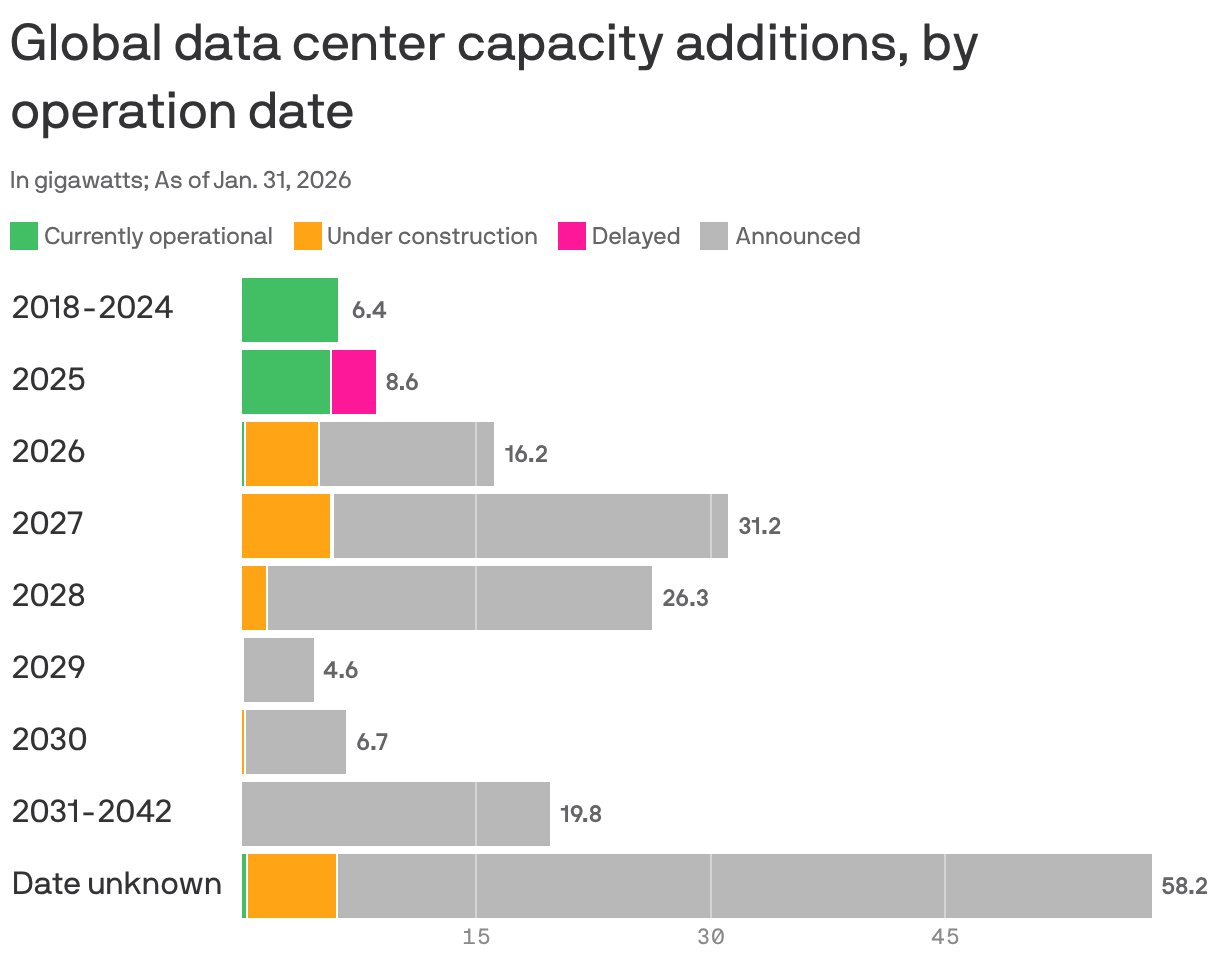
Data: Sightline Climate; Note: Includes 529 large data center projects announced since 2024 that have disclosed capacity; Chart: Kavya Beheraj/Axios
As many as half of the world's data center projects slated to come online this year could face delays, according to a report issued Tuesday.
Why it matters: It's a sign of mounting collisions in the AI race — from power constraints and grid equipment shortages to rising community opposition.
The Milan Cortina Olympics were a showcase for growth and inclusion in winter sports, but the infrastructure that keeps those sports alive is on thin ice.
Why it matters: If warming weather trends continue, the map of where people can learn to curl, play hockey, or ski will be limited.
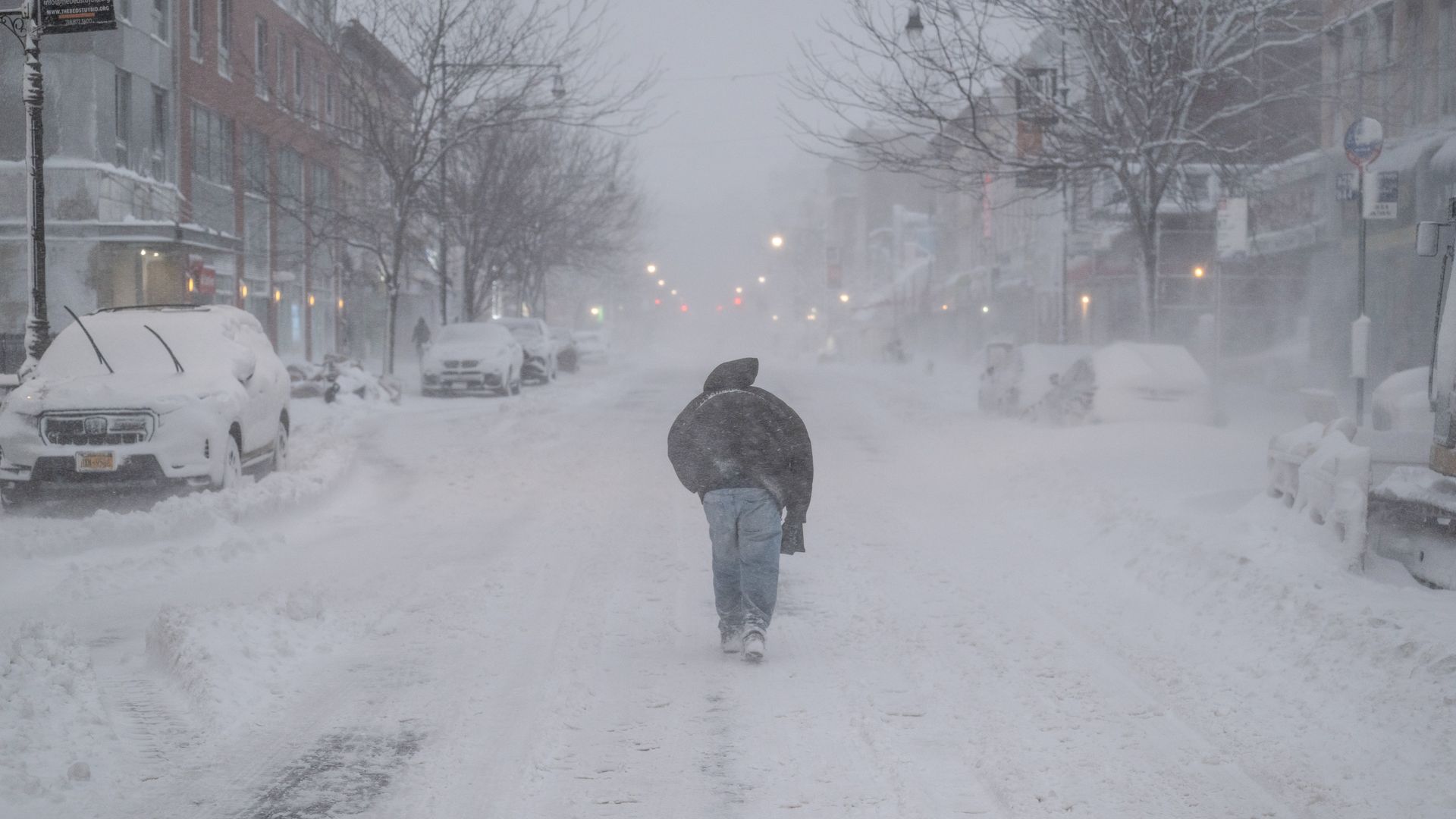
Threat level: In hard-hit areas, travel will be "extremely treacherous," forecasters say, and some leaders are restricting it. Meanwhile,more than half a million customers in Massachusetts, New Jersey, Delaware and Rhode Island are without power.
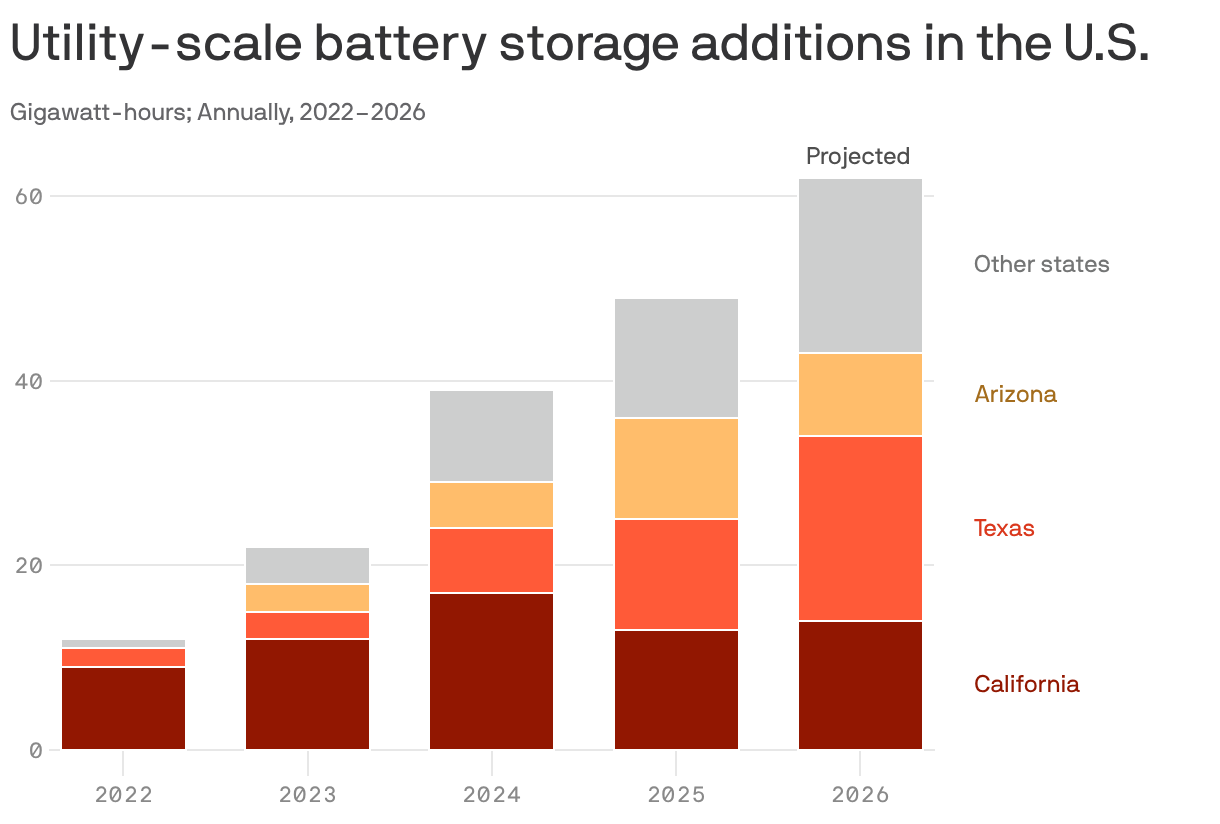
Data: Solar Energy Industries Association and Benchmark Mineral Intelligence; Chart: Axios Visuals
U.S. battery storage installations rose 29% last year, driven by strong utility-scale growth in Arizona and Texas, per new data from the Solar Energy Industries Association and Benchmark Mineral Intelligence.
Why it matters: Storage is a flexible resource that helps meet demand peaks and enables higher levels of renewables on grids.