Saturday's energy & climate stories

Florida faces destruction once more as storm Nicole leaves 5 dead
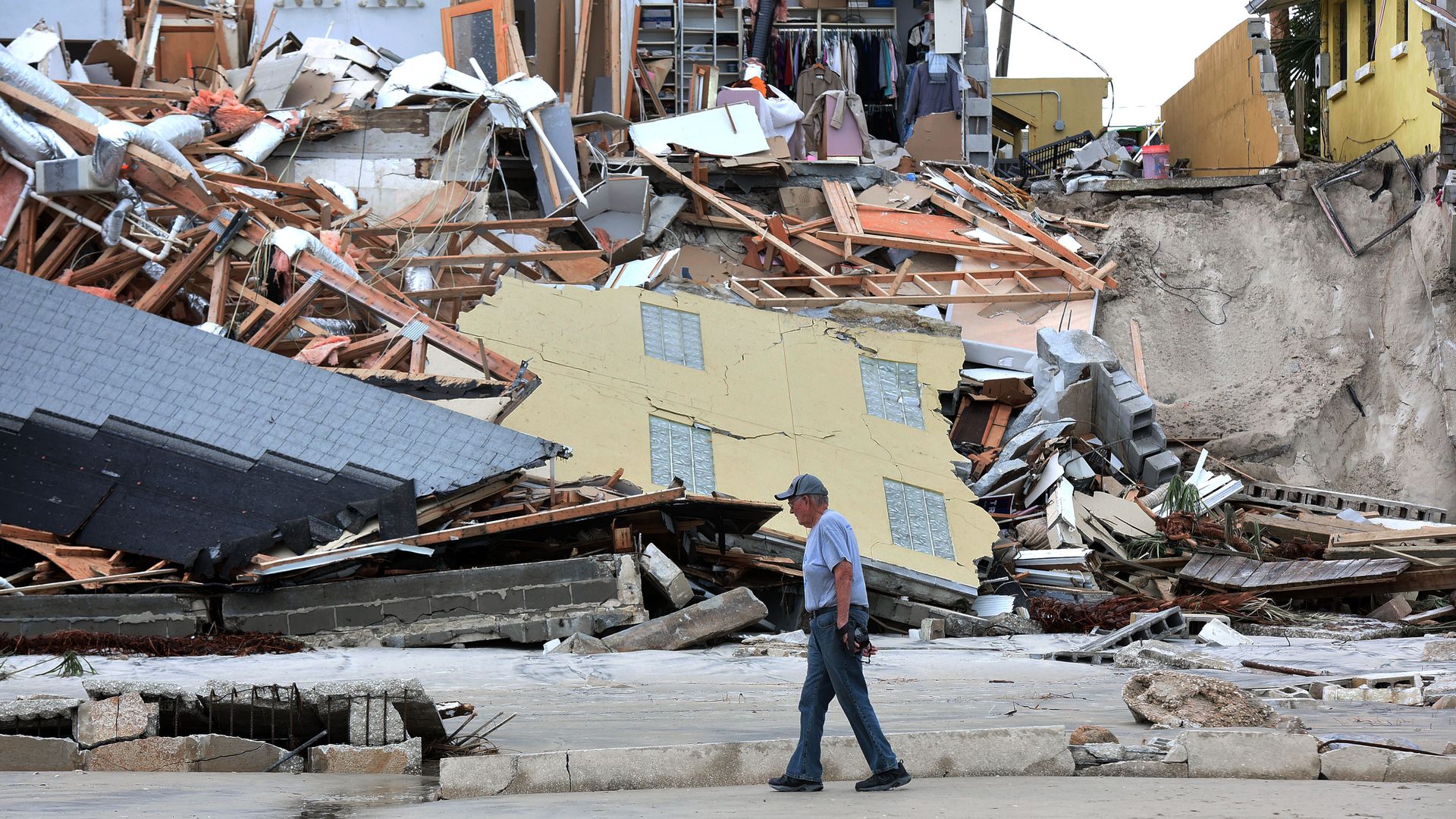
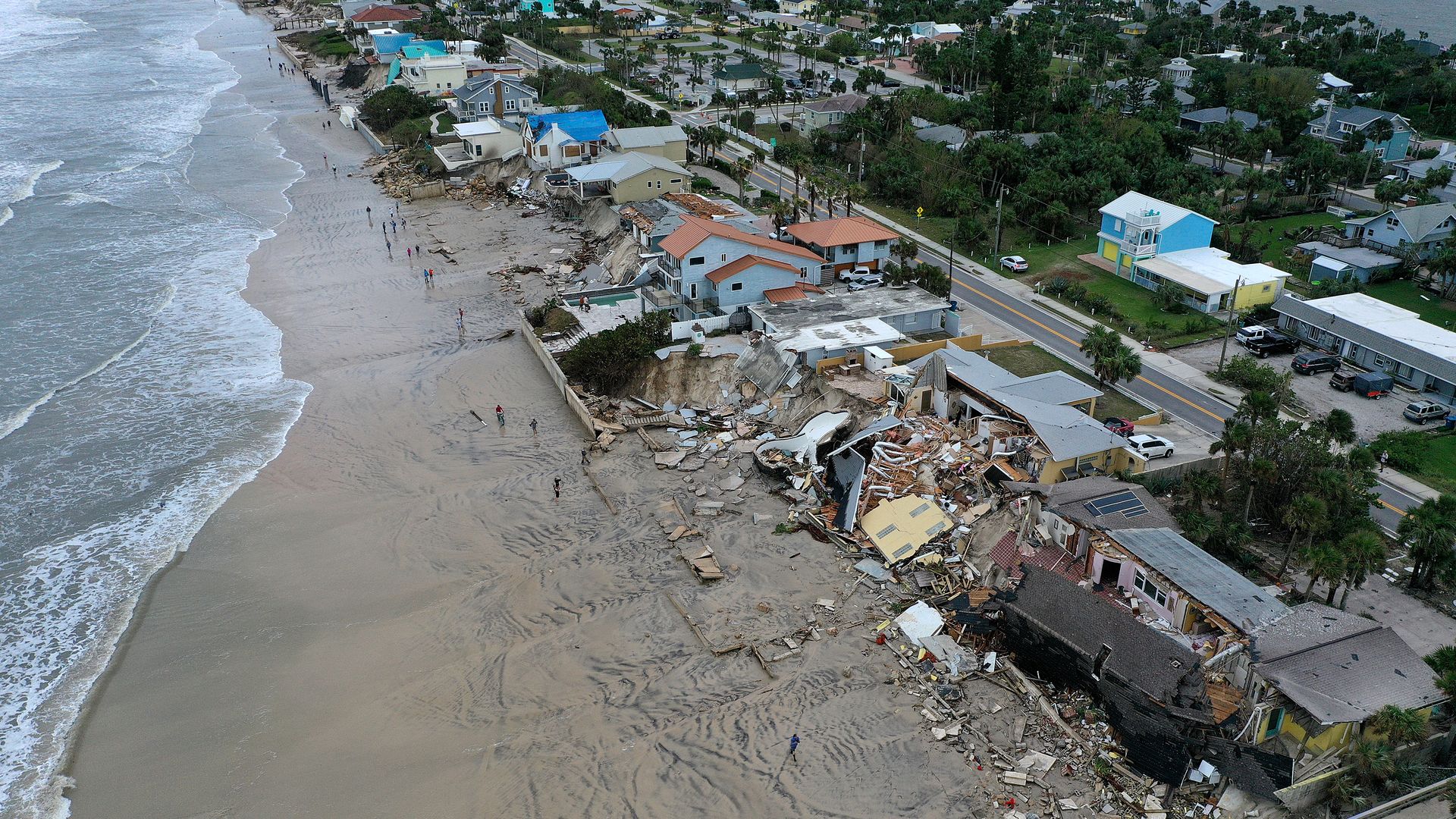
Floridians are picking up the pieces of a storm that brought strong winds and coastal flooding, leaving at least five people dead this week, CNN reports.
The big picture: The major toll on coastal areas from former Hurricane Nicole, especially in the Daytona Beach area, came as weakened dunes and coastal protections left behind from Hurricane Ian were coupled with the new surge which toppled multiple buildings.

100 plaintiffs join lawsuit against Navy facility's fuel-tainted water
More than 100 new plaintiffs have joined an ongoing lawsuit against the United States government over water contamination at the Red Hill Bulk Fuel Storage Facility in Hawaii, CNN reports.
Why it matters: The plaintiffs allege they suffered physical, mental and emotional damage from a fuel leak at the Navy-run facility that contaminated their water supply.

Deadly storm Nicole lashes Southeast with heavy rains
Threats of heavy rain and tornadoes from former Hurricane Nicole continued Friday across Georgia and up the East Coast after the storm weakened to a still-dangerous tropical depression.
Threat level: The threat of heavy rains, flash flooding and possible tornadoes remained Friday, moving up the Appalachians and into New England after the storm headed toward southwestern Georgia overnight and caused at least two deaths in Florida, where it made landfall as a Category 1 hurricane in the state's east with a large, destructive wind field early Thursday.

Biden says U.S. "on track" to meet Paris commitment
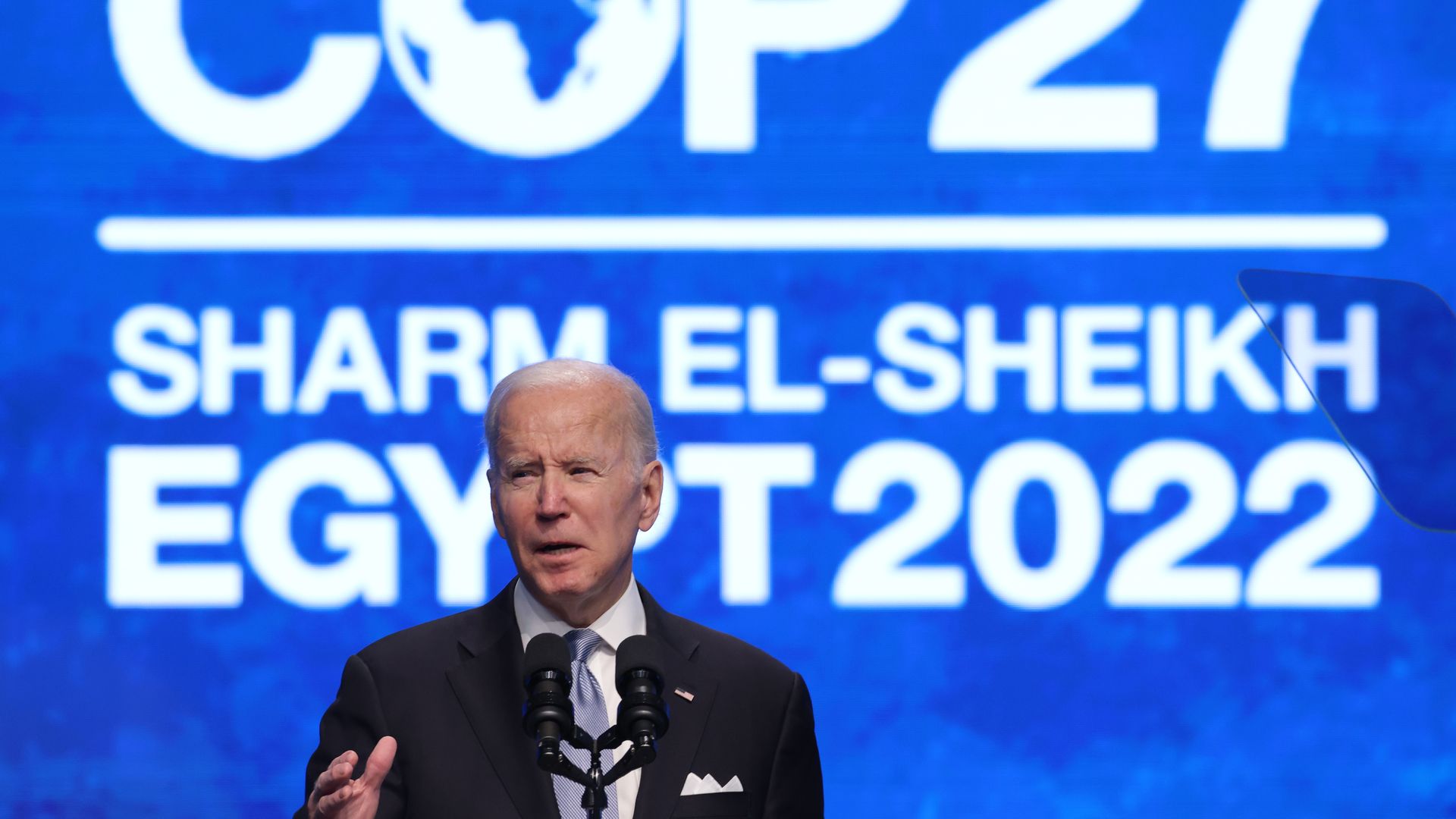
President Biden told a critical UN climate summit Friday that the U.S. is "on track" to meet its 2030 emissions-cutting pledge under the Paris Agreement while also touting efforts to help vulnerable nations harmed by global warming.
Driving the news: "Thanks to the actions we've taken, I can stand here as president of the United States of America and say with confidence, the United States of America will meet our emissions targets by 2030," Biden told the COP27 climate summit in Sharm el-Sheikh, Egypt.

"Digital portals" tackle COP27 inclusivity issues — somewhat

A new UN Live program is trying to mediate inclusivity issues at COP27 through "digital portals," or repurposed shipping containers placed around the world and outfitted for long-distance conversations.
The big picture: Past UN climate summits have been criticized for a lack of diverse representation, and this year's event is no different, as activists from African nations have faced barriers to entry.
White House unveils tougher emissions rules ahead of Biden's COP27 speech
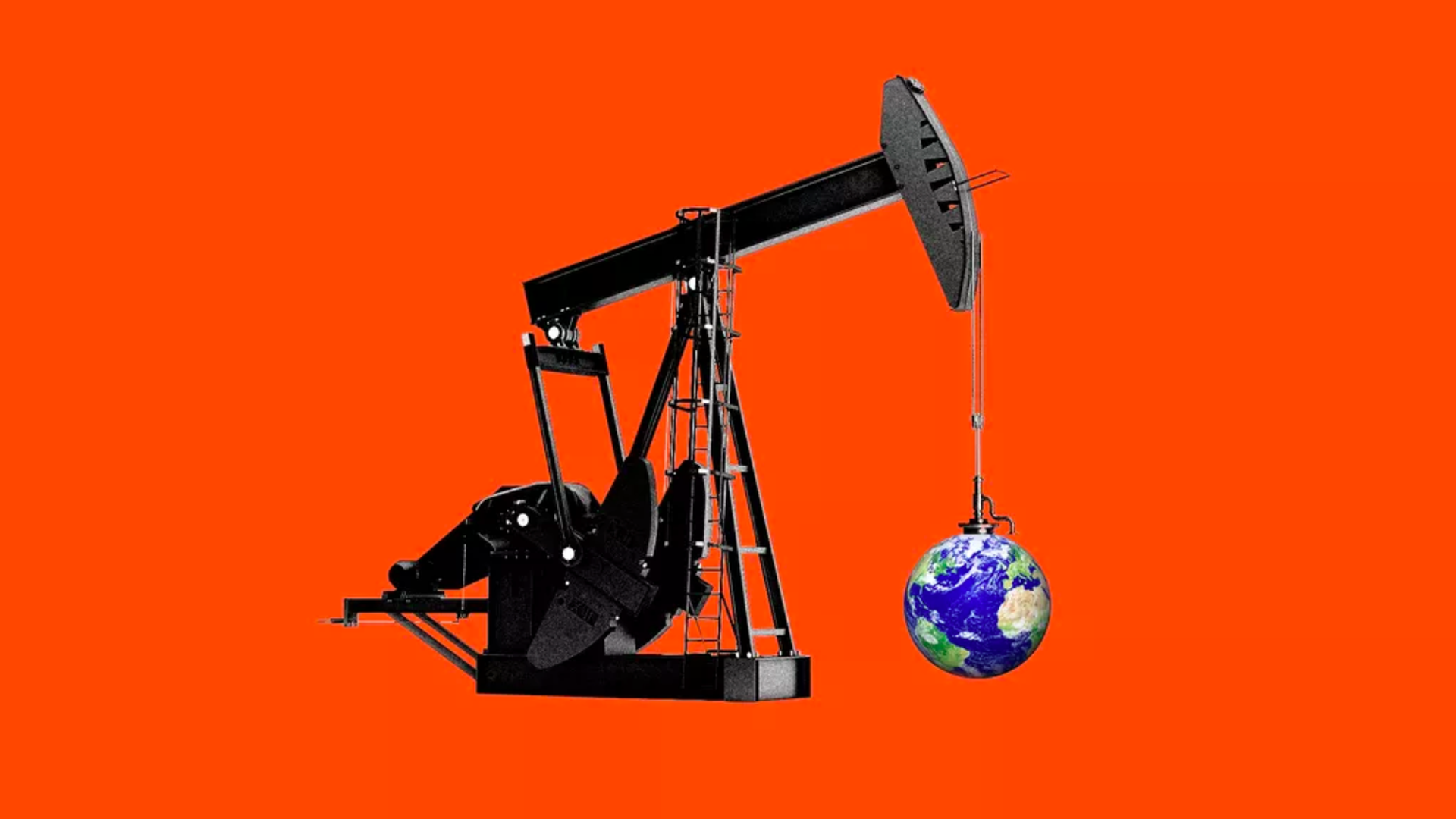
EPA plans to strengthen rules to cut methane emissions from U.S. oil-and-gas wells and infrastructure, a plan President Biden will tout in remarks Friday at the COP27 climate summit in Sharm el-Sheikh, Egypt.
Why it matters: Methane is a very powerful planet-warming gas. The White House is seeking to show its acting aggressively on climate change at the summit aimed at strengthening efforts worldwide.
Zoom in: Today's plan to better identify and fix leaks expands a 2021 proposal in a bunch of ways, per EPA, including...
- Creating a "super-emitter response program" that requires the industry to take fast action when major releases are identified by regulators or third parties.
- That's important because multiple studies (like this one) show a relatively small number of sites have an outsized impact.
- Elsewhere, per EPA, it would ensure "all" well sites are routinely monitored for leaks. "Small wells currently are subject to an initial inspection but are rarely checked again for leaks," AP notes.
- It also sets a "zero-emissions standard" for pneumatic pumps, and creates requirements for "dry seal compressors" that are currently unregulated, EPA said.
The big picture: EPA estimates that the overall plan would cut emissions from covered sources by 87% from 2005 levels by 2030.
"We’re listening to public feedback and strengthening our proposed oil and gas industry standards, which will enable innovative new technology to flourish while protecting people and the planet," EPA administrator Michael Regan said in a statement.
Catch up fast: The updated EPA proposal is among a wider set of domestic and global efforts to curb methane.
- The new climate law imposes fees on oil-and-gas industry emissions.
- Last year the U.S. and EU launched Global Methane Pledge, which now counts over 130 countries in a non-binding commitment to cut their emissions by 30% by 2030.
What's next: The methane proposal is among several new or recent initiatives Biden is expected to discuss when he addresses the summit, the White House said.
- One is a new proposal to better leverage the federal government's purchasing power to spur stronger private-sector efforts.
- The proposal, which the Washington Post first reported, would "require major suppliers to set Paris Agreement-aligned emissions reduction goals," a White House summary states.
- The federal government is a huge customer, spending $630 billion on goods and services last year, per the White House.
Threat level: The conference and White House efforts come amid fresh evidence that global efforts to curb carbon emissions are badly out of step with steep cuts envisioned under the Paris agreement goals.
The Global Carbon Project, a respected research consortium, today reported that global carbon emissions from fossil fuels are rising by an estimated 1% this year.
"Many countries, cities, companies, and individuals have made pledges to reduce emissions, and it is a stark reminder that despite all this rhetoric, global fossil CO2 emissions are more than 5% higher than in 2015, the year of the Paris Agreement," said Glen Peters of Norway's CICERO Center for International Climate Research, which is part of the group.