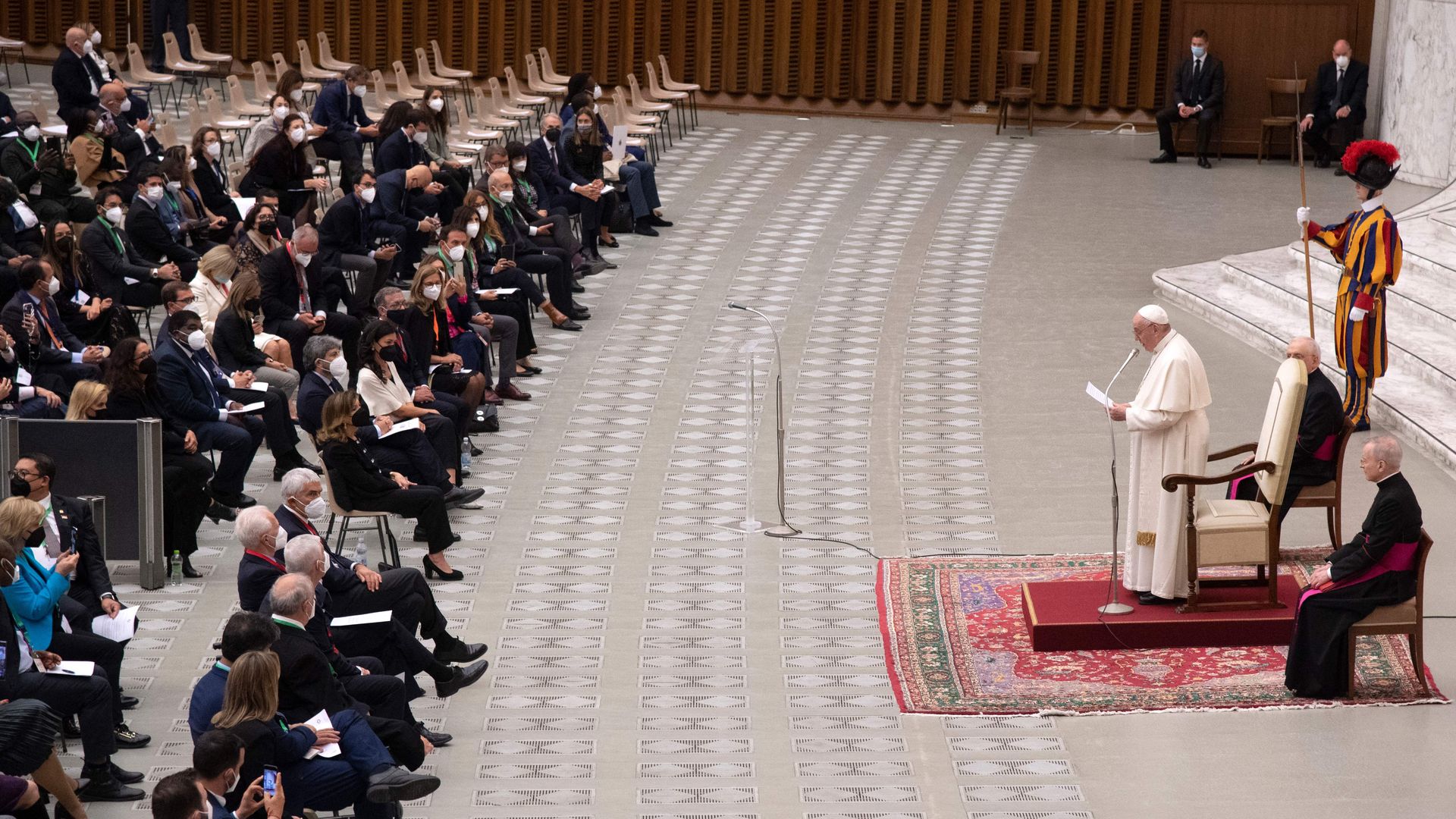
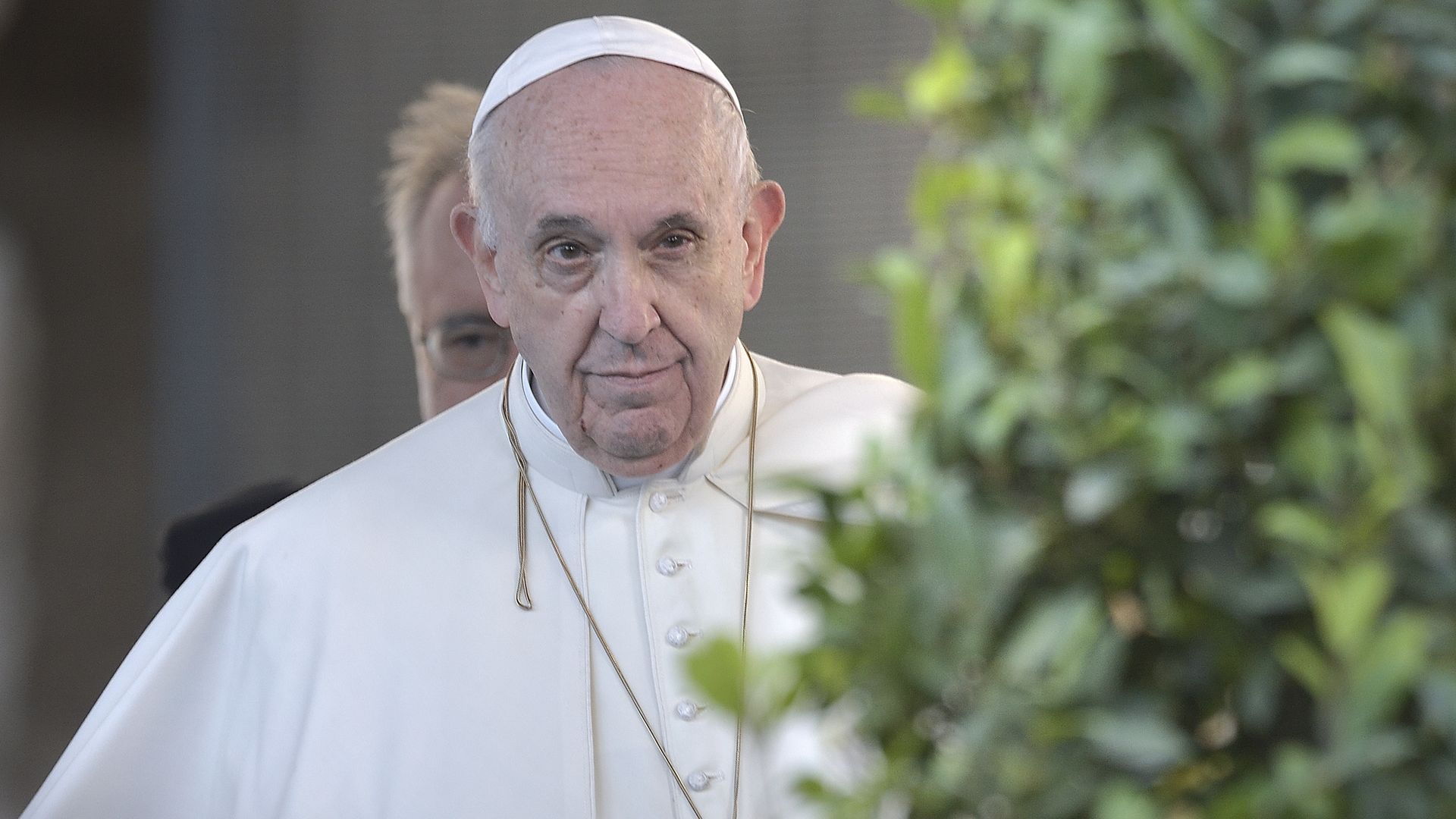
Pope Francis met with House Speaker Nancy Pelosi on Saturday, as he urged lawmakers to overcome "the narrow confines" of partisan politics to fight climate change.
Context: Francis spoke to parliamentarians who were in Rome for a meeting before the UN's climate conference, which comes as scientists caution that the window for keeping alive the Paris Agreement's most ambitious temperature target is rapidly closing, Axios' Andrew Freedman reports.
Why it matters: Francis' attendance, given his global stature, could have helped provide momentum to what are expected to be difficult talks aimed at spurring more aggressive steps to cut greenhouse gas emissions.
President Biden announced Friday the protection of the expansion of the Bears Ears and Grand Staircase-Escalante national monuments in Utah and the Northeast Canyons and Seamounts off the New England coast.
Why it matters: The decision reverses a Trump-era policy that reduced the Bears Ears Monument's size by 85% in 2017. It also comes after a coalition of Native American tribes urged Biden to restore the monument.
Fed governor Lael Brainard is filling in more blanks about how the central bank could weigh and limit financial institutions' exposure to climate risk.
Driving the news: "I anticipate it will be helpful to provide supervisory guidance for large banking institutions in their efforts to appropriately measure, monitor, and manage material climate-related risks," she said in a speech Thursday.
Sky-high European natural gas prices are volatile this morning after yesterday's retreat (see chart above) that followed Russian President Vladimir Putin's comments that seemingly signaled more supply in the offing.
What we're watching: What follows the statements about supply from Putin and other Russian officials, in terms of gas via existing infrastructure and the timing of final approval of the Nord Stream 2 pipeline.
National security adviser Jake Sullivan said Thursday that the U.S. will work with Europe to ensure that energy supply keeps up with rising demand, according to Politico.
Why it matters: Energy prices have climbed around the world due to extreme weather, rising demand and supply constraints. The costs have impacted the economic recovery from COVID-19.