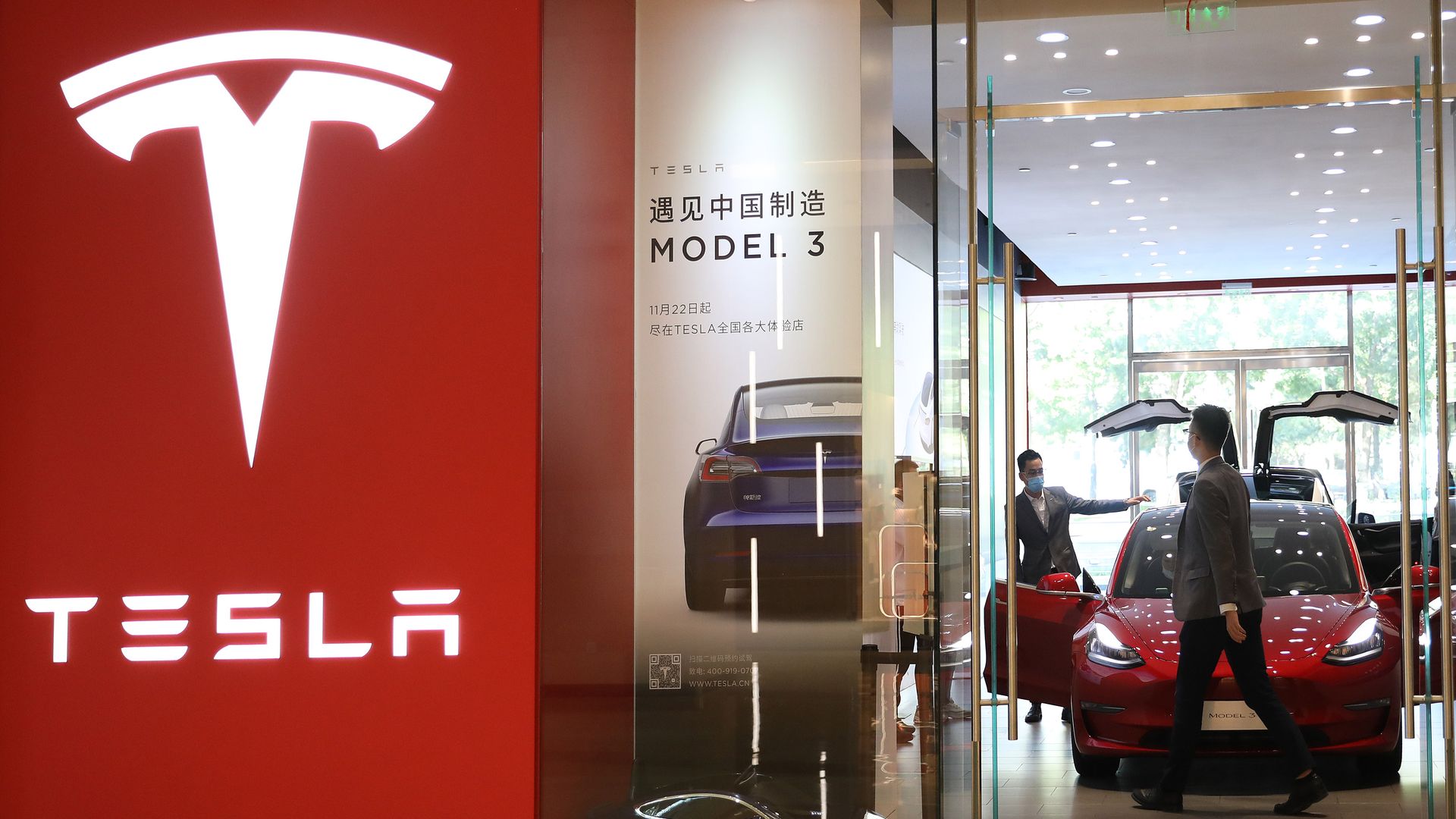
Tesla reported its fifth consecutive quarter of profitability — raking in $331 million, the most money since the run began — alongside a record number of deliveries of its electric cars.
Why it matters: Tesla has become the world's most valuable automaker. It's on the longest money-making streak in company history, despite disruptions from the COVID-19 pandemic.
The U.S. is hardly the only country with a political split over natural gas, but it's particularly stark here.
Driving the news: A newly released Pew Research Center survey on global attitudes about the fossil fuels shows one takeaway how gas, coal and oil dominate the world's energy mix.
What has LeBron James as a pitchman, some slightly awkward promotional phrasing ("watts to freedom"), and a six-figure starting price? The electric GMC Hummer.
Driving the news: General Motors unveiled the vehicle — a reborn version of the deceased mega-guzzler — with a highly produced rollout Tuesday night that included a World Series spot. The company also began taking reservations.
A new poll of nearly 1,000 likely voters suggests Joe Biden would have political wind at his back on the proposal on climate change if he wins and Democrats take the Senate.
Why it matters: 66% of likely voters support a plan to spend $2 trillion on clean energy and climate efforts, per this New York Times/Siena College poll.
Avangrid, a subsidiary of Spanish energy giant Iberdrola, is buying the big New Mexico-based power company PNM Resources in a $4.3 billion deal.
Why it matters: The companies said the deal, valued at $8.3 billion including debt, will form the third-largest renewable power company in the United States.
There are all kinds of ways that a potential Joe Biden presidency would differ from President Trump, and one of them is recycling, per a recent BloombergNEF analysis.
Driving the news: "The issue has received scant attention in the Biden-Trump face-off, but given their larger ambitions, it is possible to predict how the candidates would address it," BNEF said.
China's vow to reach carbon neutrality by 2060 is starting to produce some helpful analyses of how the world's largest greenhouse gas emitter might actually get there.
Why it matters: The plan seems to be achievable, in theory, but the numbers around the needed expansion of carbon-free power, industrial fuels and vehicles are pretty wild.
Well that, as Ron Burgundy would say, escalated quickly. China's foreign ministry is accusing the Trump administration of "major retrogression" on climate and being an environmental "troublemaker."
Why it matters: China's unusual statement Monday widens the rupture between the world's largest carbon emitters as global climate efforts are flagging and the pandemic's effect on emissions is too small to be consequential in the long term.




/2020/10/21/1603286524518.gif?w=3840)