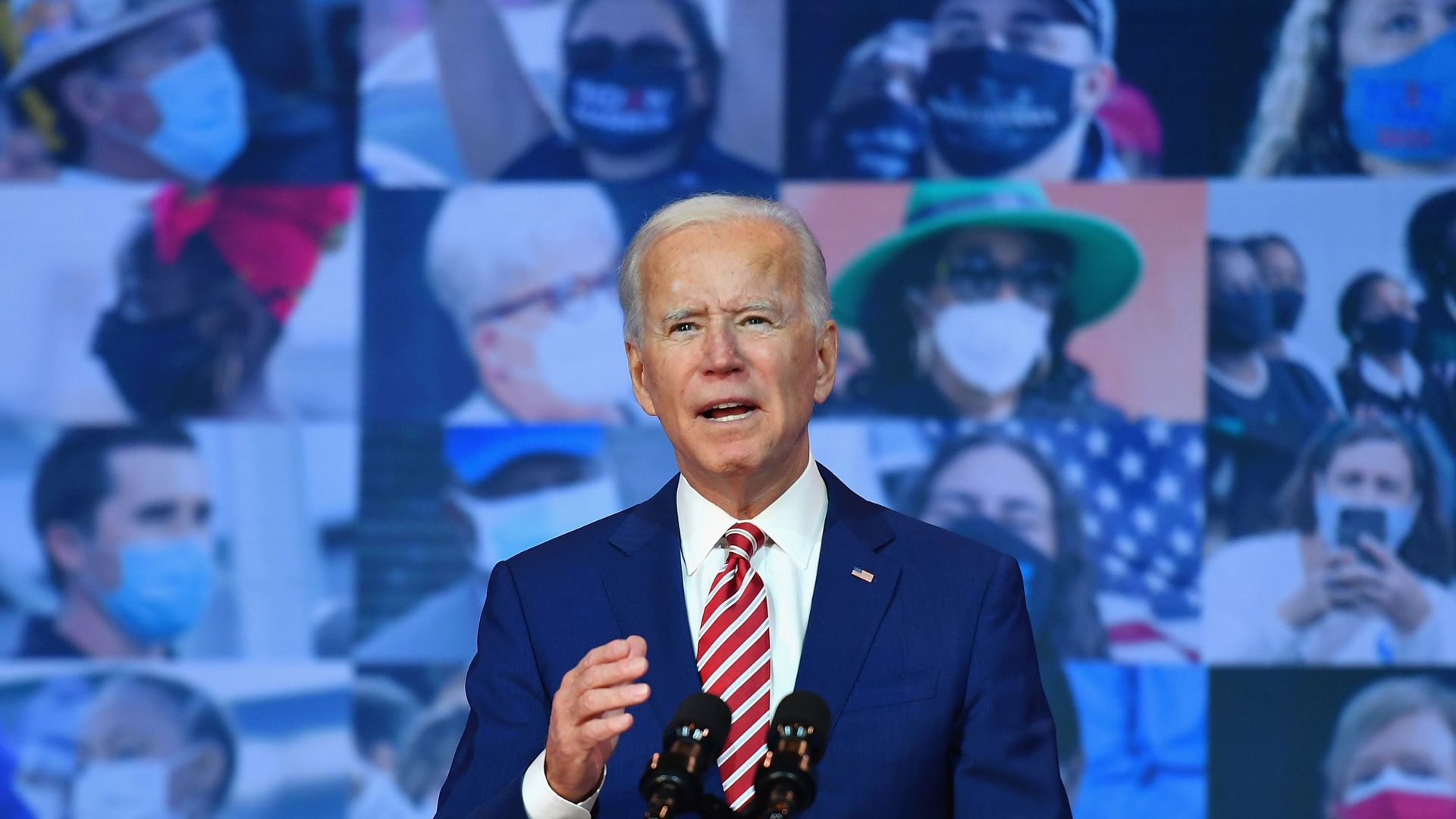
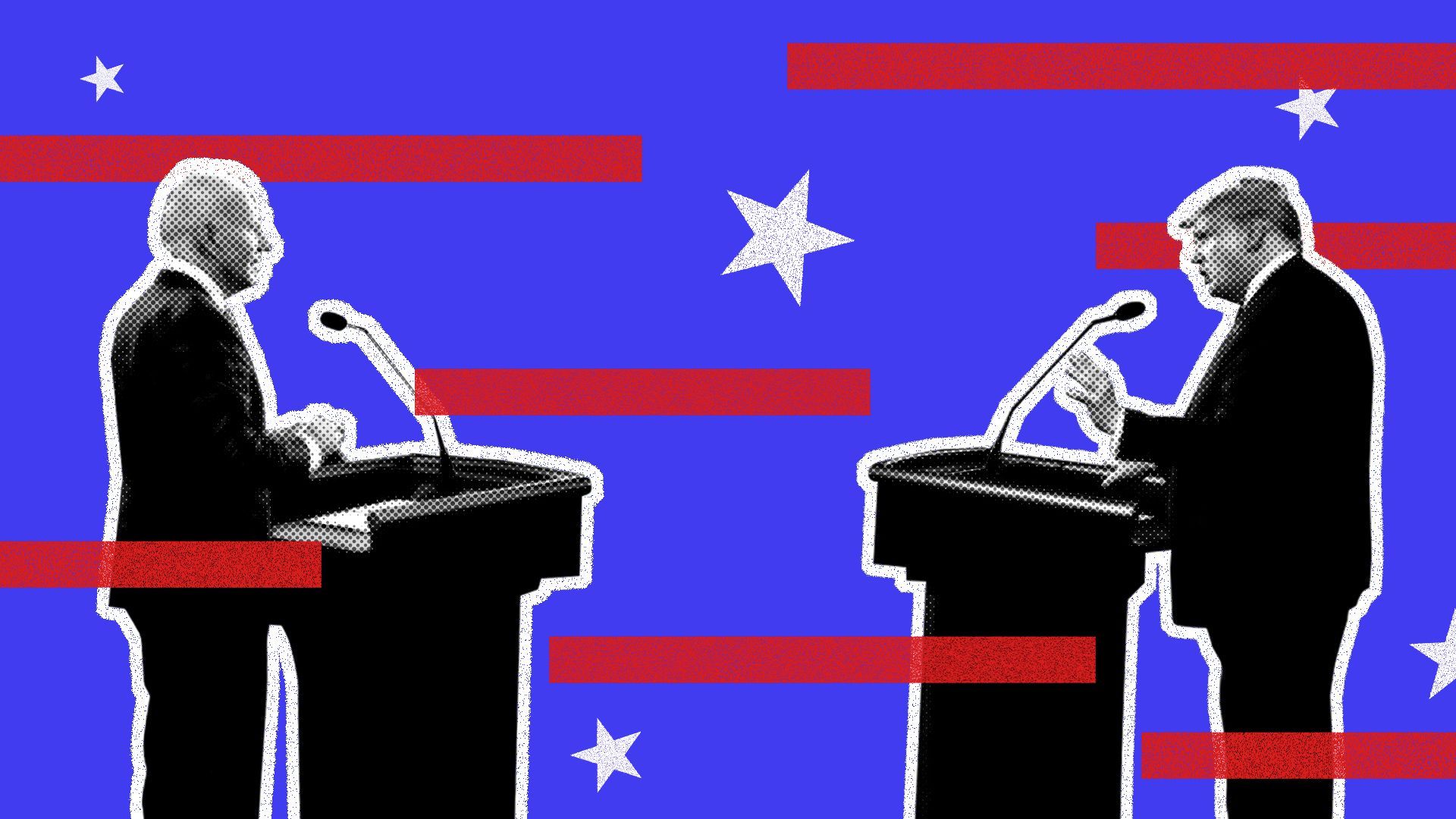
Joe Biden's campaign is looking to blunt attacks in response to his comments in Thursday night's debate about a "transition from the oil industry," as Republicans look to make the remarks a liability in the closing days of the race.
Driving the news: Biden campaign spokesperson Bill Russo, in comments circulated to reporters Friday afternoon, said the former VP "would not get rid of fossil fuels," but wants to end subsidies.
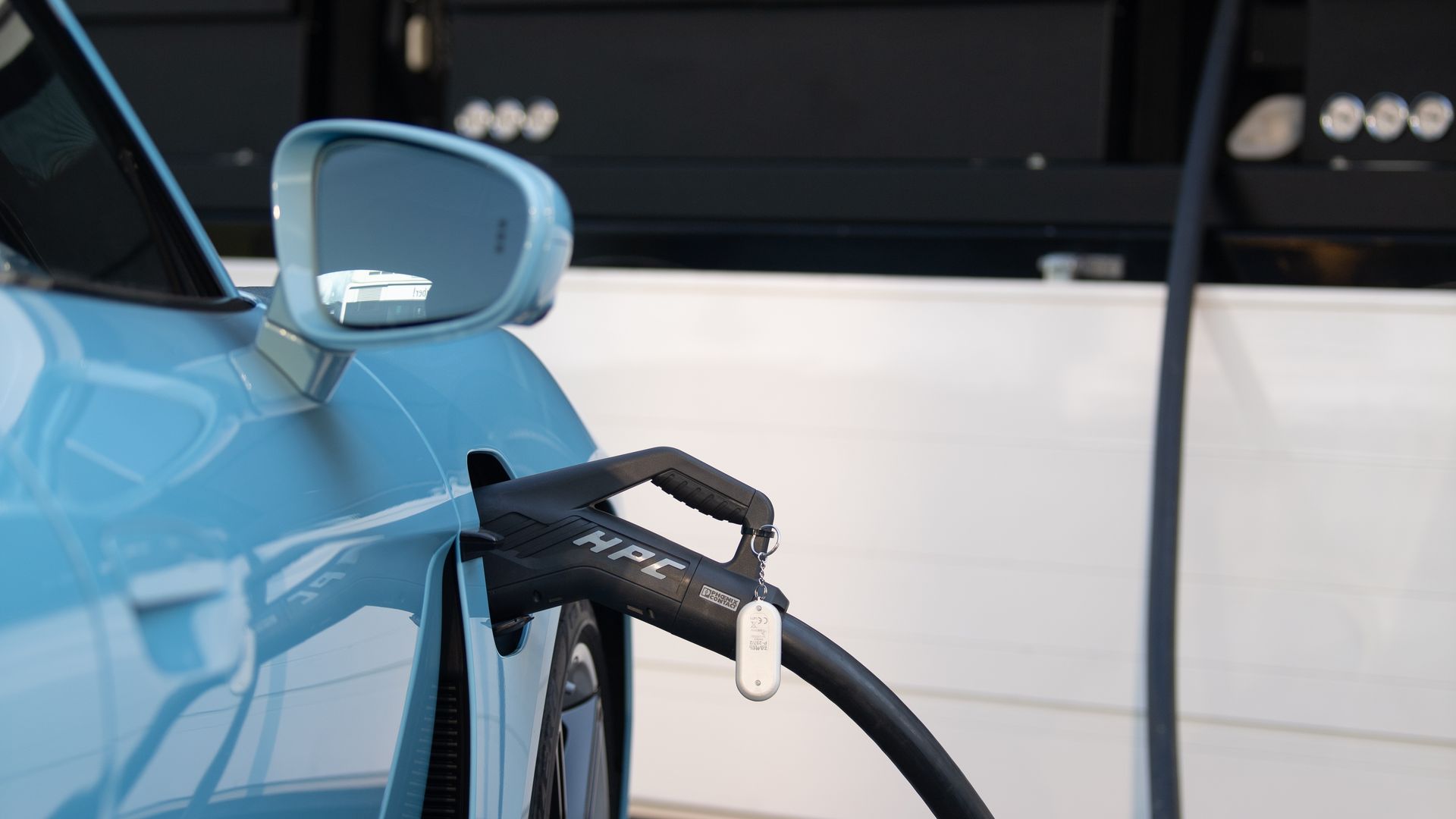
Analysts and investors are getting ever more bullish on electric vehicles, but with little regard, it seems, for consumer attitudes.
Why it matters: Tightening regulations around the world could indeed shove the vehicle market toward electrics more quickly than expected. But if consumers are reluctant to buy, automakers will have to slash prices and absorb the losses, erasing investors' rosy hopes.
Reservations for the first edition of GM's new electric Hummer revealed Tuesday night filled up in 10 minutes, according to spokesperson Mikhael Farah.
Driving the news: The page where you can plunk down $100 to reserve the $112,595 first edition, which arrives in late 2021, offers a waitlist. You can still reserve the less souped-up and less pricey versions going into production in 2022–2024.
Japan's newly elected Prime Minister Yoshihide Suga is slated to announce a target next week of making the nation carbon-neutral by 2050, per reports in Nikkei, Reuters and elsewhere.
Why it matters: Japan is one of the world's largest carbon emitters, per International Energy Agency data, though far smaller than China, the U.S. and India.
The most notable part of Thursday’s presidential debate on climate change was the fact it was included as a topic and assumed as a fact.
The big picture: This is the first time in U.S. presidential history that climate change was a featured issue at a debate. It signals how the problem has become part of the fabric of our society. More extreme weather, like the wildfires ravaging Colorado, is pushing the topic to the front-burner.
A just-published Brookings Institution analysis of U.S. cities' pledges to cut carbon emissions reveals very mixed results.
Why it matters: The potential — and limits — of city and state initiatives have gotten more attention amid President Trump's scuttling of Obama-era national policies.