Black and Hispanic communities are less likely than white communities to trust the safety of their tap water, according to Morning Consult survey data out this week.
Why it matters: There's now a greater understanding of the links between the environment and health — and the role systemic racism has played in the distribution of pollution across communities of color.
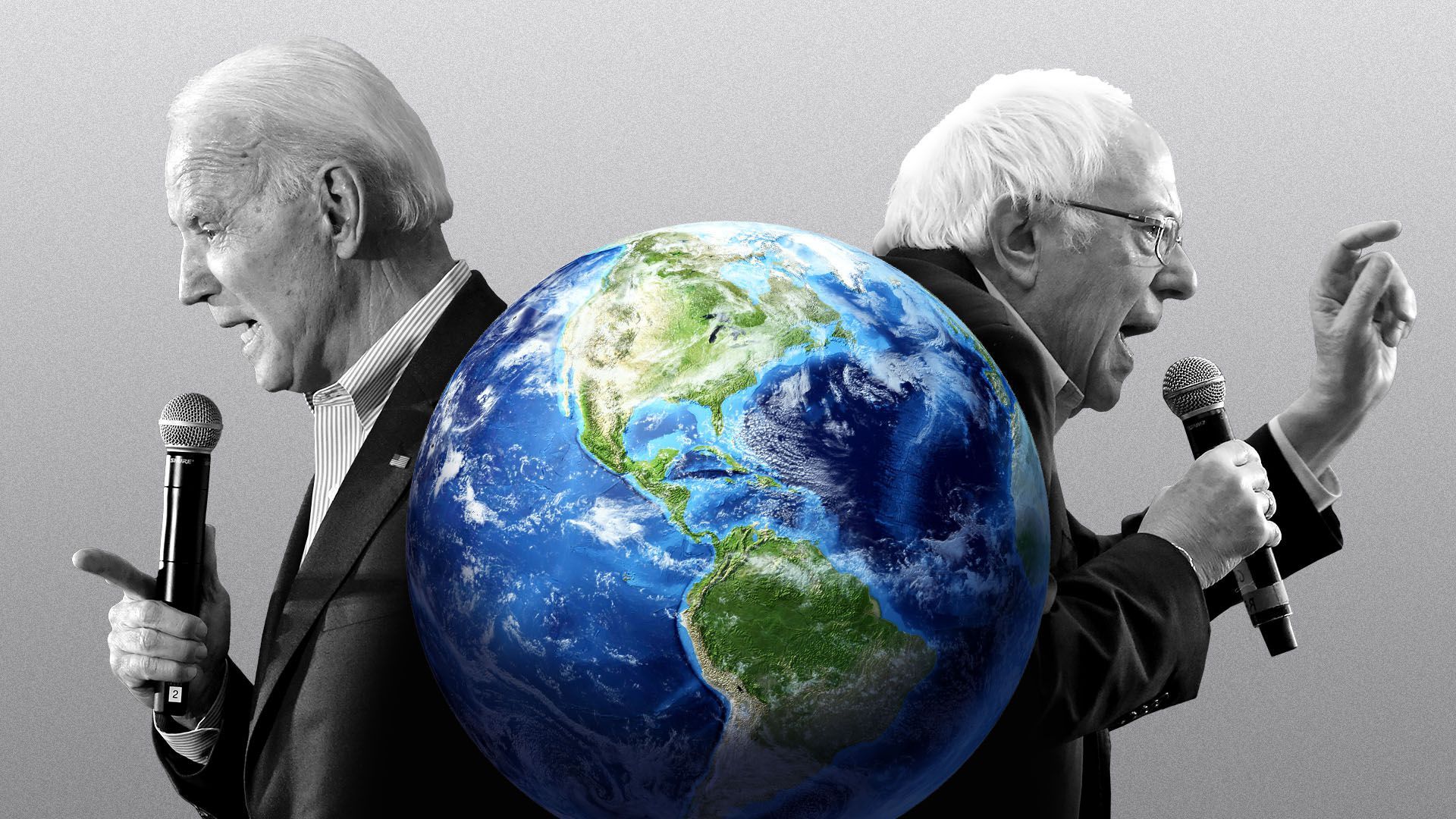
The six "unity" task forces that the Joe Biden and Bernie Sanders put together unveiled their policy recommendations yesterday.
The big picture: Big climate ideas include setting "technology-neutral" standards to achieve 100% carbon-free electricity by 2035, and a goal of achieving net-zero emissions in all new buildings by 2030.
A pandemic is a bad, expensive and inadequate way to cut carbon emissions, and a Rhodium Group analysis out this morning helps to underscore why.
Why it matters: It modeled U.S. emissions this year and going forward based on several different scenarios of GDP decline and recovery — and all of them show lower levels for the next decade compared to the pre-pandemic baseline, but none are consistent with deeply decarbonizing the economy or a pathway to net-zero emissions by midcentury.
Four of America’s biggest banks are backing a new nonprofit initiative to leverage the financial sector toward achieving climate-change goals.
Driving the news: The Rocky Mountain Institute (RMI) is launching a center focused on climate that will be supported by Wells Fargo, Goldman Sachs, Bank of America and JPMorgan Chase.
There's a new sports league with an EV twist: Tuesday brought rollout of the "eSkootr Championship," which aims to start holding high-speed electric scooter races in major cities starting in 2021.
Why it matters: Organizers say there's a serious message behind the new sport as they promote electric scooters and other emerging mobility services.
Volvo’s VC arm is investing in the blockchain tech firm Circulor as the company looks to expand its work on tracing the cobalt used in electric car batteries to include other materials too, Volvo said Wednesday.
Why it matters: Extraction of cobalt and other materials in the battery supply chain is linked to human rights abuses, so ethical sourcing of materials is important.
The onslaught of energy infrastructure news over the last 72 hours highlights the gains of activists pushing to block fossil fuel projects — and why efforts to curb supply are a small piece of the climate puzzle.
Catch up fast: Over the last three days...
Dominion Energy and Duke Energy scrapped plans for a big gas pipeline.
Dominion Energy sold its gas transmission and storage assets to Warren Buffett's Berkshire Hathaway Energy.
A federal judge ordered the shut down of the Dakota Access Pipeline.
The Supreme Court declined, for now, to allow Keystone XL pipeline construction.
The head of House Democrats' climate change panel has a simple reason why their wide-ranging plan includes nuclear power despite misgivings in some corner of the left.
What they're saying: “That’s what the scientists advised as we listened across the spectrum, that’s where we landed — that nuclear power needs to be part of the portfolio going forward,” Rep. Kathy Castor said on the new episode of the Columbia Energy Exchange podcast.
Americans in most states are moving at nearly the same level as, and sometimes even more than, before the pandemic compelled lockdowns across the U.S.
Driving the news: Mobility data from Descartes Labs shows the vast swing in American movement over the last four months, with this chart showing March 7-July 4.