At least a dozen electric vehicle startups with dreams of becoming the next Tesla are suddenly in limbo, hoping they can hang on through the coronavirus pandemic for a chance to deliver on their long-shot ambitions.
The big picture: Building a car company from scratch is extraordinarily difficult, requiring billions of dollars in capital. Tesla made it, but not without a few harrowing brushes with death. Add the economic uncertainty of a global pandemic, and the stunning collapse in oil prices, and the odds of success are even lower.
The National Association of City Transportation Officials has released a document, called "Streets for Pandemic Response and Recovery," to make it easier for city planners to adapt their streetscapes to the shifting pressures of the coronavirus pandemic.
Why it matters: The scope and duration of the changes could affect urban air quality, carbon emissions and could even influence post-crisis oil demand.
Facebook CEO Mark Zuckerberg said Thursday that the company is planning to shift the majority of its workforce to be able to work remotely in the next 5 to 10 years.
The state of play: It's the latest sign that remote work could become a permanent fixture of the post-pandemic landscape for substantial numbers of people whose jobs enable that luxury. That, in turn, is among the things that may act as a drag on long-term oil demand if many large employers go the same route.
Pump prices are at their lowest point in years heading into the long holiday weekend, but it's hard to say how many people will take advantage of them.
Driving the news: The average U.S. price of gasoline as of early in the week was $1.88-per-gallon, per the U.S. Energy Information Administration. It's the lowest overall price since early 2016.
Dozens of the world’s leaders in business, finance and politics are planning to convene June 3 to discuss how the global economy can be “reset”— with climate change a defining theme — as nations recover from the coronavirus pandemic.
Driving the news: The online event will be hosted by His Royal Highness Charles, Prince of Wales, and Klaus Schwab, founder and executive chairman of the World Economic Forum.
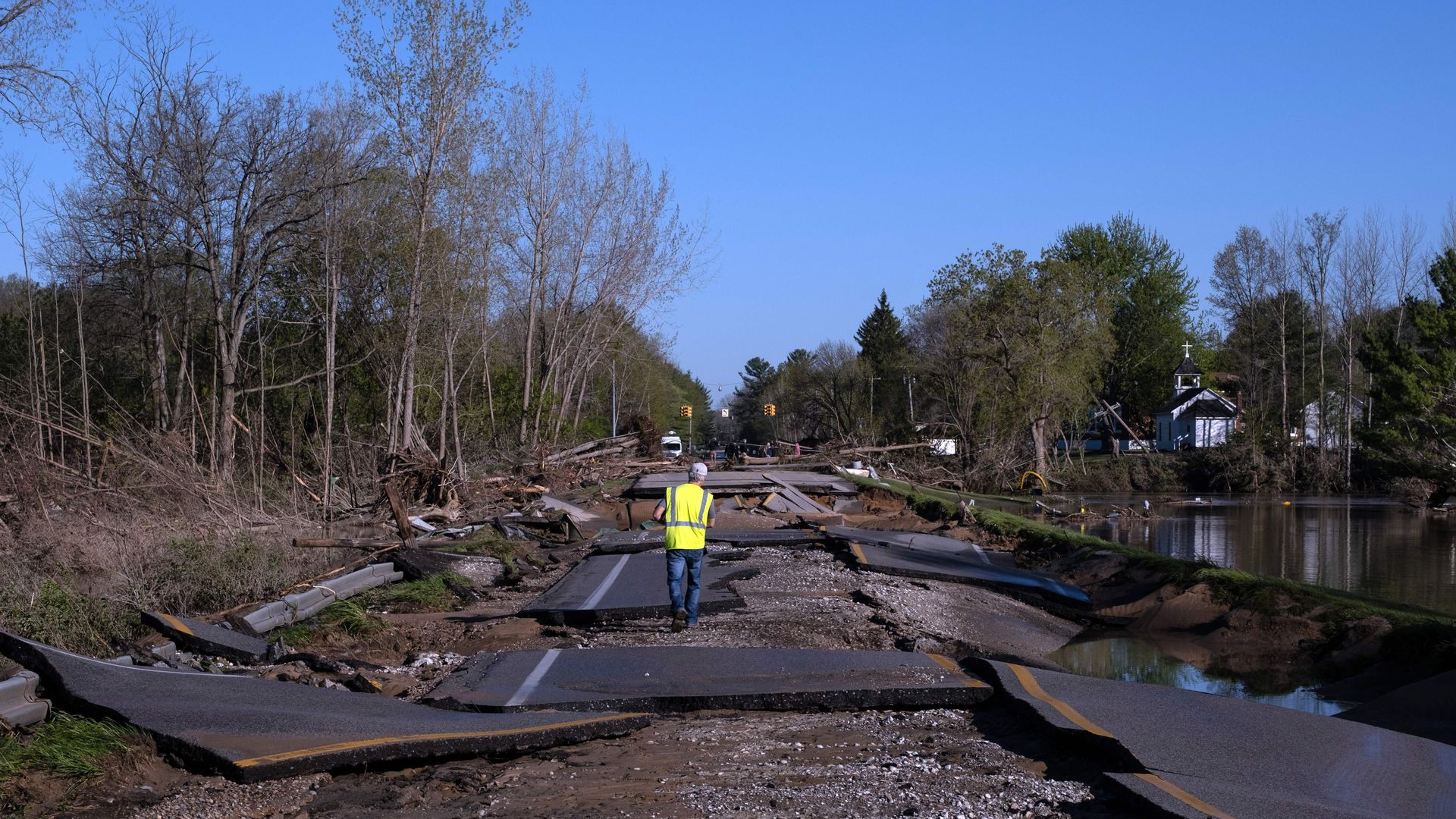
Thousands of homes are flooded and destroyed in central Michigan in the aftermath of two dams breaching in Midland County on Tuesday.
The big picture: Michigan is one of few states in the country that has not yet fully reopened amid the coronavirus pandemic — it is set to reopen May 29. But in the midst of trying to keep people socially distanced to fight the spread of the virus, over 10,000 people were forced to evacuate amid the flooding.
Information is coming out about how European nations hope to use economic stimulus packages to bolster deployment of climate-friendly energy sources.
Why it matters: The UN, International Energy Agency, International Monetary Fund and others want governments to use big pandemic response plans to help accelerate the global energy transition.
The coronavirus pandemic is remaking city landscapes worldwide, and the ultimate scope and duration of the changes will influence the future of urban mobility, pollution and even global oil demand.
Driving the news: Many cities are changing street uses and restricting cars (to varying degrees) to create new and socially distant opportunities for pedestrians, cyclists and diners.