OPEC+, led by mega-producers Saudi Arabia and Russia, reached a tentative agreement Thursday to impose large cuts in oil production as the coronavirus pandemic fuels an unprecedented collapse in demand, per Bloomberg and Reuters.
Why it matters: The revival of the OPEC+ collaboration patches up the early March rupture between the countries, which had pushed already depressed prices down much further by threatening to unleash even more new supplies into the saturated market.
Analysis from a University of Chicago energy think tank takes stock of the steep declines in power consumption in multiple regions stemming from the coronavirus pandemic.
Why it matters: While the stunning drop in oil demand is forcing a geopolitical reckoning, changes in electricity consumption provide their own metric of economies thrown into reverse.
The next two days will be pivotal for determining whether large oil-producing countries can partially stabilize an industry reeling from very low prices and the historic, coronavirus-fueled collapse in demand.
Driving the news: The OPEC+ group led by Saudi Arabia and Russia begin meeting remotely later Thursday morning to discuss production cuts, to be followed by a virtual Friday meeting among G20 energy ministers that includes the U.S.
Air travel — and the jet fuel powering it — are plummeting alongside most other parts of our modern economy as vast swaths of the world shut down to fight the coronavirus.
The big picture: Data that has newly become available shows the dramatic impact of global shutdowns, which will reverberate across the livelihoods of people working in these sectors.
Pain in the U.S. oil patch from the coronavirus outbreak is no longer on the horizon. It's here, and several new reports and data points show how quickly it's happening.
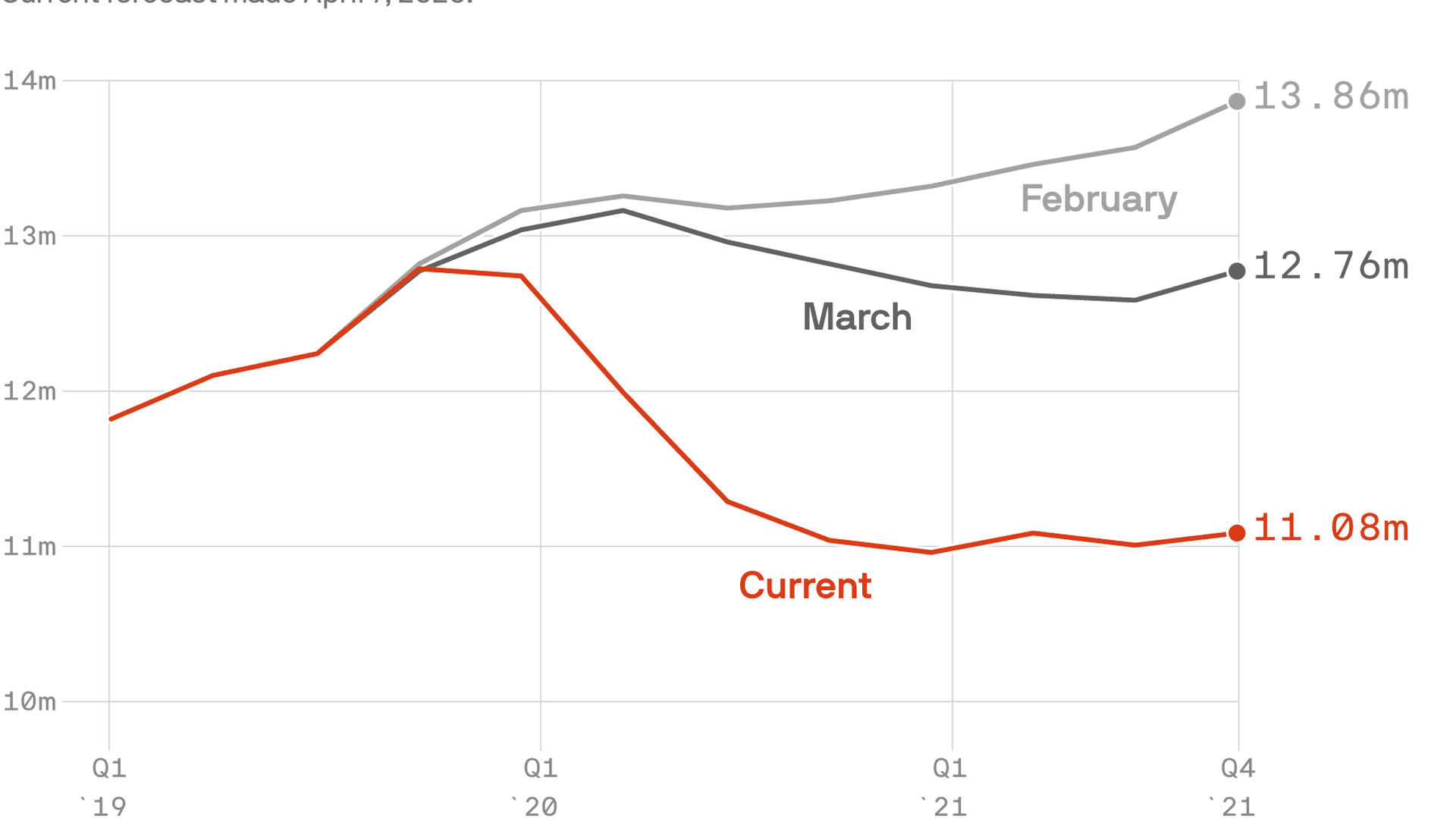
Driving the news: The Energy Information Administration yesterday released a sharp downward revision to its U.S. crude oil production forecast.
Global sales of electric vehicles are projected to drop by 43% this year as the technology faces a series of overlapping problems, the consultancy Wood Mackenzie finds in an analysis.
Driving the news: "The coronavirus outbreak, potential delays to fleet purchasing due to lower oil price and a wait-and-see approach to buying new models have all contributed to this decrease in projected sales," they write.
Russia is balking at the idea that market-driven declines in U.S. oil output could represent a significant contribution to a new global production-cutting deal, Bloomberg and Reuters reported this morning.
Why it matters: The Russian posture comes ahead of OPEC+ talks Thursday and a meeting of G20 energy ministers Friday.