Air travel — and the jet fuel powering it — are plummeting alongside most other parts of our modern economy as vast swaths of the world shut down to fight the coronavirus.
The big picture: Data that has newly become available shows the dramatic impact of global shutdowns, which will reverberate across the livelihoods of people working in these sectors.
Pain in the U.S. oil patch from the coronavirus outbreak is no longer on the horizon. It's here, and several new reports and data points show how quickly it's happening.
Driving the news: The Energy Information Administration yesterday released a sharp downward revision to its U.S. crude oil production forecast.
Global sales of electric vehicles are projected to drop by 43% this year as the technology faces a series of overlapping problems, the consultancy Wood Mackenzie finds in an analysis.
Driving the news: "The coronavirus outbreak, potential delays to fleet purchasing due to lower oil price and a wait-and-see approach to buying new models have all contributed to this decrease in projected sales," they write.
Russia is balking at the idea that market-driven declines in U.S. oil output could represent a significant contribution to a new global production-cutting deal, Bloomberg and Reuters reported this morning.
Why it matters: The Russian posture comes ahead of OPEC+ talks Thursday and a meeting of G20 energy ministers Friday.
Coronavirus patients in more polluted parts of the United States are more likely to die from the illness than those in cleaner areas, according to a new Harvard University analysis of 3,080 counties across the country.
Why it matters: The study indicates a correlation between long-term exposure to air pollution and heightened death rates associated with the virus. Its findings could impact how medical resources necessary to respond to the virus are being distributed throughout the U.S., per the New York Times.
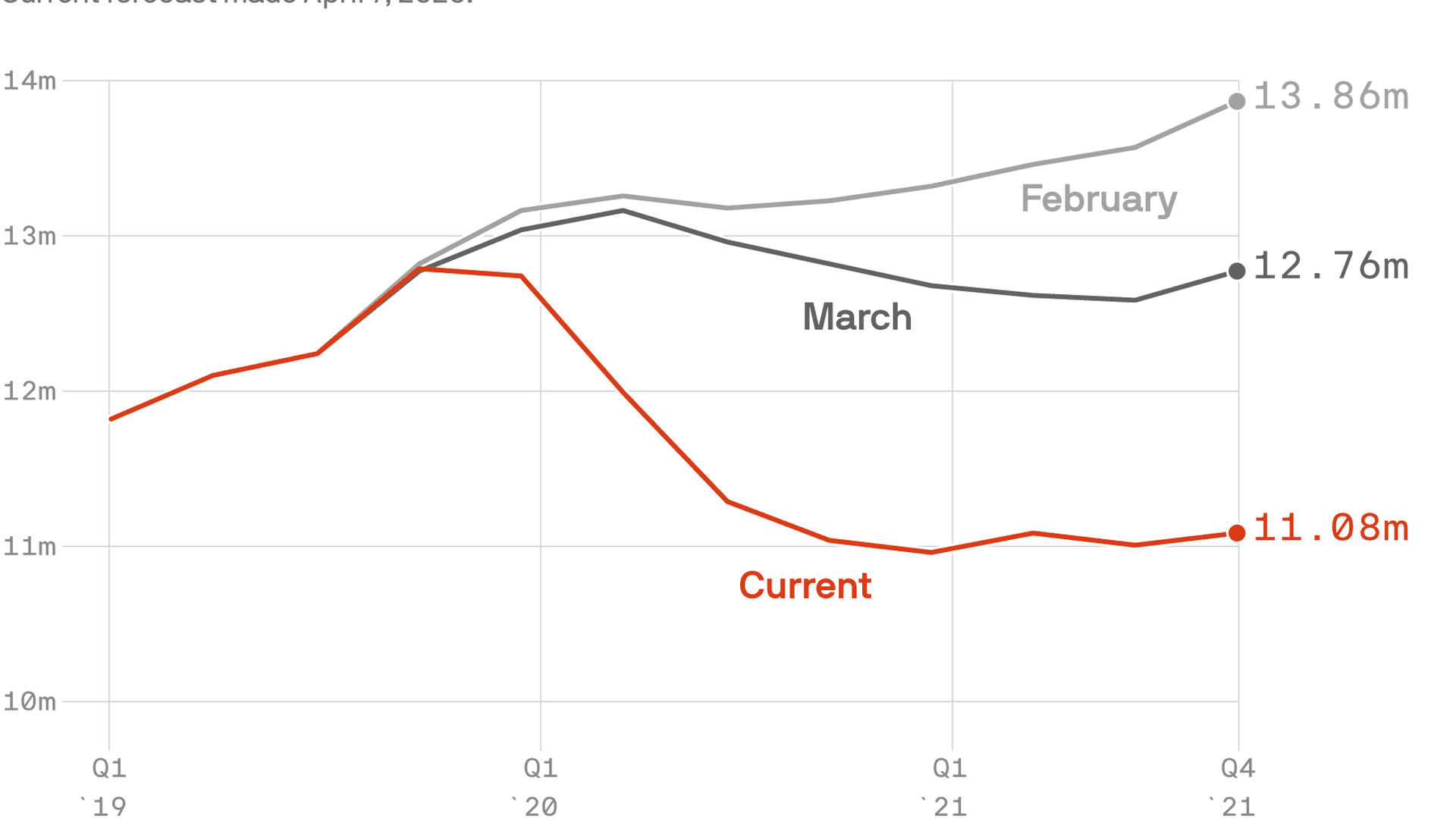
The Energy Department released revised projections Tuesday that see U.S. crude oil production dropping substantially this year and remaining at lower levels through 2021.
Why it matters: The steep downward revisions are fresh signs of how low prices and collapsing oil demand from the coronavirus pandemic are upending the oil sector.
ExxonMobil is slashing planned capital spending this year by 30%, with the biggest reductions coming in the U.S. shale patch, the company announced on Tuesday.
Why it matters: It's the latest sign of how oil producers large and small are getting hit by the price collapse and demand cratering due to COVID-19.
President Trump may have said out loud what's on the minds of people wondering about the prospects for a new international deal to pare back oil production: whether the U.S. could essentially join without a firm commitment.
Driving the news: On Monday evening, Trump said OPEC has not explicitly asked him to press U.S. oil companies to cut production, but added that U.S. output is slated to fall due to market forces as demand collapses.
International Energy Agency executive director Fatih Birol has a tough job these days — responding to an unprecedented crisis now without losing sight of an existential one that must be tackled over decades.
Driving the news: He spoke to Axios yesterday about his work to help stabilize oil markets and ensure coronavirus doesn't sap governments' and companies' work on global warming.