The Energy Information Administration is trimming its 2020 oil demand forecast by 300,000 barrels per day, citing the effects of the novel coronavirus outbreak.
Why it matters: It's the latest sign of how the outbreak is changing oil market forecasts and creating headwinds for a sector already struggling with middling prices.
BP said Wednesday that it is reorienting its business with new climate targets — including first-time emissions commitments for its products' use in the economy — and a new team to help countries, cities and other companies cut carbon.
Why it matters: It's the latest sign of how multinational oil-and-gas giants — especially European-headquartered players — are expanding climate pledges under intense pressure from activists and investors.
House Republicans will detail one pillar of their three-pronged climate plan on Wednesday, focused on capturing carbon emissions.
Driving the news: The policies include subsidizing tree growth to build more wooden buildings, making permanent a subsidy for technology capturing CO2, and boosting federal support for that same tech.
113 animal species need an "emergency intervention" to help support their recovery after they lost at least 30% of their habitat to Australia's bushfires — and many lost substantially more than that.
Details: That's according to a report released by Australia's Environment Department, which consulted a panel of experts to identify species in need of urgent help — including the koala.
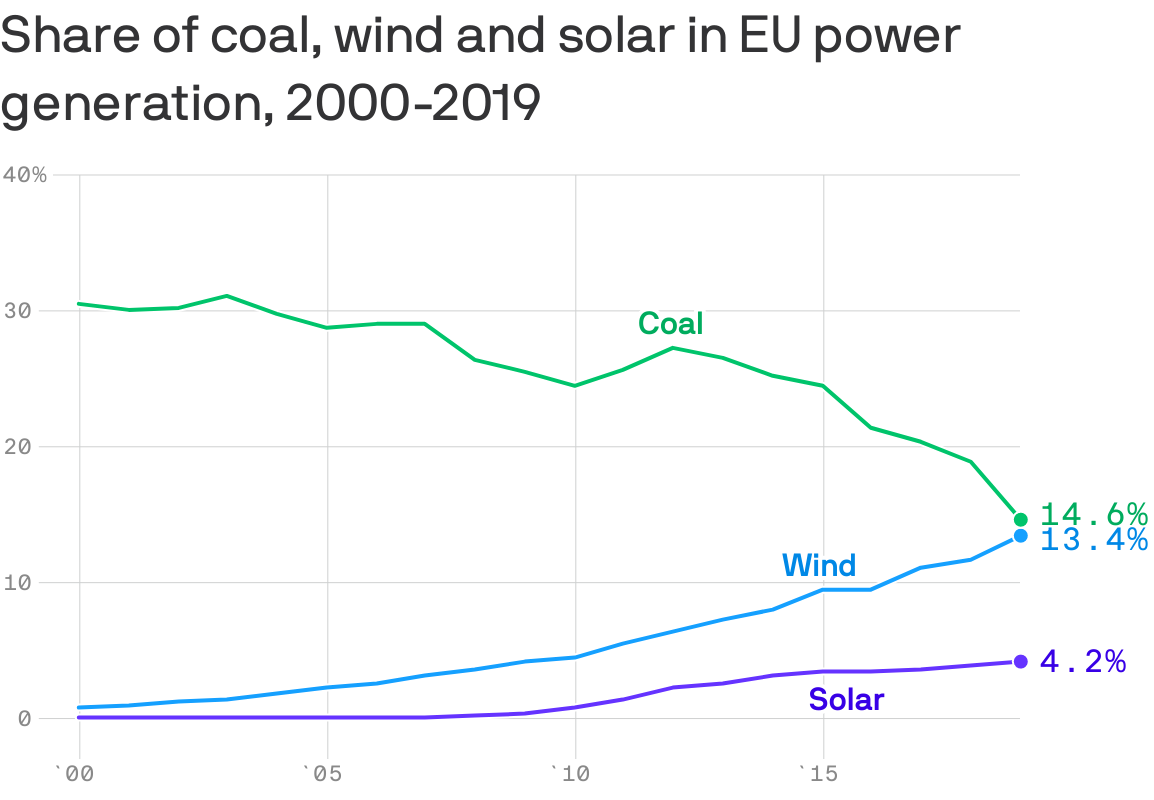
Here's one thing that helped global emissions growth seemingly flatten: Wind and solar power combined outpaced coal-fired generation in the EU for the first time last year, a pair of think tanks said.
Why it matters: Energy transitions are notoriously slow — until they're not.
Sales of residential batteries in California are expected to quadruple this year to over 50,000 storage systems, the research firm BloombergNEF said in a short new analysis.
Why it matters: It adds specifics to the expectation that power outages — notably widespread blackouts by utilities seeking to cut wildfire risk — will juice sales.
An IEA analysis released Monday found that energy-related CO2 emissions were flat last year at 33.3 gigatonnes.
Why it matters: Scientific analyses show that steep cuts — not just a plateau — are needed to meet the temperature goals of the Paris climate agreement.
The new White House budget proposal, which would slash Energy Department science and R&D programs, is awkward for congressional Republicans who are taking pains to emphasize "innovation" to fight climate change.
The state of play: To some extent this is all theater because nobody expects this budget to resemble what's ultimately appropriated — but it complicates GOP efforts to tout their ideas when the president, who commands fierce loyalty from the party, is pushing in the other direction.