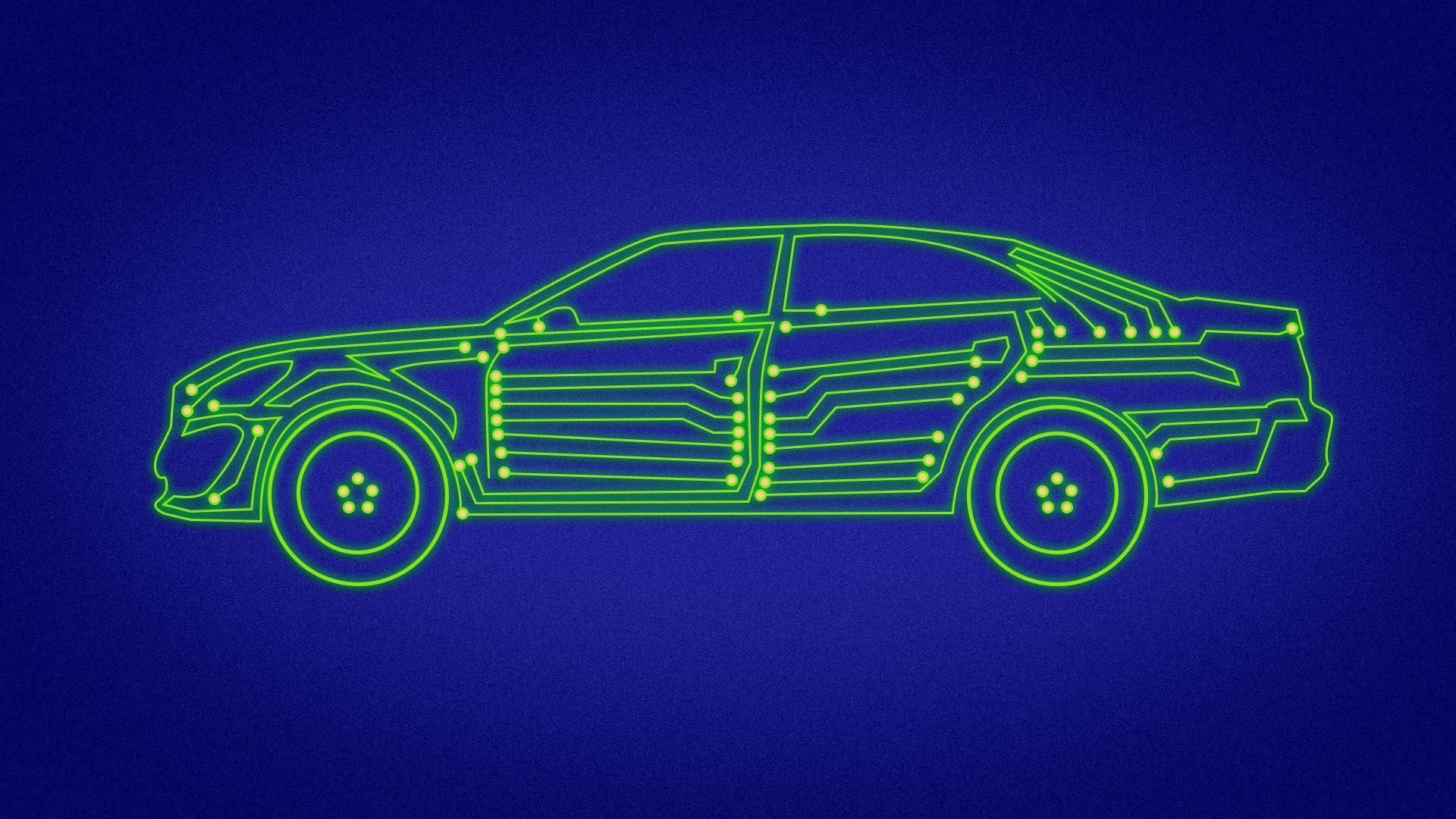
With more than 100 million lines of code in the modern car, advanced software features are testing the limits of the computer hardware under the hood. And it will only get worse: Electric, connected and automated cars will devour even more computing power in the future.
Why it matters: Automakers face an urgent need to redesign their vehicles' electronic architecture — essentially their brain and central nervous system — to handle the onslaught of advanced features that will one day allow cars to talk to each other and drive themselves.
While General Motors was announcing plans Thursday for a huge $2.3 billion battery factory to boost production of electric vehicles, a Toyota executive warned of a looming industry disaster, calling it "electrified armageddon."
Why it matters: Somebody is wrong. Either GM's heavy spending on battery-electric vehicles will be wasted, or Toyota will be caught flat-footed when the rest of the market goes electric.
Former senator and Secretary of State John Kerry, who has spent decades working on climate change, endorsed Joe Biden Thursday in a statement that included a shout-out to Biden's ability to tackle the topic.
Meanwhile, the upstart, leftist Sunrise Movement released its scorecard of candidates' climate plans and commitment to action. It puts Biden's far behind Elizabeth Warren and especially Bernie Sanders, who scored the highest with his aggressive (and, some climate experts say, questionably constructed) $16 trillion proposal.
A new report shows the skyrocketing importance of "ESG" issues — environmental, social and governance concerns — among institutional investors, who place big financial bets on companies.
Why it matters: Long considered a money-losing nicety, ESG is rapidly going mainstream. The Edelman poll of big investors found that 52% said they'd put more trust in a company that linked executive compensation to ESG goals — like data privacy and cybersecurity, diversity and inclusion, and fighting global warming.
OPEC and allied producers — notably Russia — are coalescing around a plan to deepen their joint crude oil production restrictions by 500,000 barrels per day, according to multiple reports from Vienna, where the OPEC+ group is currently gathered.
Why it matters: The emerging agreement signals how petro-states are grappling with how to prop up prices amid rising supplies from the U.S. and elsewhere, and sluggish global demand that's hampered by trade battles.
BP announced Wednesday that it will start providing Amazon with renewable electricity to fuel European data centers that power the tech giant's cloud platform.
Why it matters: Data centers are very energy thirsty, and account for a great deal of the tech sector's carbon emissions.
Models that climate scientists used in recent decades to project temperature changes have generally been very accurate, a new peer-reviewed study concludes.
Why it matters: It serves to rebut conservative opponents of proposals aimed at cutting emissions, who have long argued that models haven't gotten it right as part of broader attacks on climate science.
OPEC and Russia are deciding next steps in their three-year effort to restrict production in order to prop up prices, during their two-day meeting currently underway in Vienna.
Why it matters: It will reveal how Saudi Arabia and Russia, the OPEC+ group's dominant players, will continue grappling with soft global demand and the rise of U.S. shale production.
GM and Korea's LG Chem announced a $2.3 billion joint venture on Thursday to mass-produce battery cells for electric vehicles in Ohio, creating 1,100 new jobs.
Why it matters: The new battery plant could likely employ many of the 1,200 auto workers who lost their jobs when GM shut its Lordstown car assembly plant in March. And it's a further sign of GM's commitment to an electric car future.
There's fresh evidence that powerful industries are slowly shifting on climate change to keep up with the times and protect their interests.
Driving the news: The Natural Gas Supply Association on Tuesday said it backs carbon pricing — a message partly aimed at states crafting emissions-cutting plans.