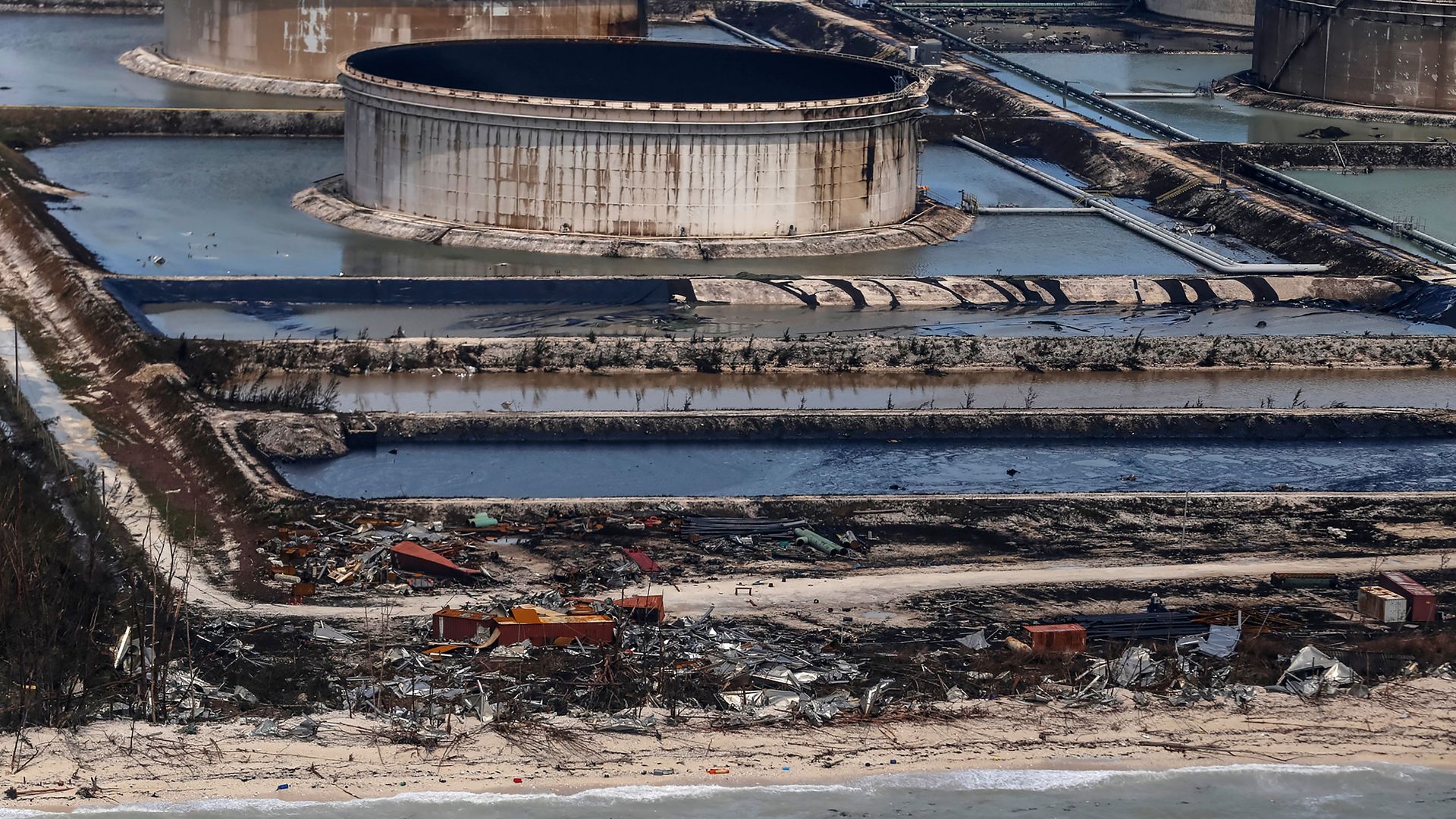
Oil seeped from storage tanks on Grand Bahama Island on Friday following storm damage from Hurricane Dorian, the AP reports.
Our thought bubble, via Axios' Amy Harder: The oil spill is a stark and tragic reminder of the risk we face by using polluting and inflammable energy types, which are inherently more dangerous in extreme weather than, say, wind turbines.
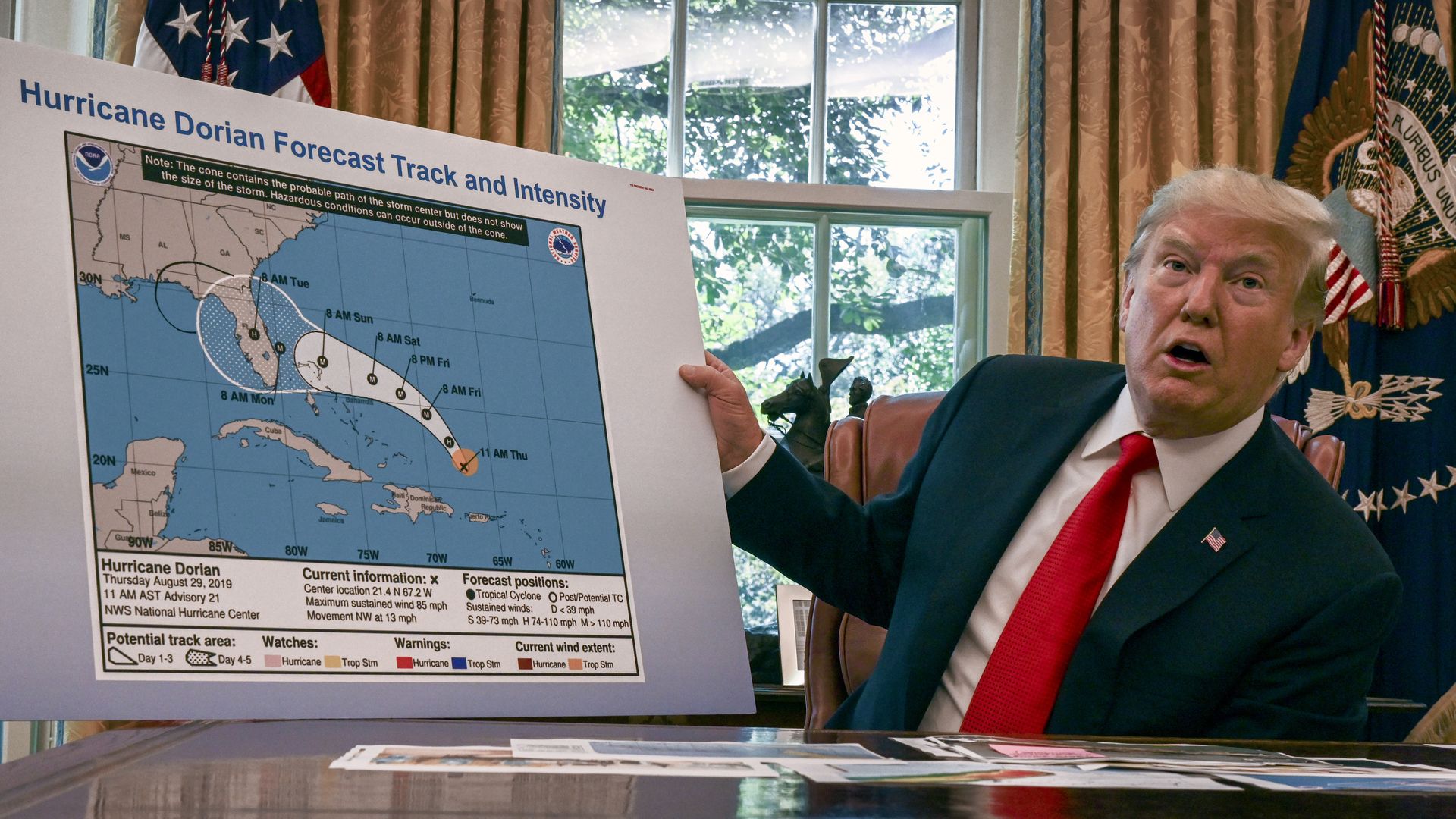
Hurricane Dorian’s outer most winds, blowing between 39 and 73 mph, had at most a 20% chance of reaching Alabama between Tuesday, August 27 and Monday, Sept. 2, NOAA said in an unsigned statement.
Why it matters: NOAA's statement confirms President Trump's weeklong insistence that he was correct about the storm threatening Alabama. The Birmingham office of the National Weather Service refuted the president's comments in a tweet on Sept. 1. NOAA, in their Friday statement, said the Birmingham office's tweet was “inconsistent with probabilities from the best forecast products available at the time.”
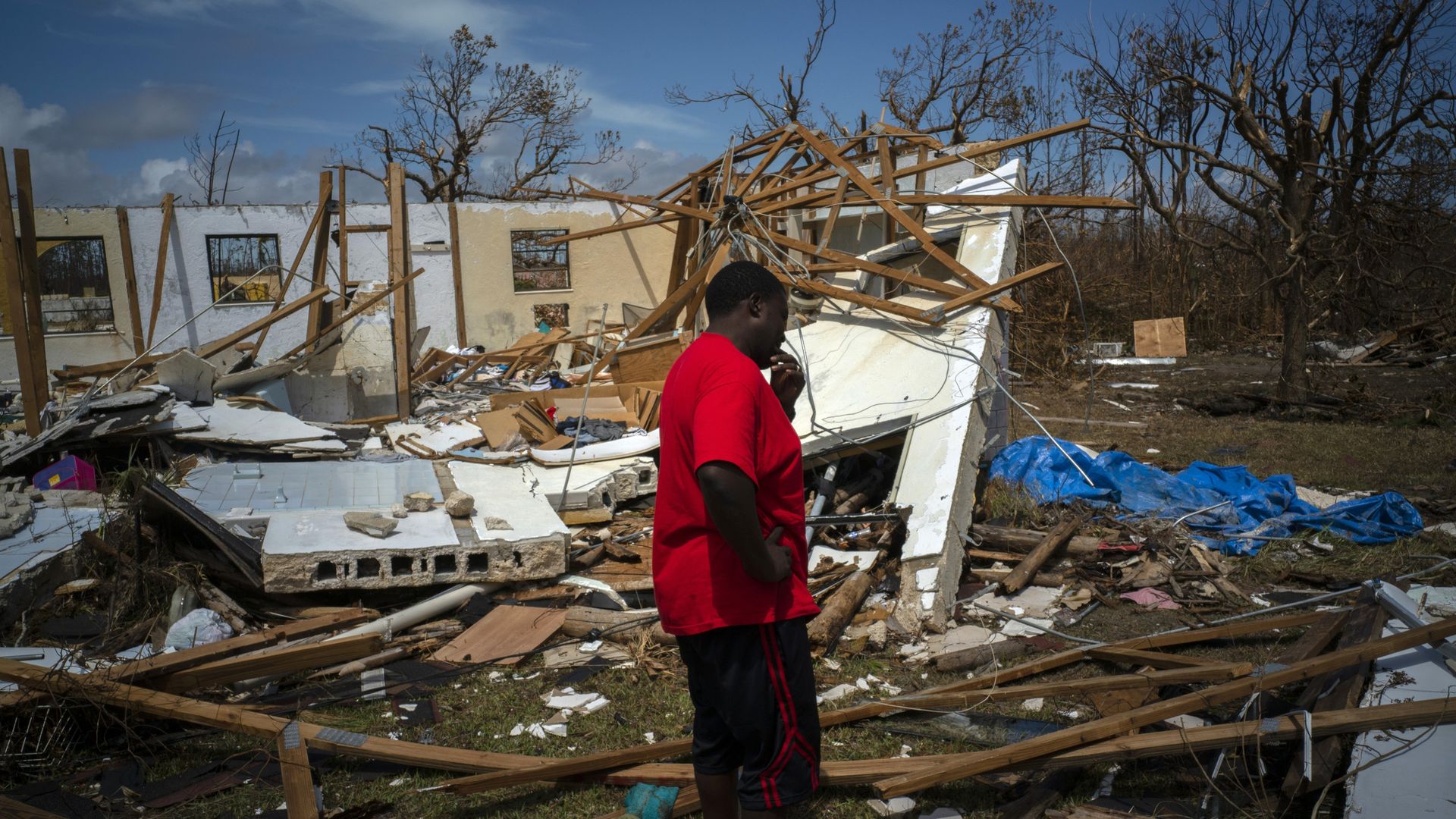
The Dorian death toll in the Bahamas officially has reached 30 people — but hundreds are still missing, and authorities said that figure could soar.
The impact: The final death count will be "staggering," Health Minister Duane Sands told local radio: "[T]he public needs to prepare for unimaginable information about the death toll and the human suffering," per the BBC.
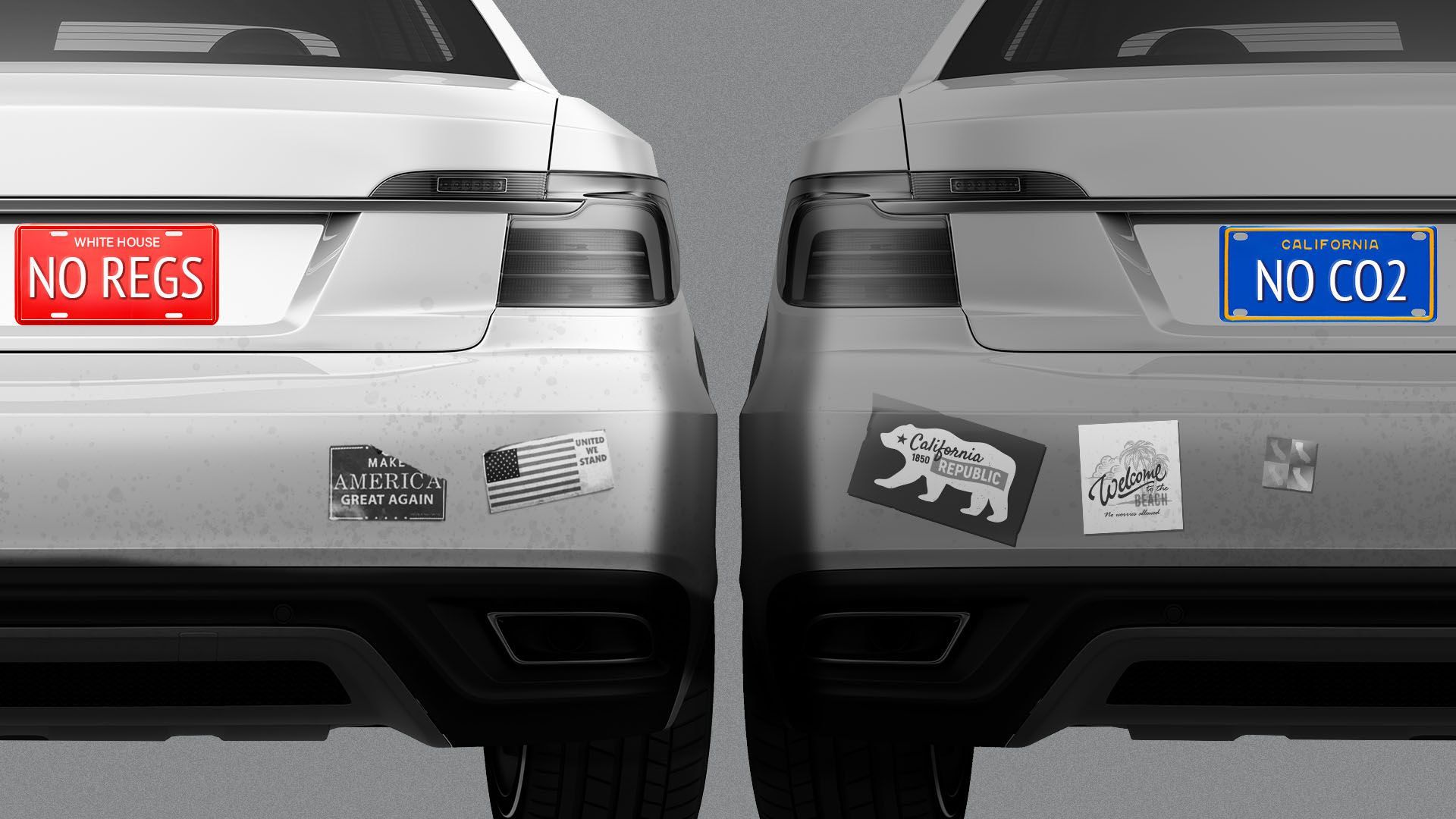
The Justice Department (DOJ) has opened an antitrust inquiry into 4 major automakers who recently struck a deal with California to boost emissions standards for their nationwide fleets, The Wall Street Journal reports.
Why it matters: The report, if correct, signals the opening of a new and high-stakes front in the fight between California and the White House over vehicle emissions and mileage rules.
The Trump administration could soon move to revoke California's authority to set vehicle pollution rules that are tougher than federal standards, per multiple reports Thursday.
Why it matters: It’s the next phase in the high-stakes battle between the White House and California over carbon emissions and mileage rules and a key part of the wider White House effort to freeze Obama-era standards, rather than allowing them to get significantly tougher through the mid-2020s.
Technology used in ride-hailing and other new mobility services could be used to make public bus networks more environmentally friendly and convenient.
Why it matters: Public buses are frequently criticized as unreliable, inefficient and alternatively near-empty or so full that they skip stops, but electric buses with next generation technology and flexible routes could help address congestion and emissions.
The smart buildings startup 75F Inc. has raised $18 million in Series A funding from backers including the Bill Gates-led Breakthrough Energy Ventures and the Oil & Gas Climate Initiative's VC arm.
Why it matters: Commercial buildings are a significant source of carbon emissions, so tech that helps make them more efficient is important from a climate standpoint. Plus, it's the first time OGCI, a coalition of many of the world's largest oil-and-gas companies, has invested in the buildings space.
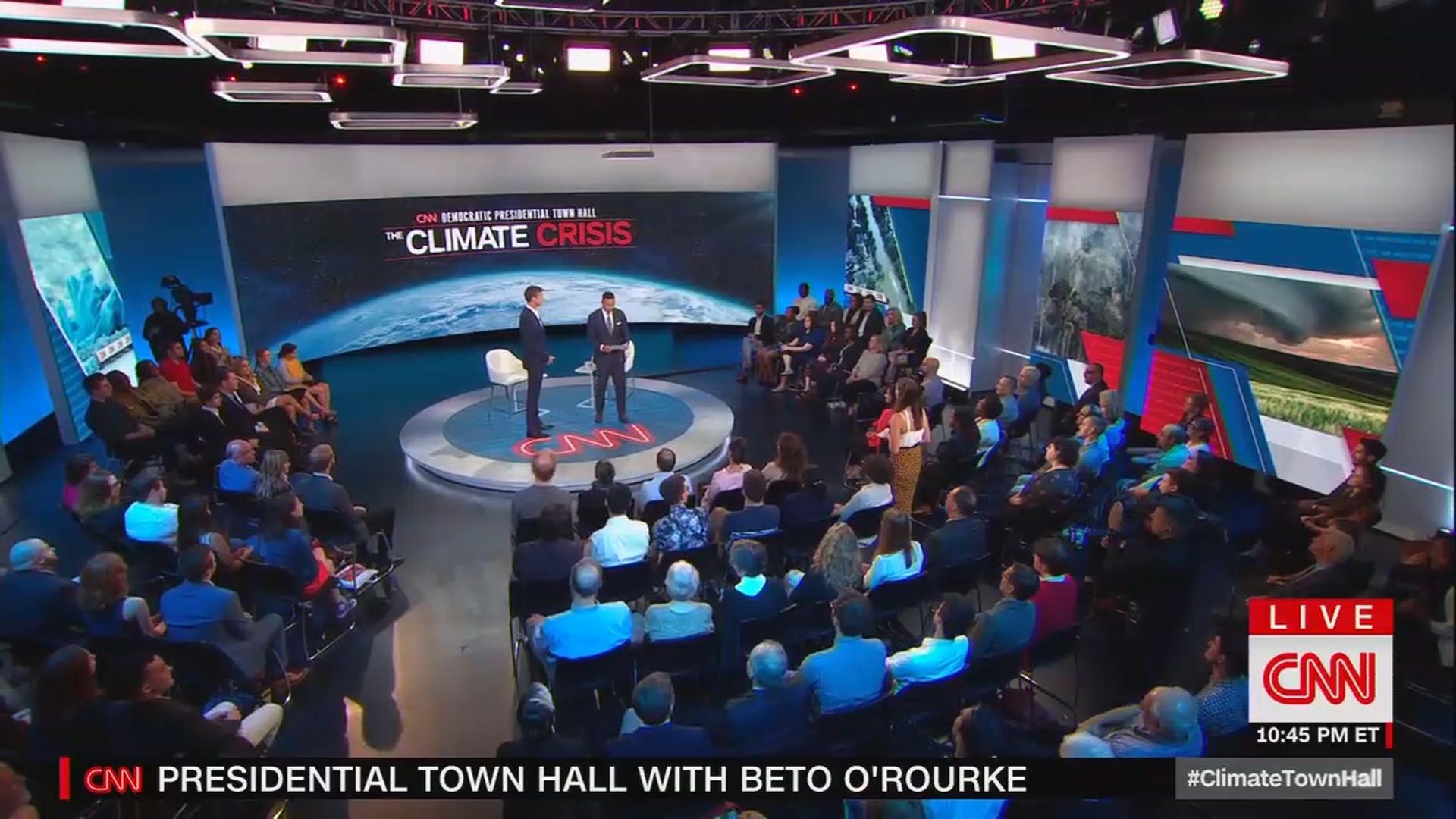
2020 Democratic White House hopefuls talked about climate change for roughly 7 hours last night in a CNN town hall — where it became clear that the whole landscape has shifted on the topic.
Why it matters: The network was past asking if candidates believe in human-induced warming. The first question to Joe Biden was about whether his plan for achieving net-zero emissions by 2050 is too weak, highlighting just how much the center of gravity on the left has moved in recent years.
Ten 2020 Democratic candidatestook questions at a 7-hour CNN town hall Wednesday night about howto tackle a "climate crisis."
Why it matters: It was their chance to talk to a broad audience about proposals that some of them have unveiled in just the last few days.Scientific reports from the last 2 years suggestthe world is at tipping point to confront the effects of global warming.