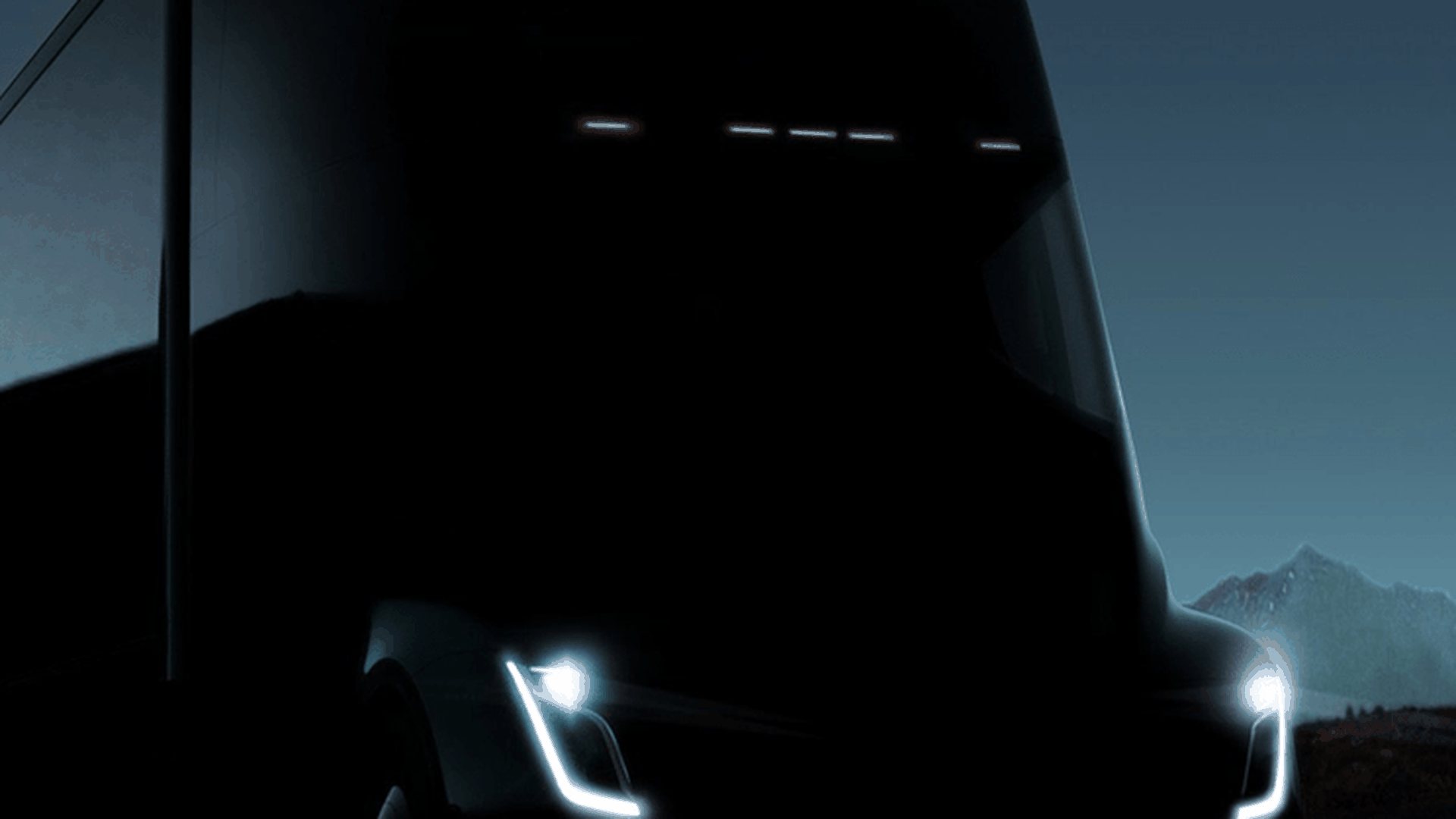
In a move to capture a piece of one of the most promising sectors of robotization, entrepreneur Elon Musk plans tomorrow evening to unveil a Tesla semi-truck, a prototype electric with self-driving technology. According to one estimate, its enormous battery could make it double the price of a standard diesel-propelled vehicle. But Musk has said he already has customers waiting for the vehicle.
The jobs impact: There are about 3.5 million truckers in the U.S., in addition to about 5 million workers in other parts of the industry. Many of those jobs are threatened in a future of autonomous freight transportation.
From a fascinating Rolling Stone profile on Elon Musk, a description of how he thinks of the scientific method, in "mostly his own words":
"Ask a question."
"Gather as much evidence as possible about it. "
"Develop axioms based on the evidence, and try to assign a probability of truth to each one."
"Draw a conclusion based on cogency in order to determine: Are these axioms correct, are they relevant, do they necessarily lead to this conclusion, and with what probability?"
"Attempt to disprove the conclusion. Seek refutation from others to further help break your conclusion."
"If nobody can invalidate your conclusion, then you're probably right, but you're not certainly right."
A new report from IHS Markit looks at the combination of the rise of electric vehicles, autonomy and "mobility as a service" trends such as ride-sharing — factors that will erode oil's stranglehold on transportation fuels by 2040.
One possible future: Add it all up and you have a "convergence of technological, political, and economic forces could fundamentally alter the automotive ecosystem." They summarize some of the findings in a blog post, and here are a few key points:
The IEA's World Energy Outlook for 2017 revealed that total global energy demand now rises more slowly than in the past, but still increases by 30% between now and 2040 under the New Policies model, which looks at nations' existing and officially announced policies.
Here's one way to think about the scope of the U.S. shale oil boom — by 2025 it could rival Saudi Arabia's ramp up decades ago as "the greatest increase seen over a sustained period in the industry's history," according to the IEA. Their new World Energy Outlook released last night seeks to put the U.S. oil and natural gas boom in historical context.