Syria announced its plans to sign the Paris Climate accord during United Nations climate talks on Tuesday, per the New York Times. The move, which follows Nicaragua's announcement to participate in the agreement last month, means the U.S. is now the only country opposed to participating in the pact.
Why it matters: Syria joining the climate pact underscores — but won't change — the Trump administration's lone position withdrawing from it. It provides a talking point to those urging the president to rejoin, but the calculations inside the White House have nothing to do with what other countries are doing, and everything to do with how the deal could (or couldn't) help America.
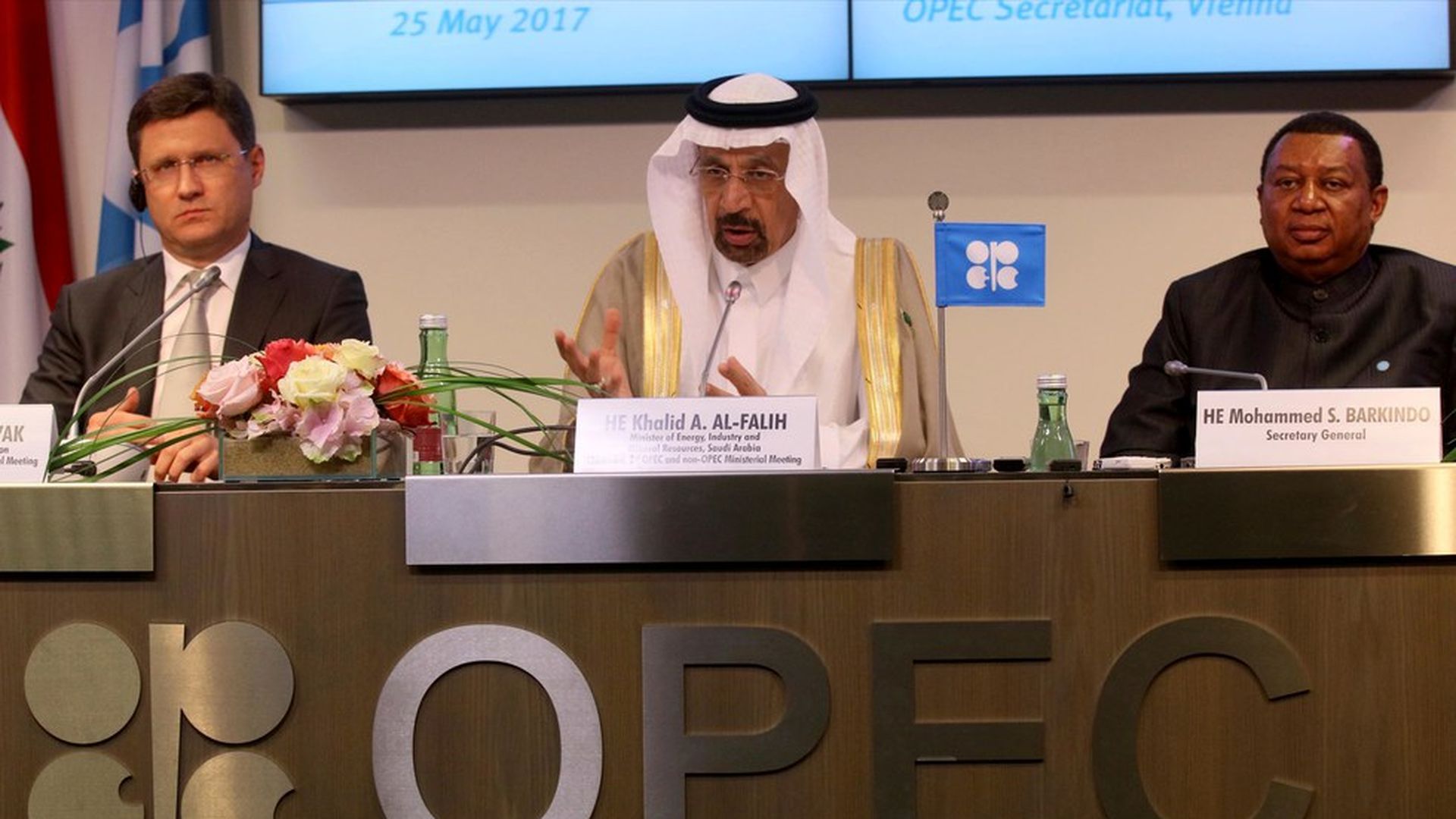
OPEC is out today with its big annual World Oil Outlook, a detailed analysis of supply and demand trends in coming decades that puts meat on the bones of some top-line conclusions that Secretary General Mohammad Barkindo offered in London last month.
Why it matters: Yes, OPEC has plenty of reasons to shape a narrative around future oil demand. But the forecast nonetheless adds a detailed entry to the mix of analyses of the global energy pictures, and shows how the powerful cartel is positioning itself.
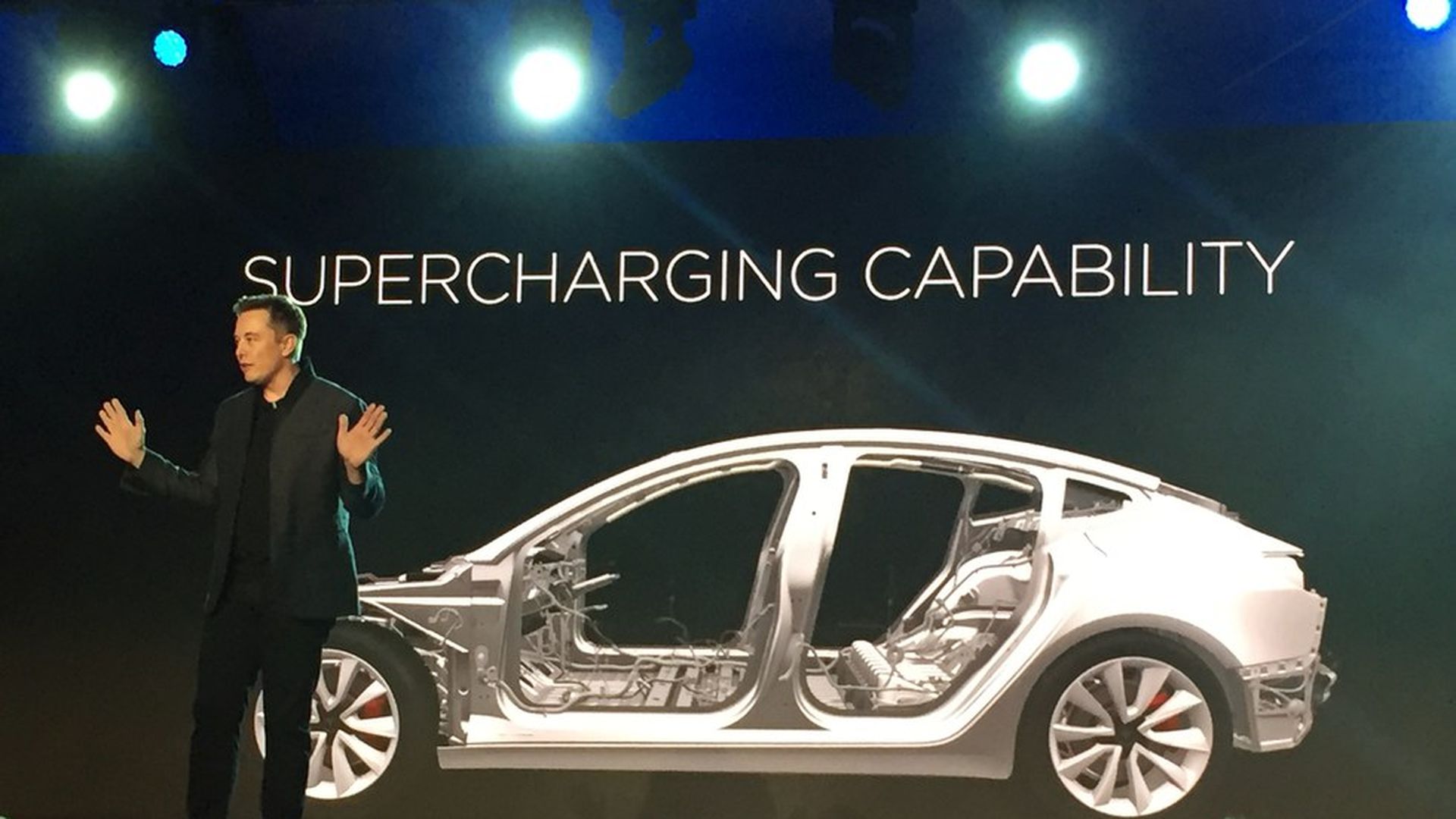
A second senior battery executive in three months has left Tesla, the electric car company. Jon Wagner, director of battery engineering, exited in recent weeks, Jalopnik's Ryan Felton reports, and his Linkedin page says he is now working on a "stealth startup." That comes after the August departure of Kurt Kelty, who was director of battery technology and had been with Tesla since 2006, before the company produced its first car.
Why it matters: Tesla declined to comment. But the dual exits come at a crucial inflection point for the company, which is attempting to transform itself from a niche carmaker for the rich into a mainstream giant that triggers the creation of a global electric car industry. Key to that is the success of the mainstream-priced Model 3, which has had a choppy few months since its launch in July.

/2017/12/15/1513306728270.gif?w=3840)