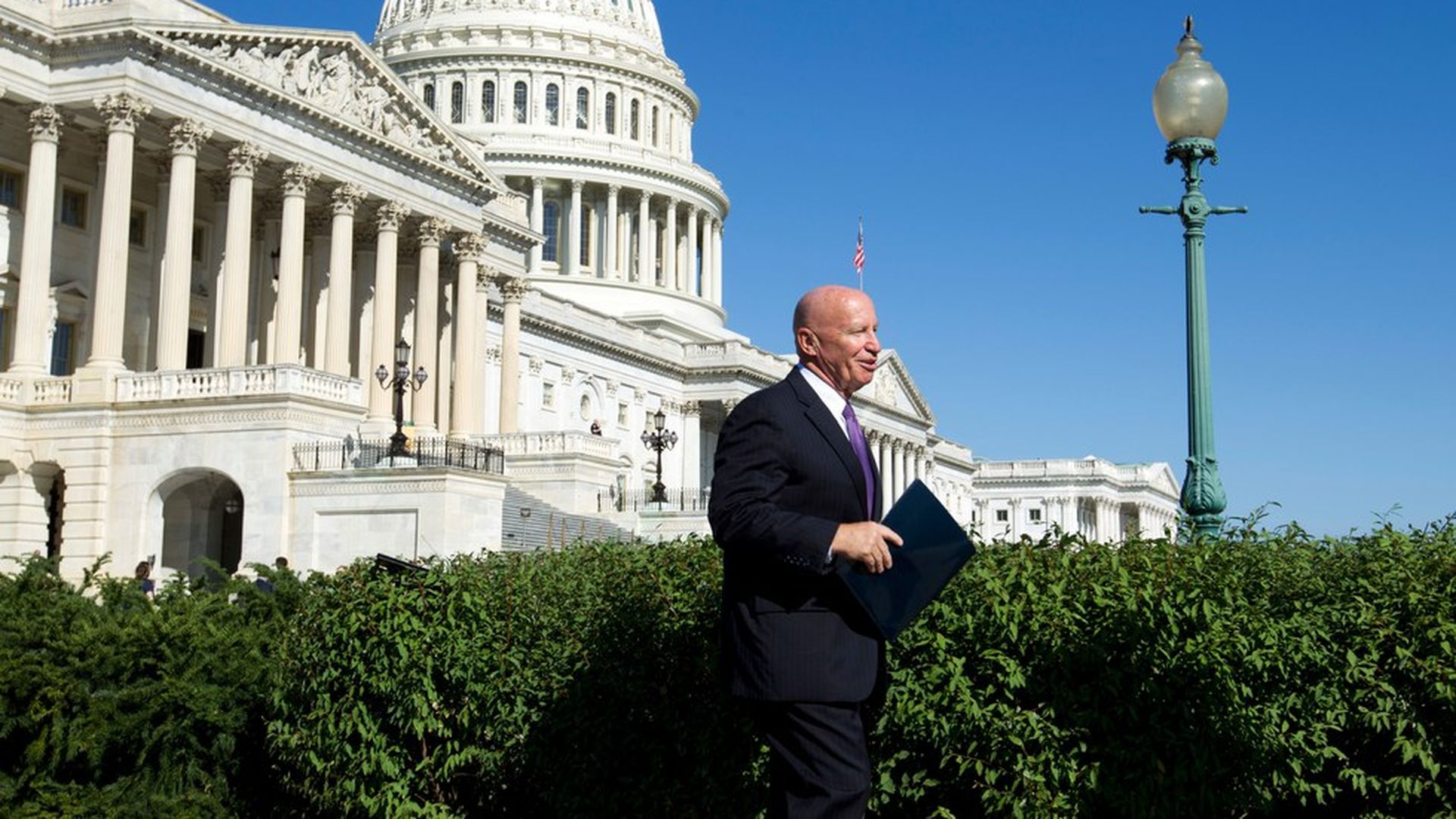
House Republicans unveiled their new tax plan Thursday, and although there will likely be some changes as it moves through Congress, here's who stands to gain and who stands to lose from the current plan. Trump wants to pass the plan through the House by Thanksgiving and through the Senate by late December.
Falling costs for developing wind and solar power plants are giving those technologies a market edge over coal and nuclear power even without tax subsidies, according to a new analysis on the changing economics of electricity from the financial advisory firm Lazard.
At an Axios and NBC discussion about the administration's energy policy priorities Thursday morning, Energy Secretary Rick Perry indicated he thinks using fossil fuels can help prevent sexual assault. The quote, in full:
"I just got back from Africa, I'm going to finish up with this, because I think I heard a lady say there are people dying. Let me tell you where people are dying, is in Africa, because of the lack of energy they have there. And it's going to take fossil fuels to push power out into those villages in Africa, where a young girl told me to my face, 'one of the reasons that electricity is so important to me is not only because I'm not going to have to try to read by the light of a fire and have those fumes literally killing people.' But also from the standpoint of sexual assault. When the lights are on, when you have light that shines, the righteousness, if you will, on those types of acts. So from the standpoint of how you really affect people's lives, fossil fuels is going to play a role in that. I happen to think it's going to play a positive role."
Energy secretary Rick Perry joined an Axios/NBC event this morning, helping us drive the discussion about the administration's energy policy priorities in 2017. Perry told Axios' CEO and co-founder Jim VandeHei and NBC's Chuck Todd that he thinks climate change is real and humans "have an impact on it," but that "I still think the science is out on" whether humans cause 100% of it.
Yes, but: The scientific consensus is that human activities have been the primary driver of the warming trend since the mid-20th century.
The biggest difficulty in self-driving cars is not batteries, fearful drivers, or expensive sensors, but what's known as the "trolley problem," a debate over who is to die and who saved should an autonomously driven vehicle end up with such a horrible choice on the road. And short of that, how will robotic vehicles navigate the countless other ethical decisions, small and large, executed by drivers as a matter of course?
In a paper, researchers at Carnegie Mellon and MIT propose a model that uses artificial intelligence and crowd sourcing to automate ethical decisions in self-driving cars. "In an emergency, how do you prioritize?" Ariel Procaccia, a professor at Carnegie Mellon, tells Axios.
Crude oil exports averaged a record 2.1 million barrels per day for the week ending October 27, according to new Energy Information Administration data, marking the first time they have surpassed the 2 million threshold in EIA's weekly tallies.
Why it matters: The growing exports underscore how the shale boom and the lifting of major export restrictions in late 2015 are making the U.S. an increasingly prominent force in global crude oil markets.
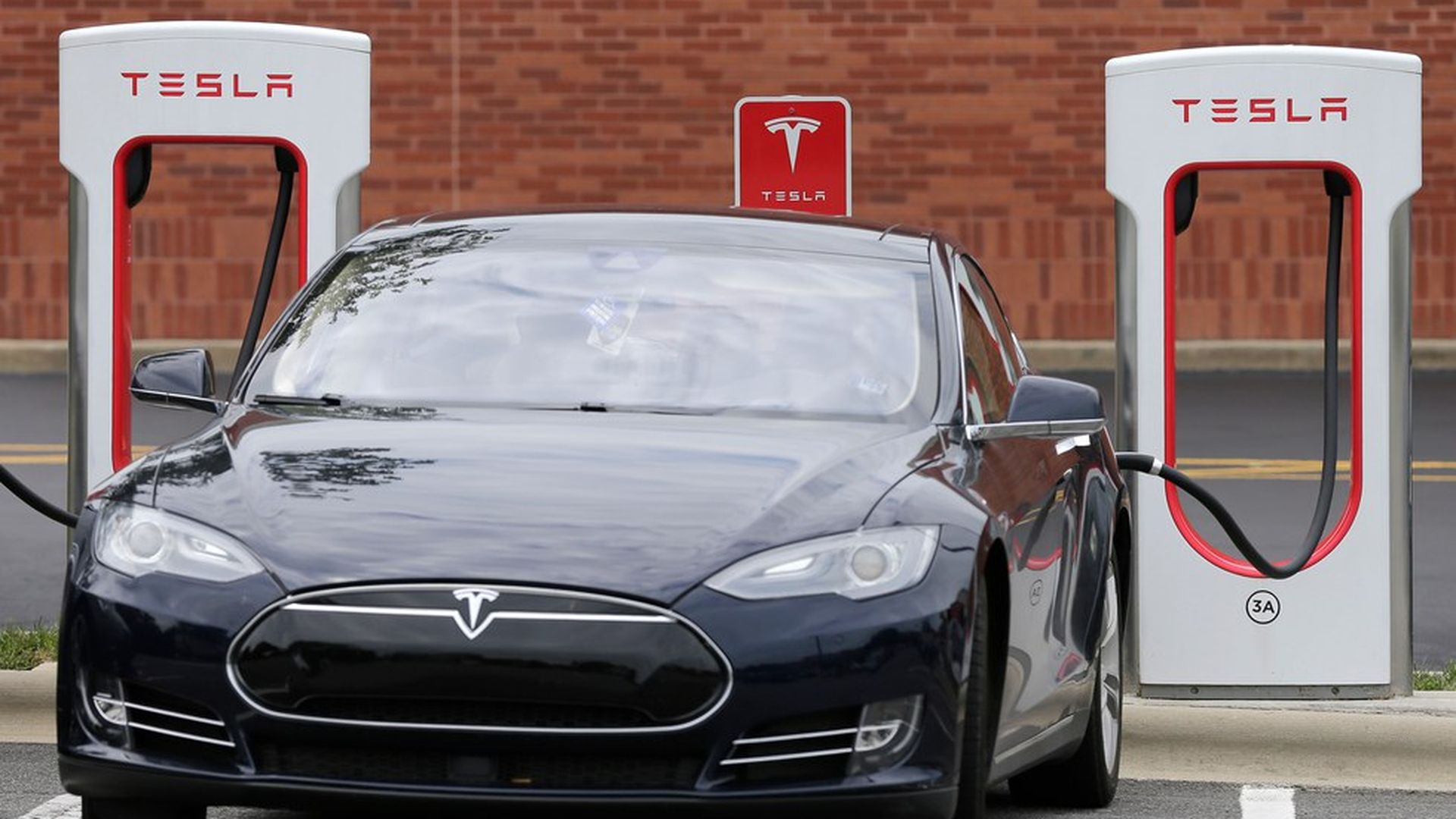
Tesla will report its third quarter earnings this afternoon at a time when the Silicon Valley company has been in something of a rough patch.
One big question: Analysts and others on the conference call with Tesla management will be keenly interested in the status of production of the Model 3, which has been far slower than the company had initially forecast.
Get ready:This Bloomberg preview looks at that and other questions facing Elon Musk's company, such as how much money Tesla is burning through to work things out with the Model 3 and the status of plans for a factory in China.