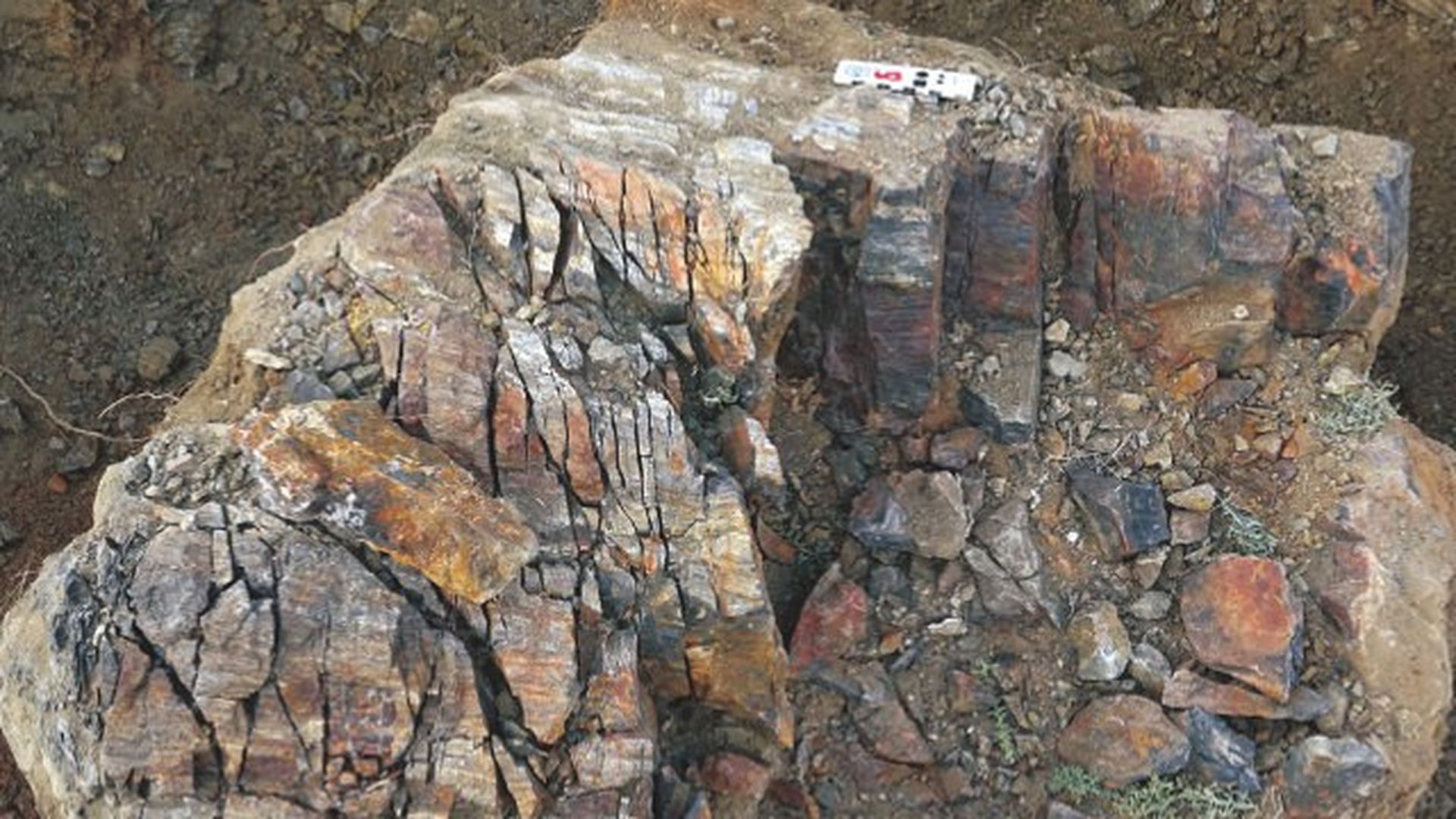
Scientists have used fossils to discern how some of Earth's earliest trees called cladoxylopsids, which helped to jumpstart the planet's earliest forests about 374 million years ago, actually managed to grow, per the Los Angeles Times. Cladoxylopsids have no living modern ancestors and are believed to be most closely related to ferns.
Why it matters: The discovery helps us to better understand how some of the key inhabitants of our planet's first forests managed to survive. In turn, knowing more about cladoxylopsids could help shed light on how early plants helped to make Earth's climate habitable for the first animals by reducing the planet's carbon dioxide levels.
The federal Energy Information Administration is out with a new report on electric vehicles and how much the market might grow. The chart below shows EIA's forecast of how much, or how little, of the global auto market that EVs will grab in coming decades.

Sunday is the fifth anniversary of Superstorm Sandy landfall. "[D]isaster planning experts say there is no place in America truly prepared for climate change and the tempests it could bring," AP's Frank Eltman and Wayne Parry write: "That is true even in New York and New Jersey, where cities and towns got slammed by deadly floodwaters that rose out of the Atlantic on the evening of Oct. 29, 2012."
Why it matters: "While billions have been spent to repair the damage, protecting vulnerable infrastructure, people and property across the nation from the more extreme weather that climate change could bring is going to require investment on a staggering scale, easily costing hundreds of billions, perhaps trillions." And some "experts worry also that the ascendance of a climate-change skeptic to the White House may put the brakes on coastal protection efforts."