Friday's energy & climate stories

How clouds could be engineered to cool the Earth

Scientists are actively exploring – on a theoretical basis – what it might take to cool the Earth if governments, businesses and individual actions collectively fail to do so in the next 15+ years. But, in nearly every case, the potential downside of such scientific actions aren't yet known, and there is no regulatory mechanism yet in place to govern or monitor the efforts, several leading scientists argue in Science this week.

Rep. Upton weighs joining climate caucus
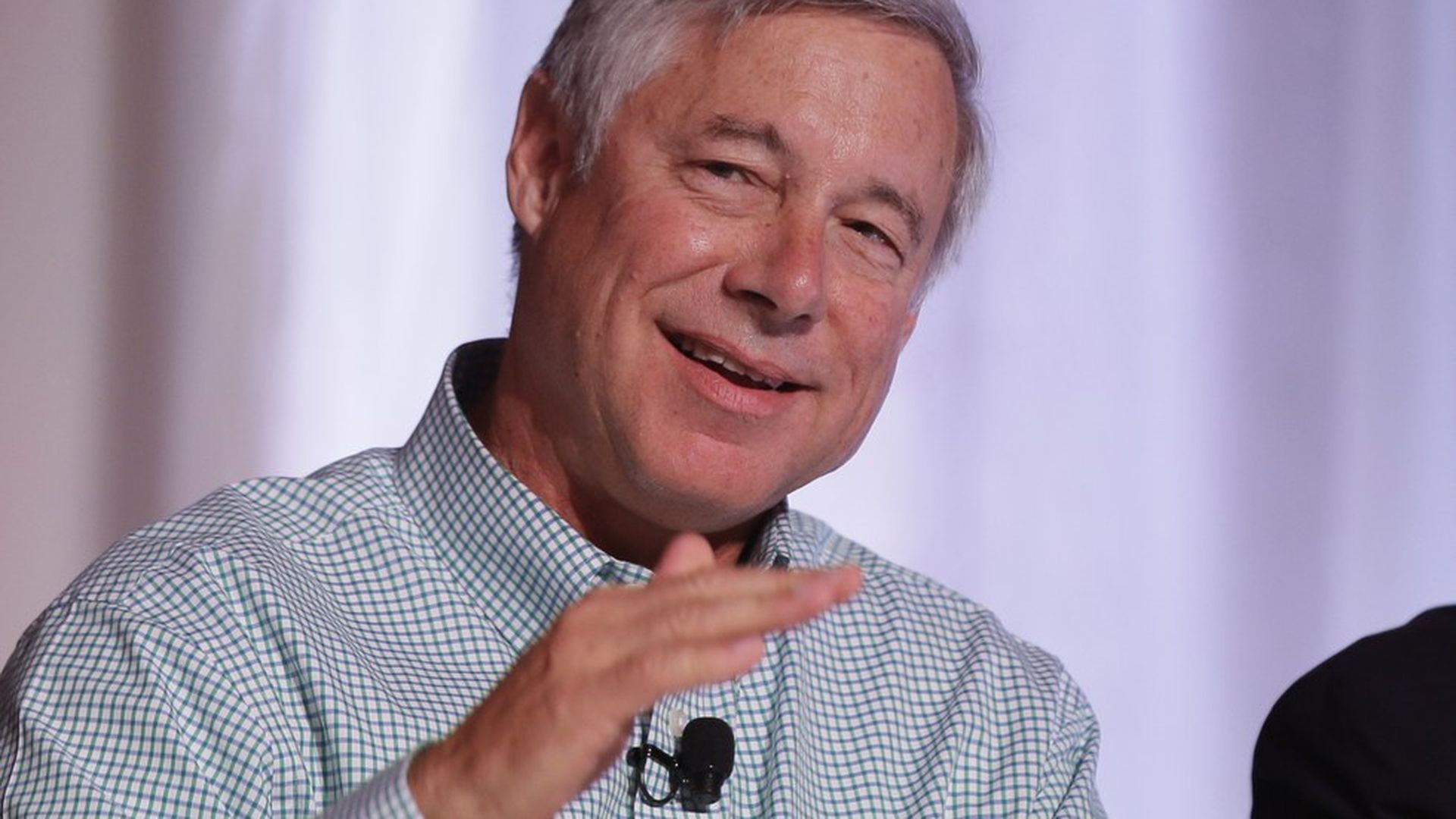
Axios sat down with Rep. Fred Upton yesterday, the former Energy and Commerce Committee chairman who now leads the energy subcommittee. A few notes from our conversation in the Michigan Republican's office:
Upton revealed he may join the bipartisan Climate Solutions Caucus, which currently has 48 members split evenly between the parties.Why it matters: Membership from Upton would add stature to the group, given his longtime prominence on energy policy and seniority in GOP circles.Upton said Democrat Jan Schakowsky approached him this week about joining, and that he's "running the traps" on the idea. (Note: It's a "Noah's Ark" caucus with equal party representation, so members join in bipartisan pairs.)
Paris: Upton is "disappointed" that President Trump is abandoning the Paris climate accord. He noted that the agreement does not impose emissions mandates or penalties, and noted the provisions that improve monitoring of China's and India's emissions."I didn't think it was worth joining Syria and Nicaragua as being the only two other countries that were not signatories to it," he said.Go deeper: Upton was among the 46 Republicans who broke with most of their colleagues by voting last week to support new Defense Department's work to assess the national security threat of climate change.

Musk claims "verbal agreement" to build NY-DC hyper loop

Elon Musk tweeted that he has received "verbal agreement" to build a super-fast, 29-minute "hyper loop" taking passengers from New York to Washington, D.C. Traveling within an airless tube, passengers could disembark or get on along the way in Baltimore and Philadelphia.
There were no further immediate details, and no confirmation from any officials along the route. But, should such a system be built, it would out-perform any type of current travel options in the East.
The bottom line: The idea still seems outlandish from almost every vantage point — technology, land acquisition, expense, and so on. Yet, given Musk's foray into space and his formidable electric car company, we have learned not to underestimate Musk. He even has a rival: On July 13, a company called Hyperloop One conducted a slow test of its technology on a Nevada track and is currently looking at 11 serious proposals for where to build a working model, with the idea of reducing the number to three.

U.S. fines Exxon for violating Russia sanctions under Tillerson
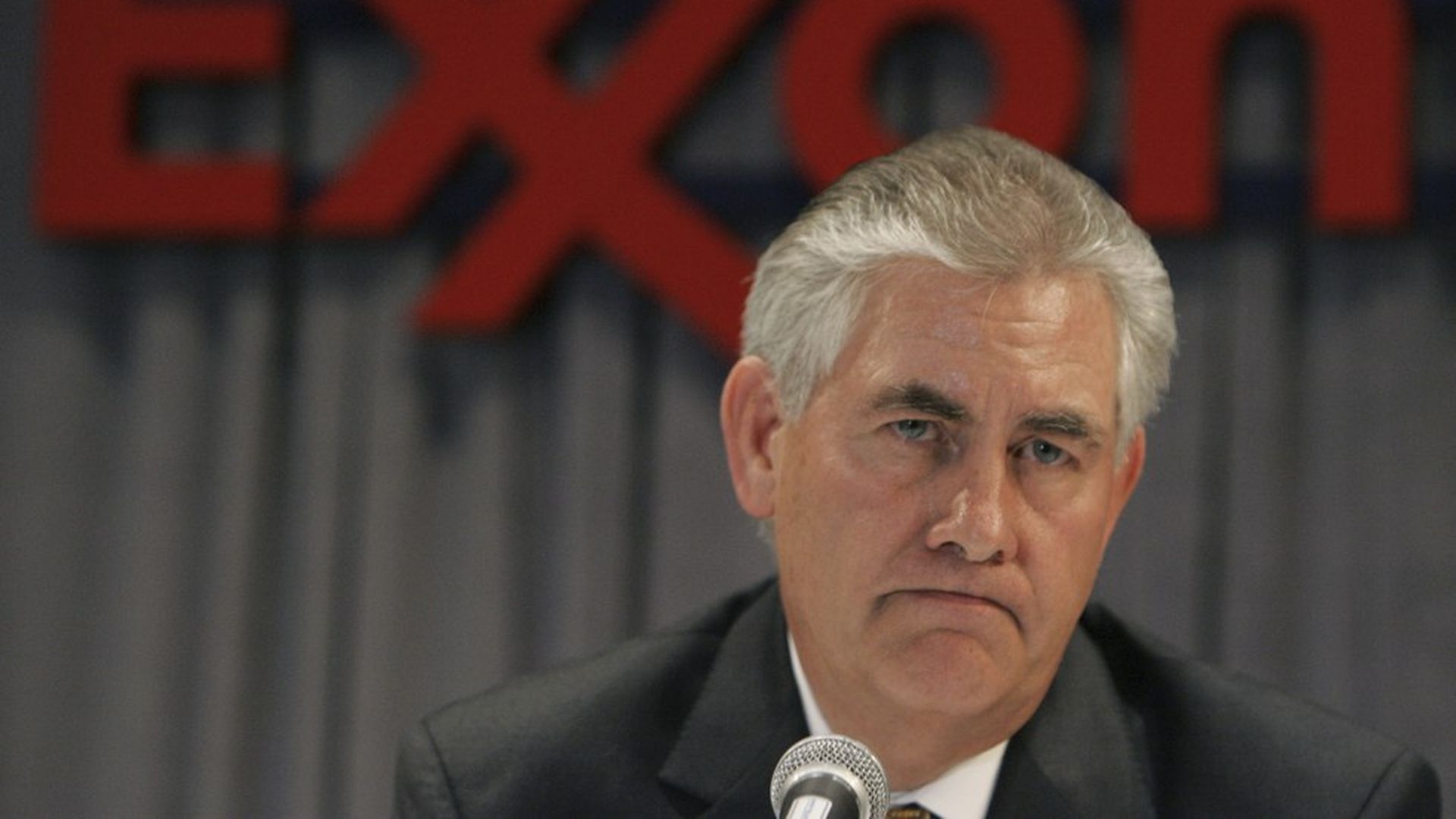
The U.S. Treasury announced Thursday that it is fining Exxon Mobil $2 million for violating Ukraine-related sanctions in May 2014, when Secretary of State Rex Tillerson was CEO, per AP.
- The Treasury Department said Exxon showed "reckless disregard" for the sanctions when two of the oil giant's U.S. subsidiaries signed legal contracts with Igor Sechin, the president of Russian oil giant Rosneft, who is currently blacklisted in the U.S. for Russia's actions in Ukraine.
- Key line from AP: "When Tillerson was CEO, he said Exxon didn't support sanctions generally because it found them usually ineffective."
- Why it matters: Tillerson has generally managed to avoid becoming involved in the Russia investigations, despite his prior ties to the Kremlin. However, the discovery of his company's sanctions violations could bring him back into focus.
Exxon's pushback: Exxon issued a statement in response Thursday morning stating that the company followed "clear guidance from the White House and Treasury Department" when signing the documents involving Rosneft. The oil giant also argued that the Treasury "is trying to retroactively enforce a new interpretation" of the sanctions order, and that the fine is "fundamentally unfair."Later Thursday afternoon, Exxon announced it is suing the Treasury Dept. for their unjust action.

Al Gore's climate movie sequel ignores political reality
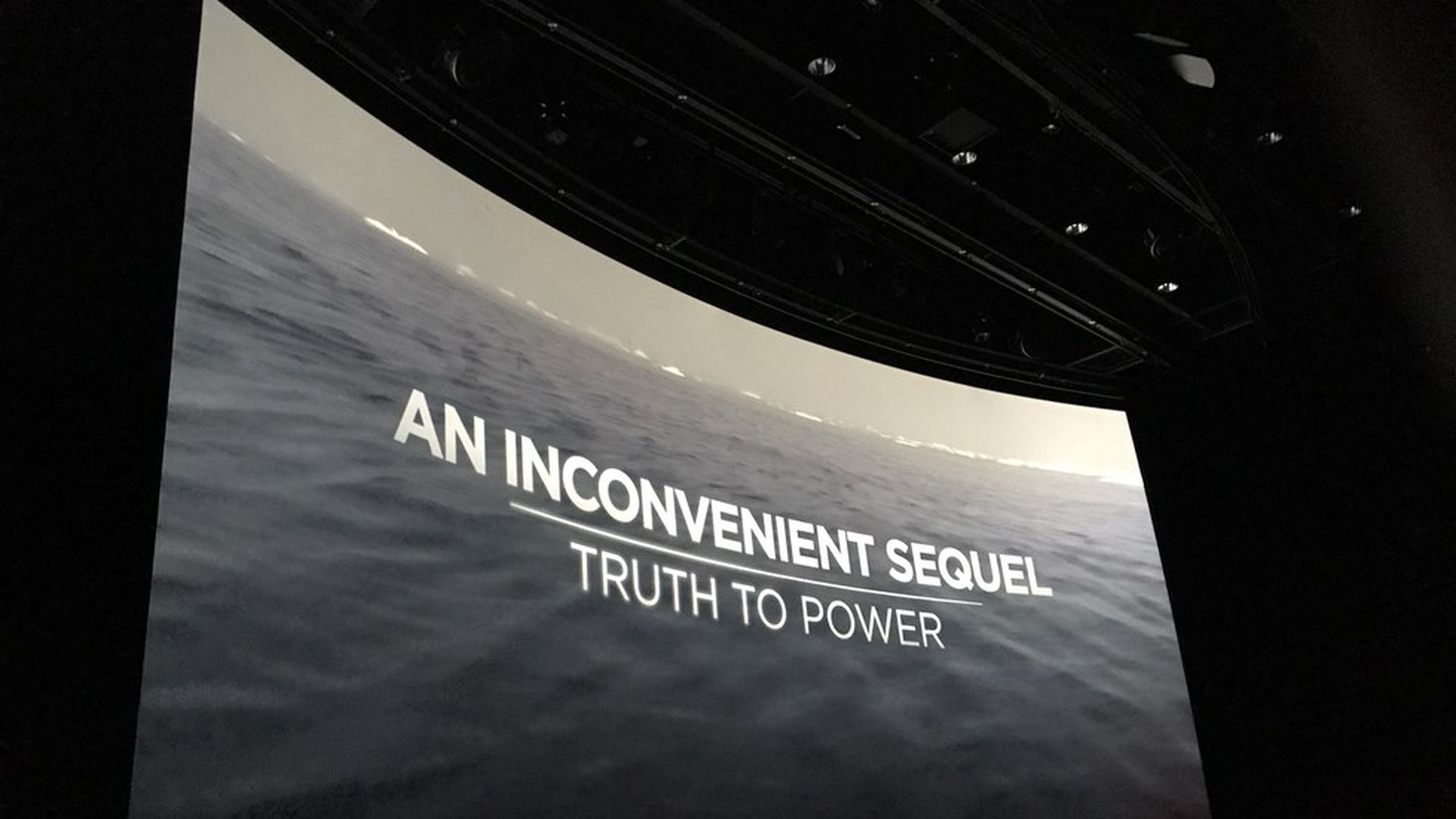
A lot has shifted in climate change issues over the last 11 years, but you might not be able to tell by watching former vice president Al Gore's sequel to his 2006 Academy Award-winning "Inconvenient Truth."
- As one attendee told me after the film's Wednesday night premiere in D.C.: "The film was an unusual combination of electoral self-deprecation and climate narcissism."
- Despite its name ("Inconvenient Sequel: Truth to Power), it's the film that actually ignores the inconvenient reality climate change advocates are now facing with the Trump administration. Instead, we saw mostly more of what we saw in the first film, which is to say: Gore himself and the impacts of climate change (albeit marginally worse).
- Why it matters: The film, and its Washington premiere, showed how much of the climate movement is out of touch with political reality right now — Republicans control Congress and the White House is run by a president who doesn't acknowledge climate change is real, let alone a problem worthy of addressing.