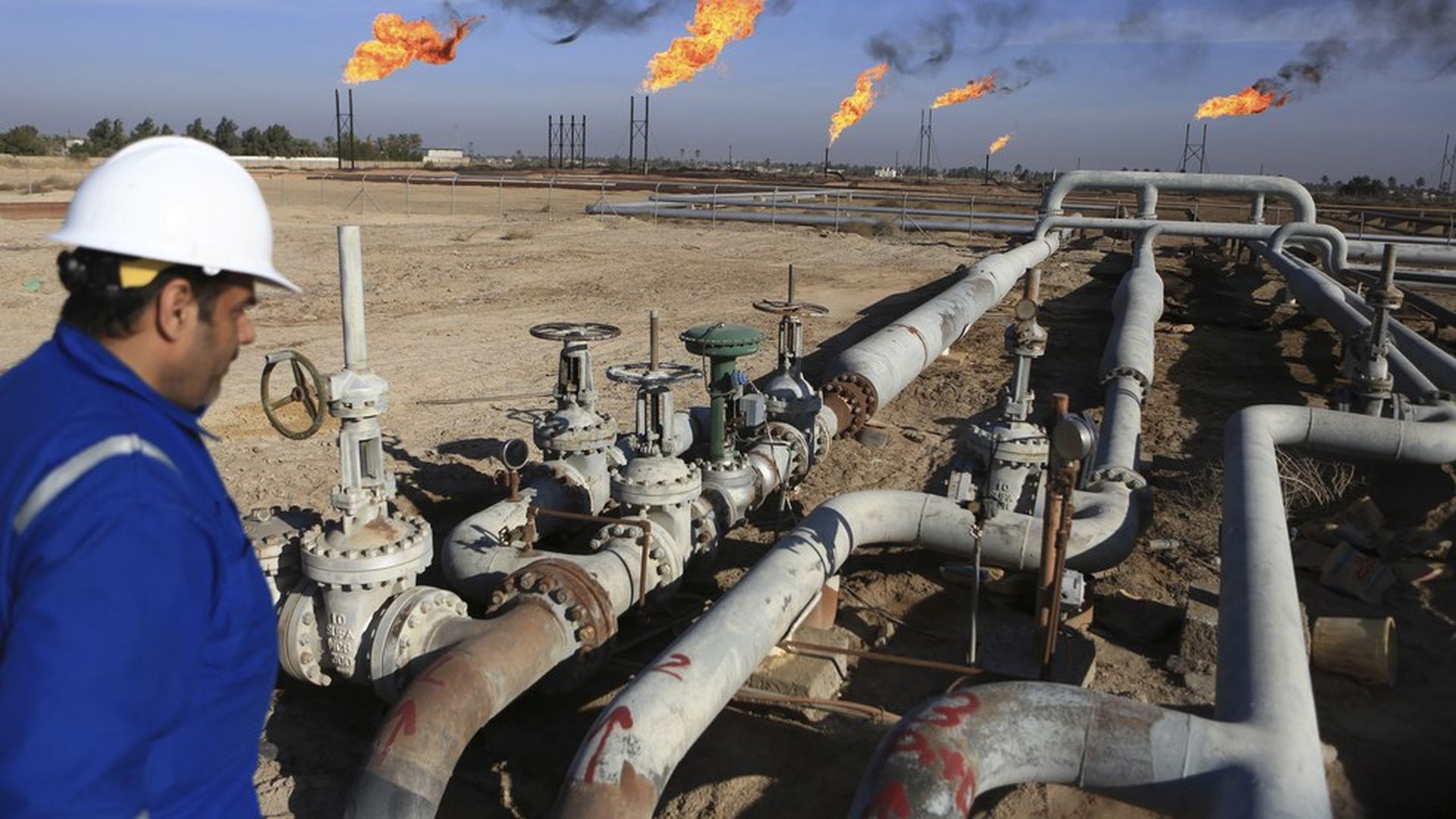
Iraq, which has the world's fourth-largest oil reserves, announced this week it will be offering oil and gas exploration rights as part of its effort to root out ISIS from the region, per the AP. The measure is intended to boost energy revenues amid low oil prices.
Why it matters: Oil has been important to financing Iraq's security services and its fight against ISIS — for context, in 2014 94% of Iraq's federal revenue came from oil, per the IMF, and even amid the tensions in the region, Iraq stepped up its production last year, according to CNNMoney. Note also, U.S. imports from Iraq are up this year from last, per the EIA, and more than doubled between August and September 2016 alone.
The plan: Putting nine border exploration blocks up for bidding, according to Oil Minister Jabar Ali Al-Luaibi. Five are shared with Iran, three with Kuwait, and one in the Persian Gulf.
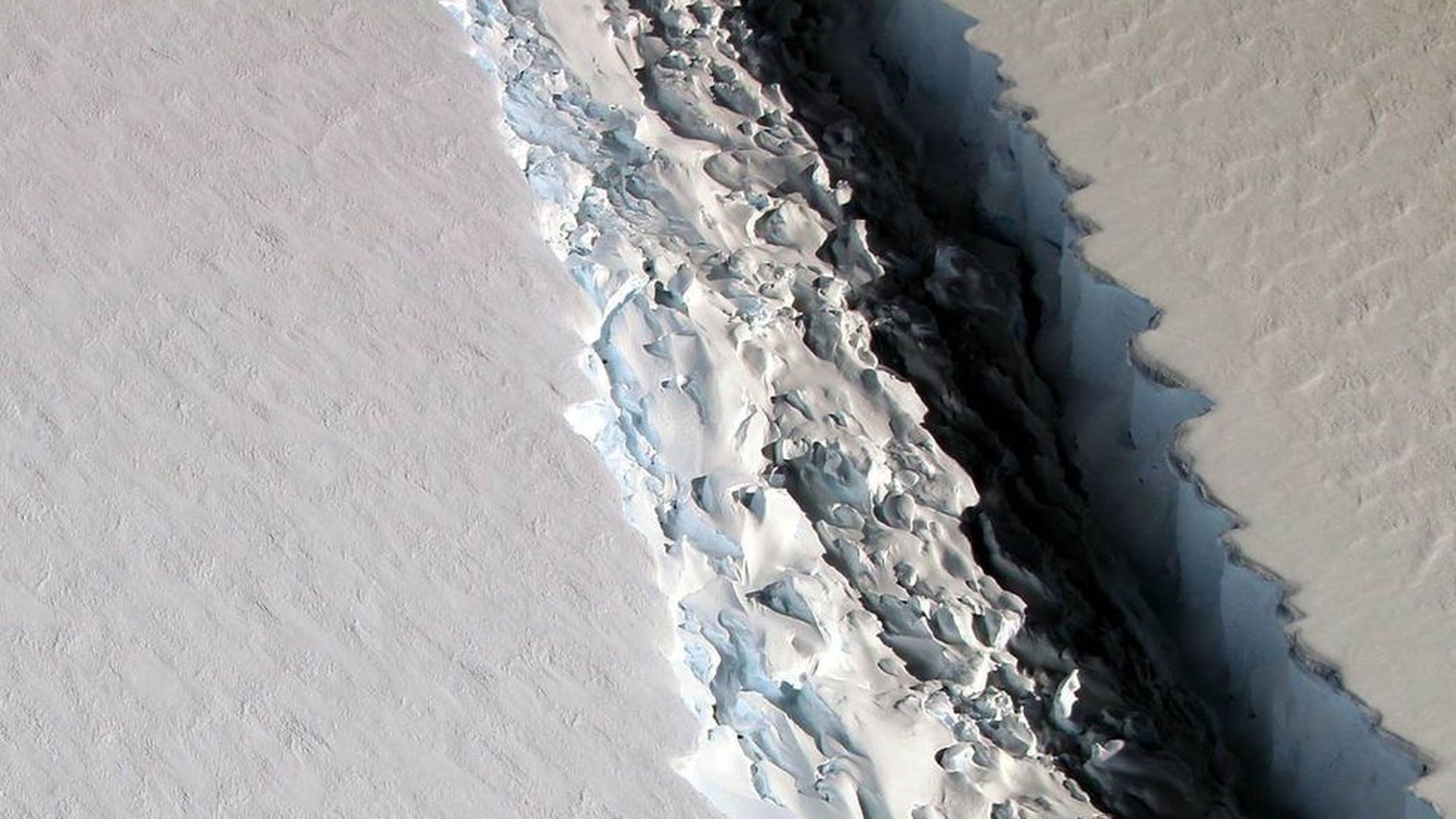
A 2,239 square mile iceberg (roughly the size of Delaware) has broken off of Antarctica's Larsen C ice shelf. The chunk of ice weighs over a trillion tons.
Climate scientists have been monitoring the rift ever since the Larsen A ice shelf disintegrated in 1995. The Larsen B ice shelf also collapsed in 2002 following a similar calving event in 1995. It's possible that Larsen C will regrow and stay stable, but it's also possible it will meet the same fate as the other ice shelves.
Why it matters: Ice shelves are floating on water already, so they don't contribute to sea level rise. However, they act as sort of dams, keeping land-based glaciers from flowing into the sea. Such glacial flows could gradually contribute to sea level rise. Regardless of what happens, the geography of the Antarctic peninsula is forever changed.