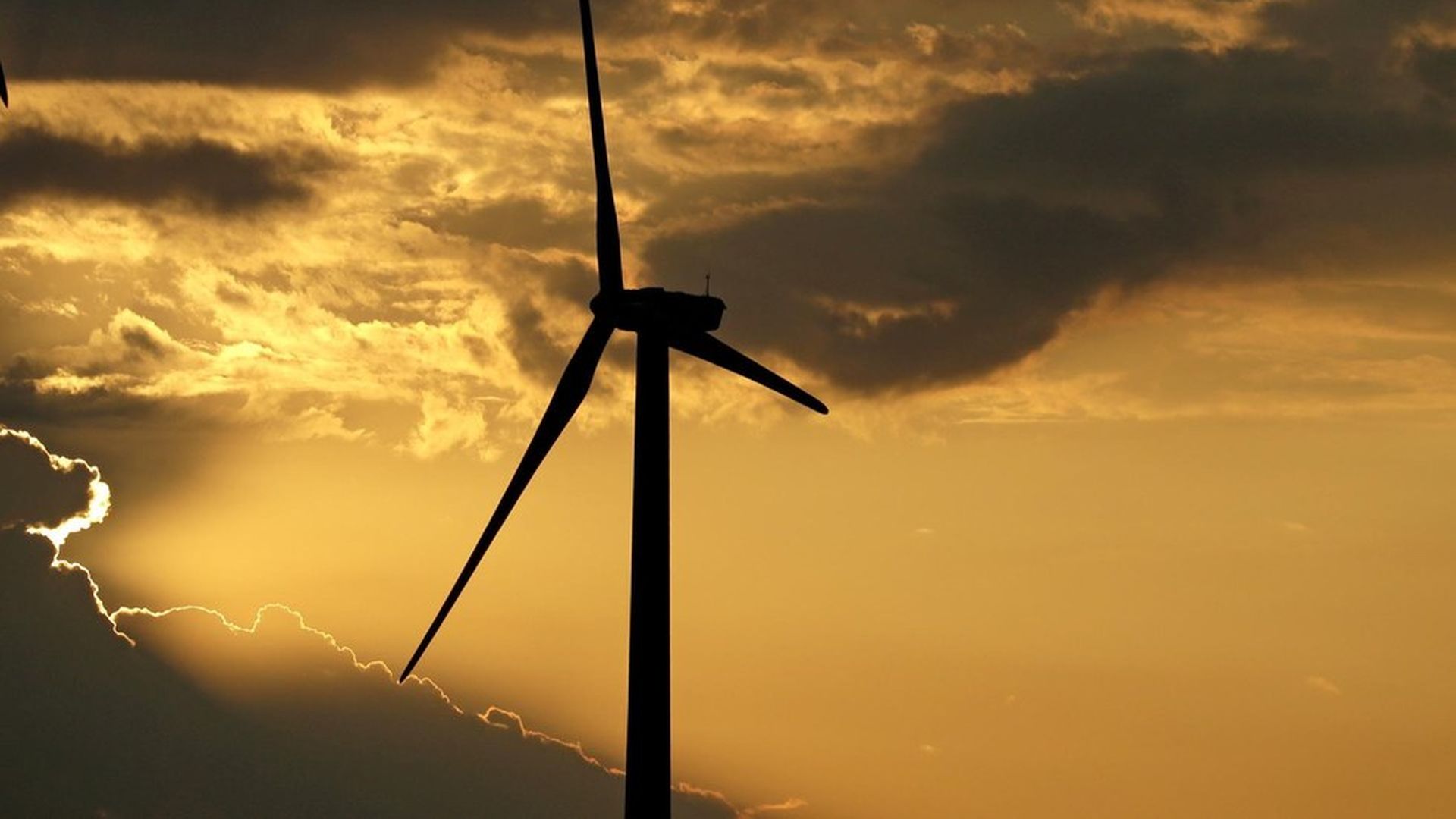
The world's first floating wind farm — made up of 5 turbines over 800 feet in height — will soon be installed off the coast of Scotland, allowing the ocean to be tapped for renewable energy, per The Guardian.
The benefits: Floating wind farms could be placed anywhere, opening up new frontiers for wind energy that could not be utilized previously. Fixed-bottom turbines, which are attached to the sea floor, can only be installed at depths up to 40 meters — usually very close to shore, where they can often meet resistance from citizens' groups due to environmental and aesthetic concerns.
The problem: Right now, it's the $228 million price tag. A floating wind farm costs more than double a conventional fixed-bottom wind farm of similar generating capacity. Plus, it requires expensive special equipment to move the turbines into place. But experts expect the costs should even out by 2030.
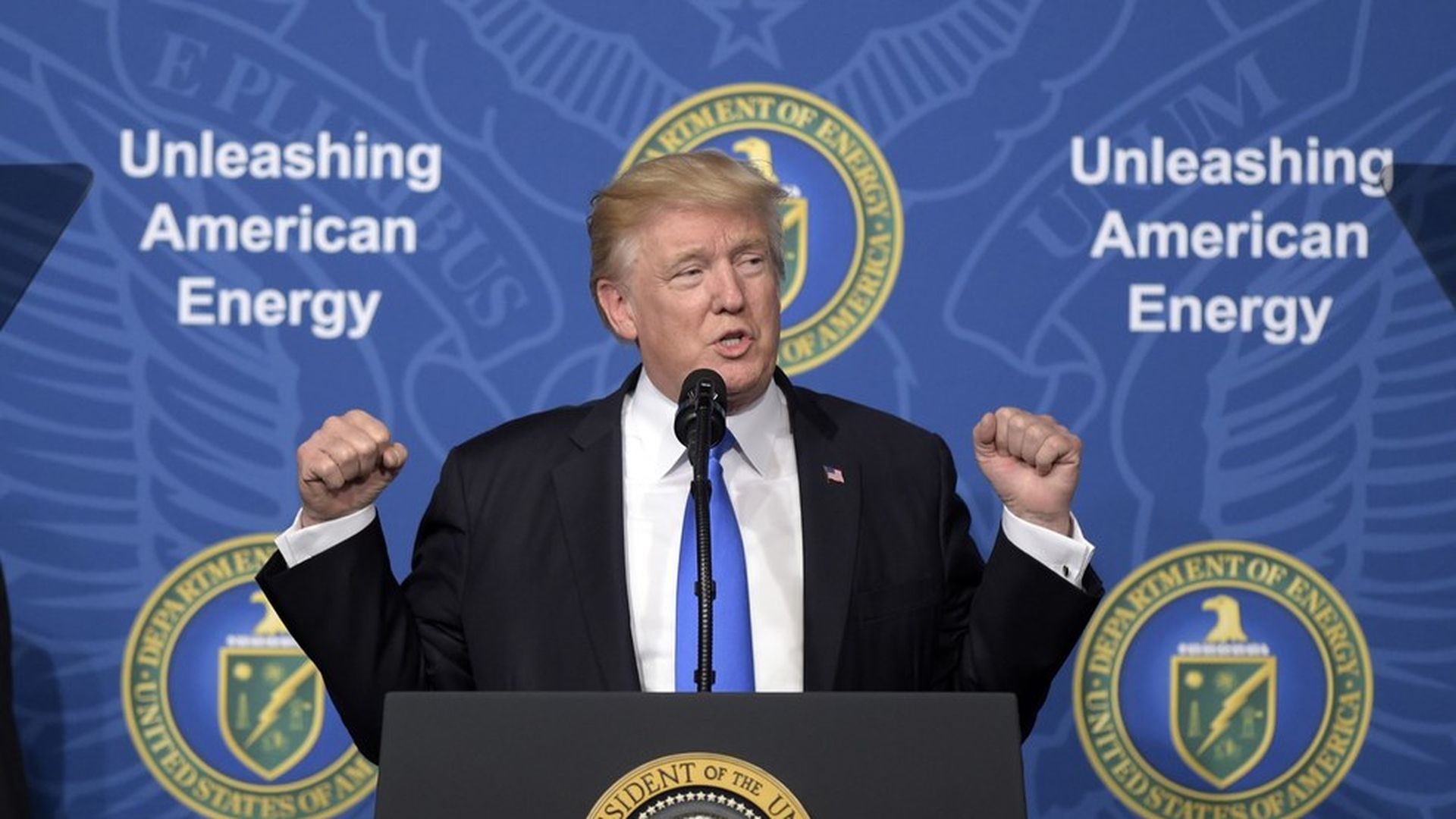
President Trump spoke at the Department of Energy's Unleashing American Energy event this afternoon, culminating the White House's "Energy Week" by touting a handful of new initiatives that his administration claims will boost the economy by cutting Obama-era regulations.
The big thing: Trump stated that his administration plans to reduce barriers for foreign nations to gain loans to build new coal plants, which he argued prevents countries (like Ukraine) from achieving their full potential.
But it wasn't all energy. POTUS couldn't help but take a shot at CNN, which he branded as "fake news" before claiming that he saw the red light on the network's camera turn off. (CNN broadcast the president's remarks without interruption.)
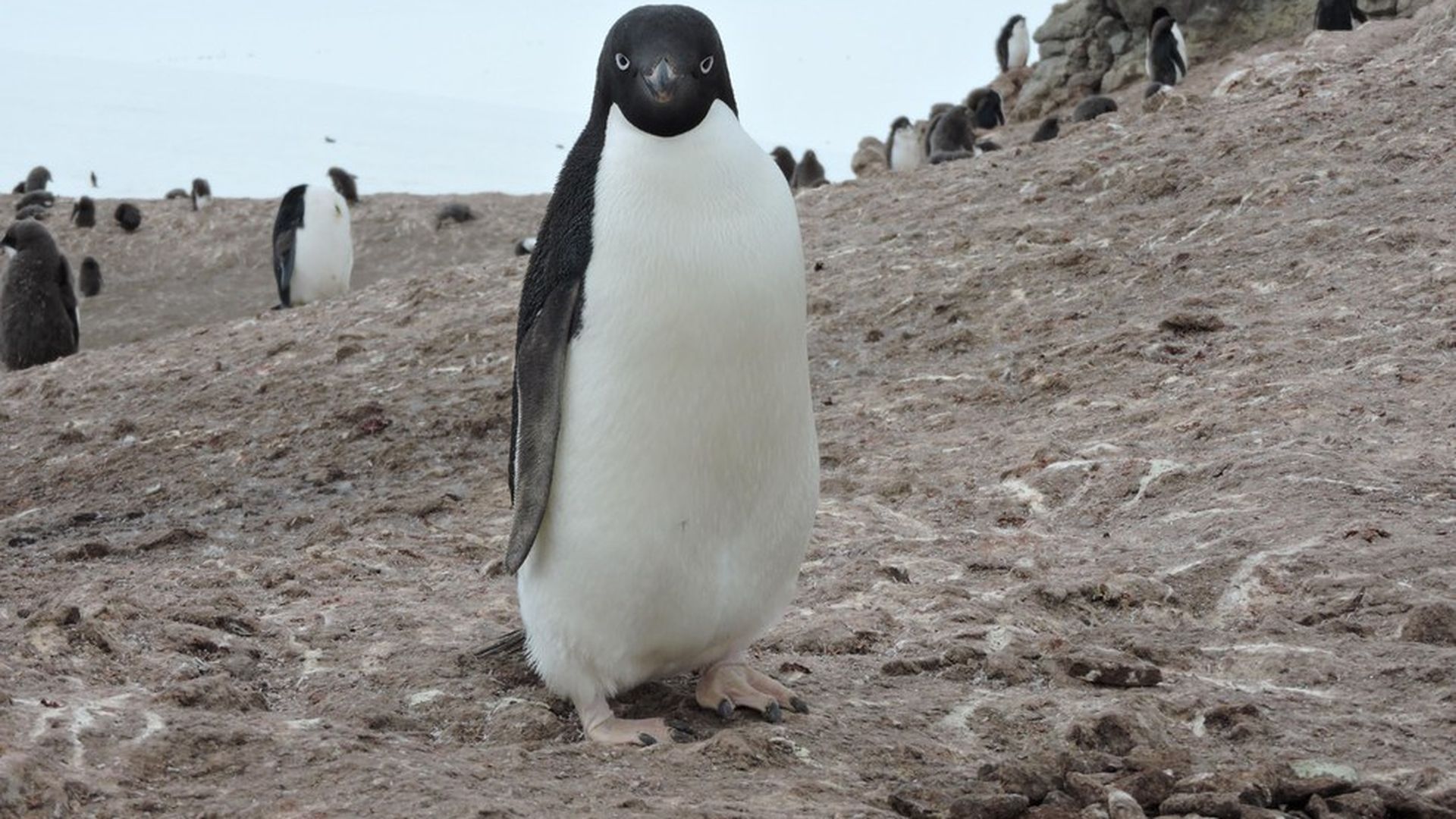
Antarctica is thought of as covered in ice, but a small part, about 1%, is dry land. These patches are the most biodiverse places on the continent. Despite this, little is known about the impacts climate change will have on those biological hotbeds. A new study, published today in Nature, found climate change could increase Antarctica's dry land by 25%.
Why it matters: Some patches of ice-free land have species that haven't been seen anywhere else. Others serve as important breeding grounds for seabirds and seals. It's unclear whether existing species could move into the dry land or if animals there now could disappear.