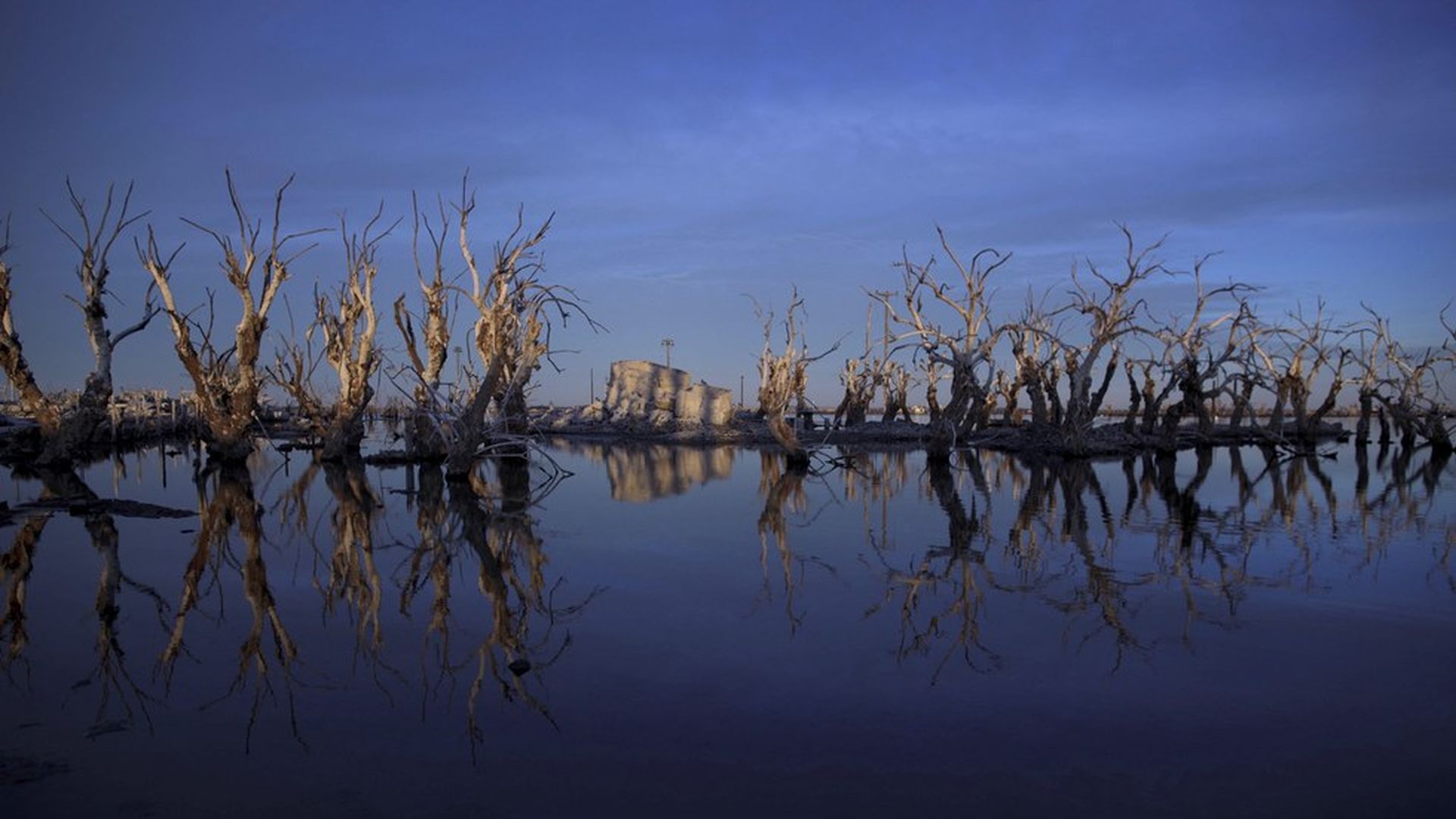
Researchers have discovered a preserved section of 50,000-year-old forest 10 miles off the coast of Alabama in 60 feet of water that might provide hints about how climate change could affect ecology, per The Washington Post.
How it formed: In its day, the forest was miles inland from the shoreline due to significantly lower sea levels, and it may have been quickly buried in a flood or some other disaster to preserve it in an oxygen-free environment.
How it was uncovered: A hurricane — perhaps 2004's Hurricane Ivan — removed as much as 10 feet of sand and sediment to uncover the forest, whose wood is still fresh enough to leak sap when cut.
What it means: The geology of the area around the forest gives scientists an insight into how rapid climate change can affect coastlines, especially due to quickly rising sea levels — one of the biggest areas of concern for today's shifting climate.
If tech leaders are correct, someday we'll be getting around by summoning rides in self-driving cars with our smartphones instead of driving ourselves. But who will own the cars and supply the rides?
Why it matters: There's lots of talk about how autonomous vehicles will change jobs and traffic patterns, but less attention is being paid to the logistical details of how these vehicles would be used. Whether self-driving cars take off depends on finding the right model to fit the demand, whatever that may be.