The GOP-controlled Senate Wednesday morning failed to repeal an Obama-era regulation that curbs methane emissions from gas wells on public and tribal lands, a major win for environmental advocates. The final vote was 51 "nays" to 49 "yays." The last day to use the CRA is at the end of the week.
What it means: The November 2016 Interior Department rule will stay in place, although the department has said it will review the regulation, as required by an executive order Trump signed.
Get smart: This victory by environmentalists is more symbolically important than substantively impactful; public lands account for a small portion of domestic drilling — 11% of the nation's natural gas supply and 5% of its oil supply — according to Interior Department data.
The hiccup: Lindsey Graham, Susan Collins, and John McCain voted along with the Democrats. McCain's vote was a surprise.
Former Vice President Al Gore personally urged President Trump not to abandon the Paris climate accord in a phone conversation on Tuesday morning, Axios has learned.
Why it matters: The chat between Gore, the world's best-known climate activist, and Trump occurred as the divided administration nears a decision about whether to abandon the 2015 international pact that's aimed at preventing runaway global warming.
New research suggests that methane leaks in the Arctic may actually slow the effects of global warming, challenging conventional understanding of how greenhouse gases (like methane) impact climate change. The study found that the surface water above methane gas bubbles absorb twice as much CO2 as the water around it, calling it the "methane fertilization effect."
Why this matters: Though researchers are not yet sure how this will apply to other parts of the ocean, this is a bit of good news for finding future solutions to the threat of global warming in the Arctic.
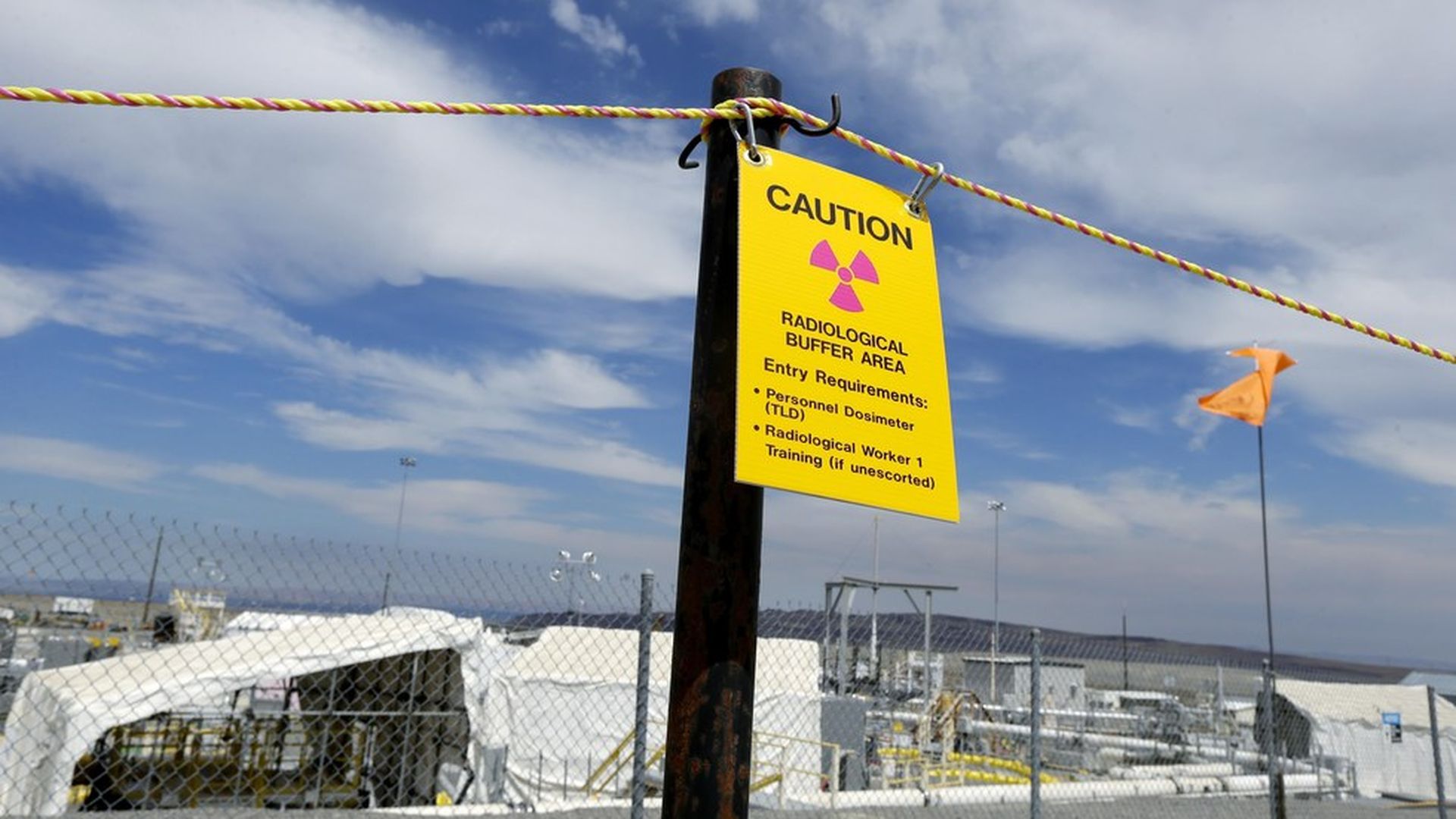
The roof of a tunnel "caved in" at the Hanford nuclear site in Washington Tuesday morning, per Hanford spokesman Destry Henderson. Hundreds of workers were in the "take cover" position after the collapse, and facility personnel were evacuated, according to the Energy Department, which labeled the incident an emergency.
What happened: The tunnel that caved in was filled with radioactive trains that transported nuclear waste. A spokesperson for the Washington Department of Ecology said that there has been no detection of a radiation release, which Henderson confirmed Tuesday afternoon.
Why it matters: The Energy Department has acknowledged in 20 studies that there is a safety risk to the workers at Hanford; the site is where plutonium was produced for the Nagasaki Bomb and has been dubbed "the most toxic place in America" and "an underground Chernobyl waiting to happen" since it's the largest depository of radioactive defense waste.