Friday's energy & climate stories
U.S. and China reach deal to expand U.S. natural gas exports
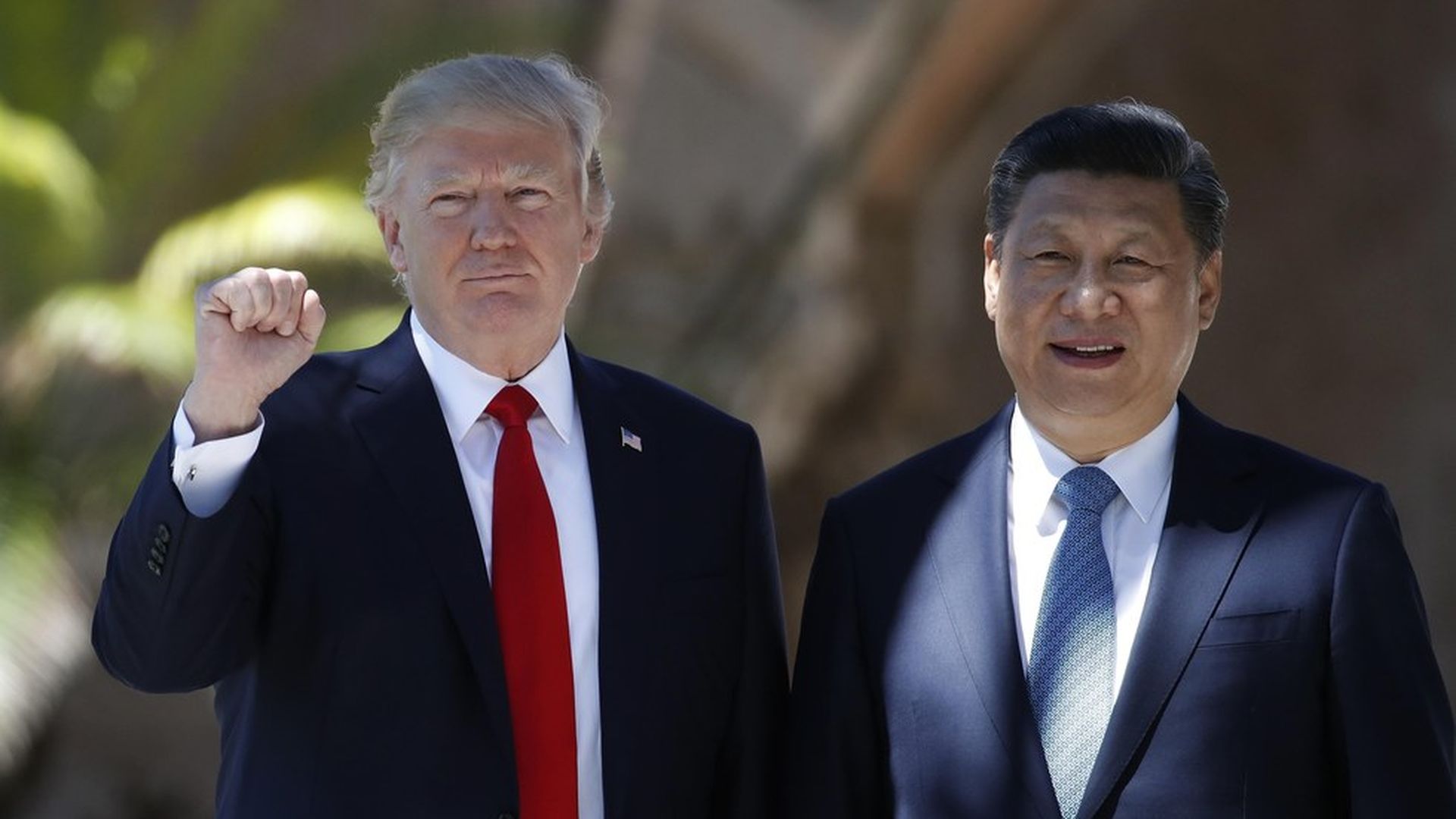
The U.S. and China have agreed to "broad terms" on a plan which would expand U.S. natural gas exports to China, per the WSJ. It includes joint investment in infrastructure China needs to process the natural gas and also involves easier access to Chinese markets for U.S. agriculture and other products.
Why it matters: The agreement would give U.S. natural gas exporters easier access to a massive market at a time when China has been trying to stop burning so much coal and been turning to liquid gas imports.
On the agriculture side: U.S. exports of agricultural products to China totaled $21 billion in 2016 and China was America's second largest agricultural export market last year, per the U.S. Trade Rep, but imports of U.S. beef are currently banned.
What to watch for: A communiqué with more details is expected some time this month.

New study reveals 467 million hectacres of unreported forest
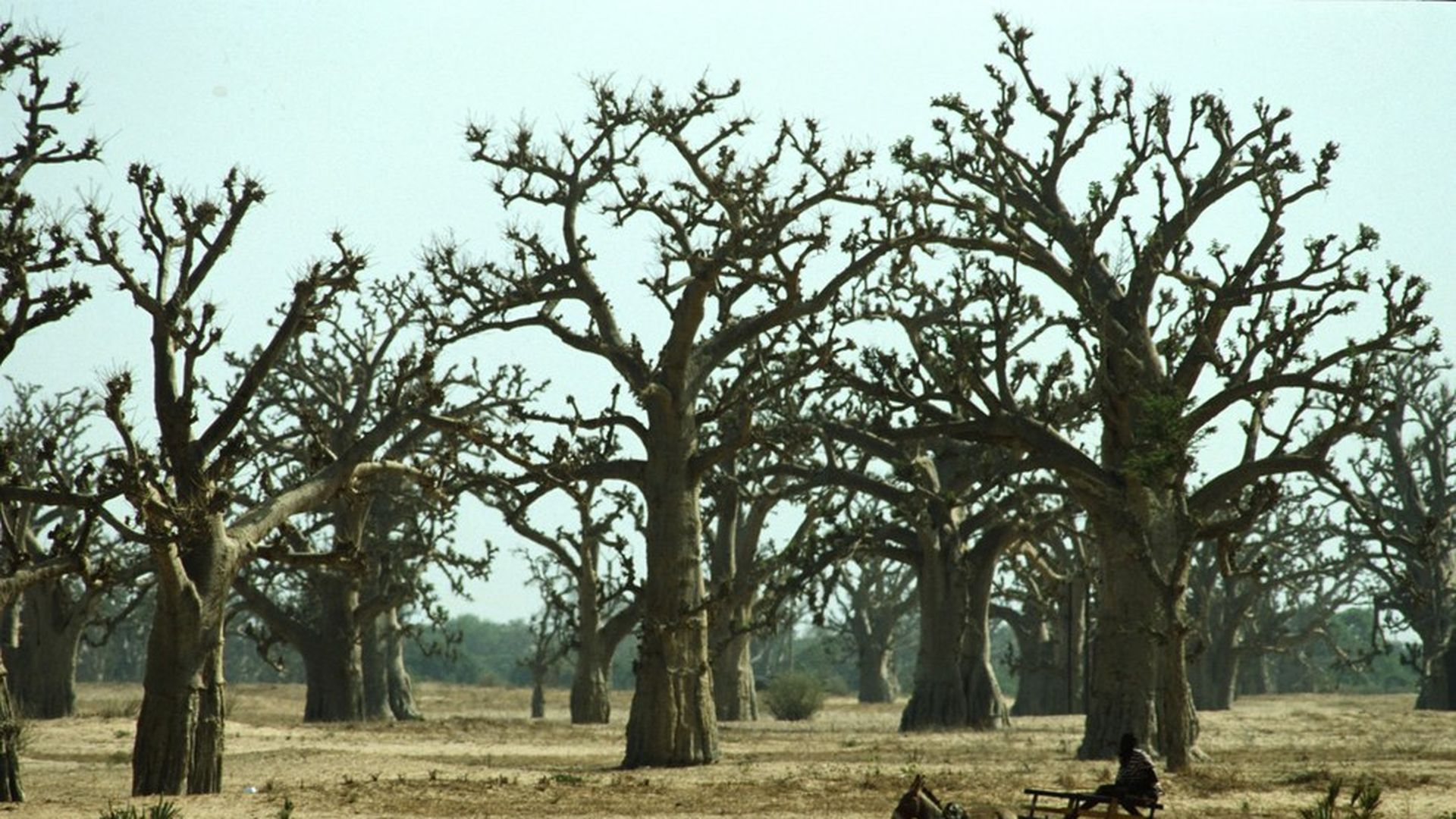
A new study reveals global forest cover is at least 9% higher than previously thought — that amounts to 467 million hectares of forest that haven't ever been reported before.
Why it matters: These forests contain some of the "most threatened, yet disregarded, ecosystems." Plus these forests act as sinks by storing carbon in plants, trees, and soil and keep it from circulating in the atmosphere. These additional hectares of forest are likely to change estimates of how much carbon can be held by Earth's vegetation, which is thought to have an upper limit, according to the IPCC.
Why we're just hearing this: Previous estimates of dryland forests have been disputed due to differences in satellite spatial resolution, mapping techniques, and the definition of forests themselves (for example, how much tree coverage constitutes a forest).

A European view: good riddance to U.S. from Paris pact
For all the European diplomatic lobbying for President Donald Trump to stay in the Paris climate pact, the notion that the deal and the planet are better off with the U.S. in the accord is not universally held. Two new opinion pieces from across the Atlantic make the opposite argument...
Not worthy: Over at Climate Home, Joseph Curtin makes the case that aggressive White House steps to unwind domestic emissions controls leaves the U.S. undeserving of the pro-climate cred that Paris membership provides. Paris, he argues, should not be a "fig leaf" or a "branding opportunity."Why it matters: "There is a danger [that] remaining in [the pact] could muddy the waters and allow U.S. citizens [to] believe they are contributing to resolving a global problem, when the opposite is the case," writes Curtin, a senior fellow at the Dublin-based Institute of International and European Affairs.The second voice: Former EU climate diplomat Jorgen Henningsen makes a related case in a letter to the Financial Times, arguing that the U.S. has already "de facto left the agreement," given Trump's actions so far.Go deeper: He argues that if other nations keep accepting the U.S. as a partner in the deal, it undermines the discussion of strengthening the national commitments needed to keep the global temperature rise below 2 degrees celsius.

How global carbon emissions changed over time
The issue
With all this talk about whether Trump will pull out of the Paris Climate Accord, the most aggressive agreement among nearly 200 nations to curb carbon emissions, let's put the U.S. contributions to carbon emissions in context.
The Facts
Turns out that as a portion of total global carbon emissions, the U.S. is not currently contributing the most of any country — China is. Even though the U.S. isn't the top contributor, global emissions have been steadily rising over time, although note the recent plateau.
Why it matters
Even though the U.S. emits much less than China, it is still an influential force in holding other countries that emit much less, and much more, accountable. That influence is part of what's at stake as the U.S. decides whether to stay in the agreement. If Trump stays in the accord, it doesn't necessarily mean the emissions from the U.S. won't spike, as Axios' Amy Harder points out.