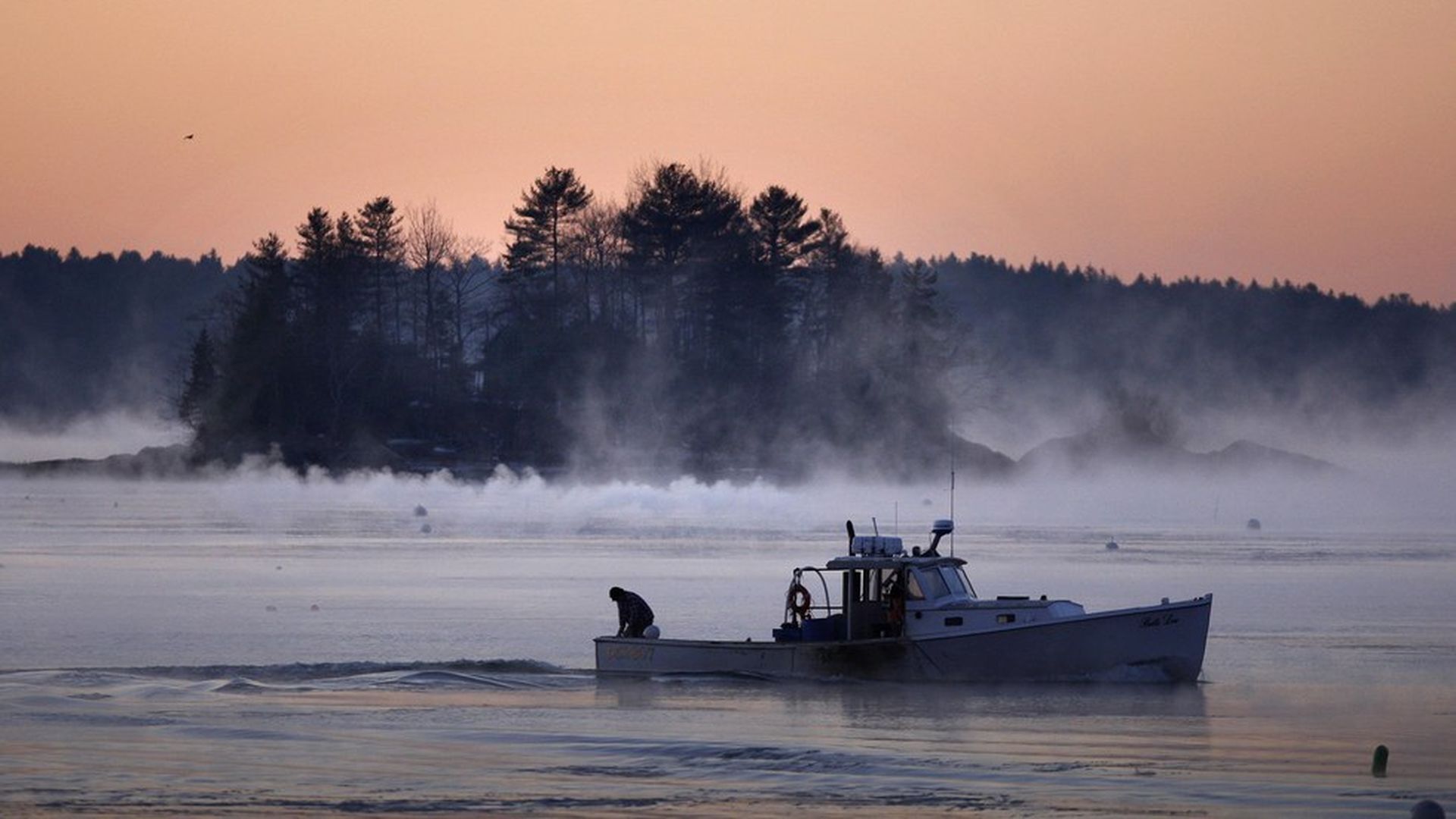
New research suggests that methane leaks in the Arctic may actually slow the effects of global warming, challenging conventional understanding of how greenhouse gases (like methane) impact climate change. The study found that the surface water above methane gas bubbles absorb twice as much CO2 as the water around it, calling it the "methane fertilization effect."
Why this matters: Though researchers are not yet sure how this will apply to other parts of the ocean, this is a bit of good news for finding future solutions to the threat of global warming in the Arctic.
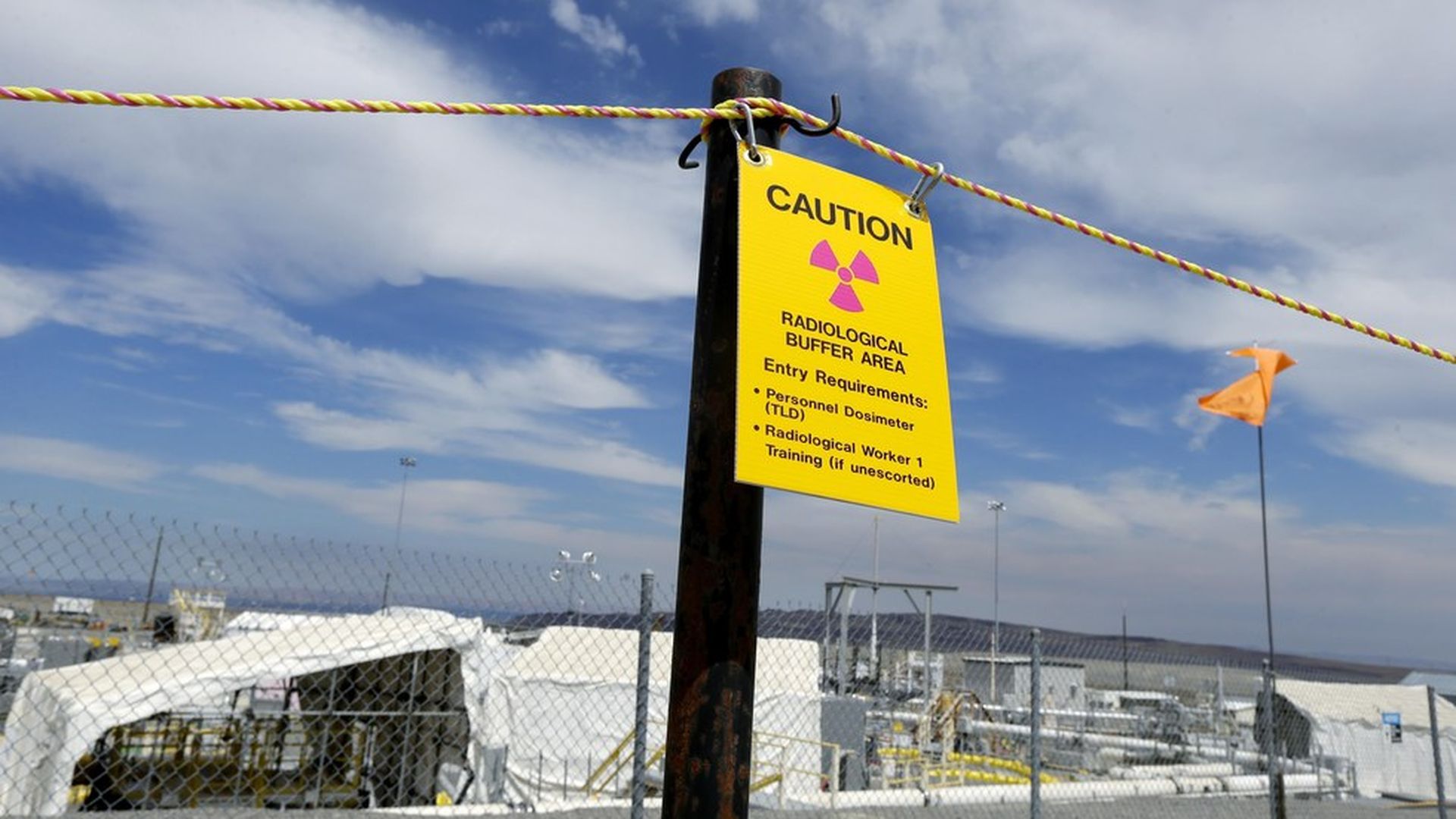
The roof of a tunnel "caved in" at the Hanford nuclear site in Washington Tuesday morning, per Hanford spokesman Destry Henderson. Hundreds of workers were in the "take cover" position after the collapse, and facility personnel were evacuated, according to the Energy Department, which labeled the incident an emergency.
What happened: The tunnel that caved in was filled with radioactive trains that transported nuclear waste. A spokesperson for the Washington Department of Ecology said that there has been no detection of a radiation release, which Henderson confirmed Tuesday afternoon.
Why it matters: The Energy Department has acknowledged in 20 studies that there is a safety risk to the workers at Hanford; the site is where plutonium was produced for the Nagasaki Bomb and has been dubbed "the most toxic place in America" and "an underground Chernobyl waiting to happen" since it's the largest depository of radioactive defense waste.
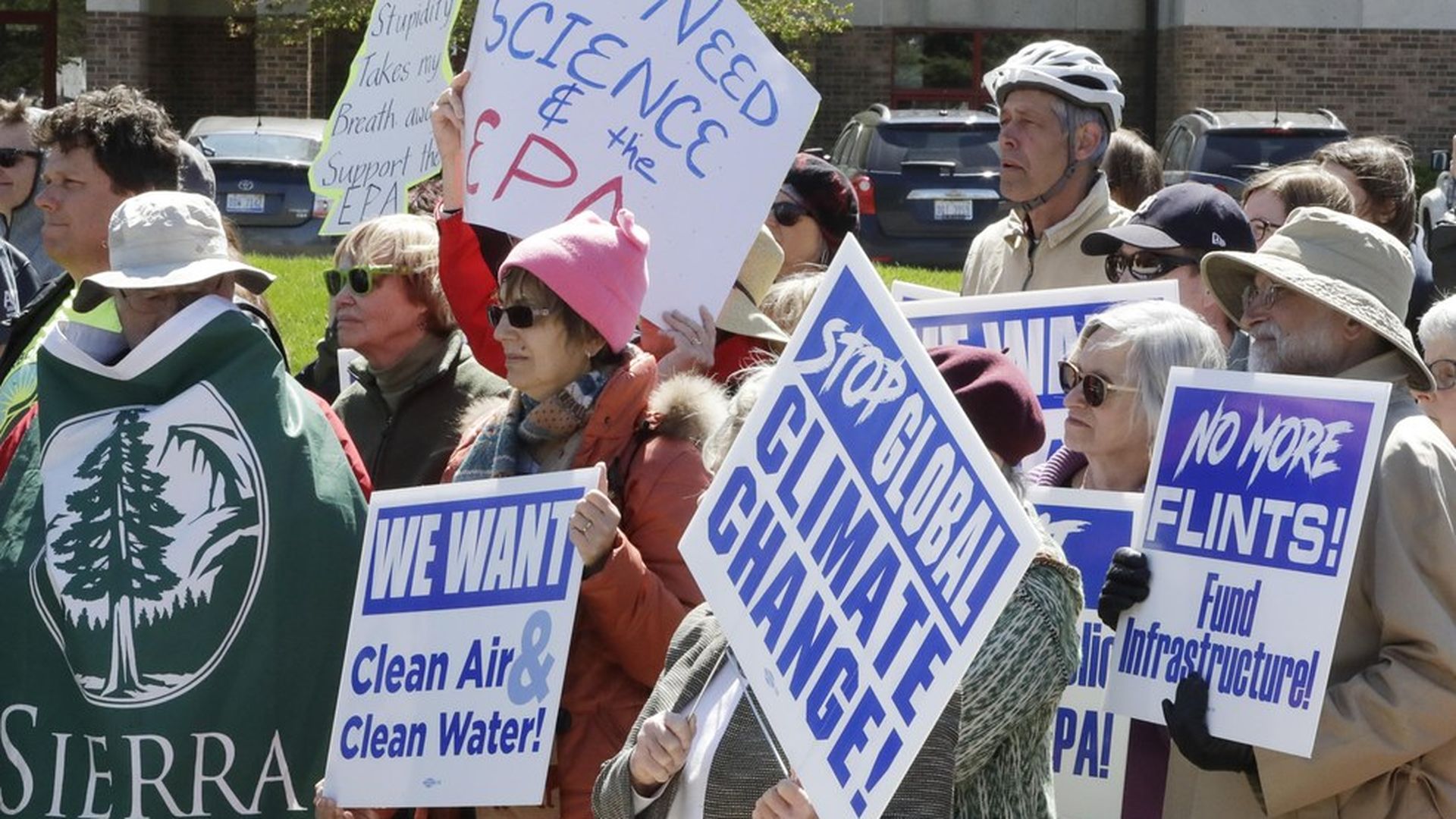
Late last week the EPA dismissed half the scientific advisers from the Scientific Advisory Board (SAB), and the Interior Department suspended more than 200 of its advisory boards late last week, according to the Washington Post. These boards review the science behind the policies at EPA and Interior.
Key point: The SAB does not usually report to or receive attention from the EPA administrator like this. According to a senior administration official, this shows Scott Pruitt "is planning a much broader overhaul of how the agency conducts its scientific analysis."
The agencies' explanations: The EPA spokesman said, "[w]e're not going to rubber-stamp the last administration's appointees. Instead, they should participate in the same open competitive process as the rest of the applicant pool." Unlike Pruitt, Interior Secretary Zinke will take time to consider whether the advisory boards were helpful before making a more permanent move.
Washington is a mess when it comes to climate change, split in two mutually exclusive groups of people: those who think the issue is the most urgent problem facing the world and those who refuse to acknowledge it's a problem at all.