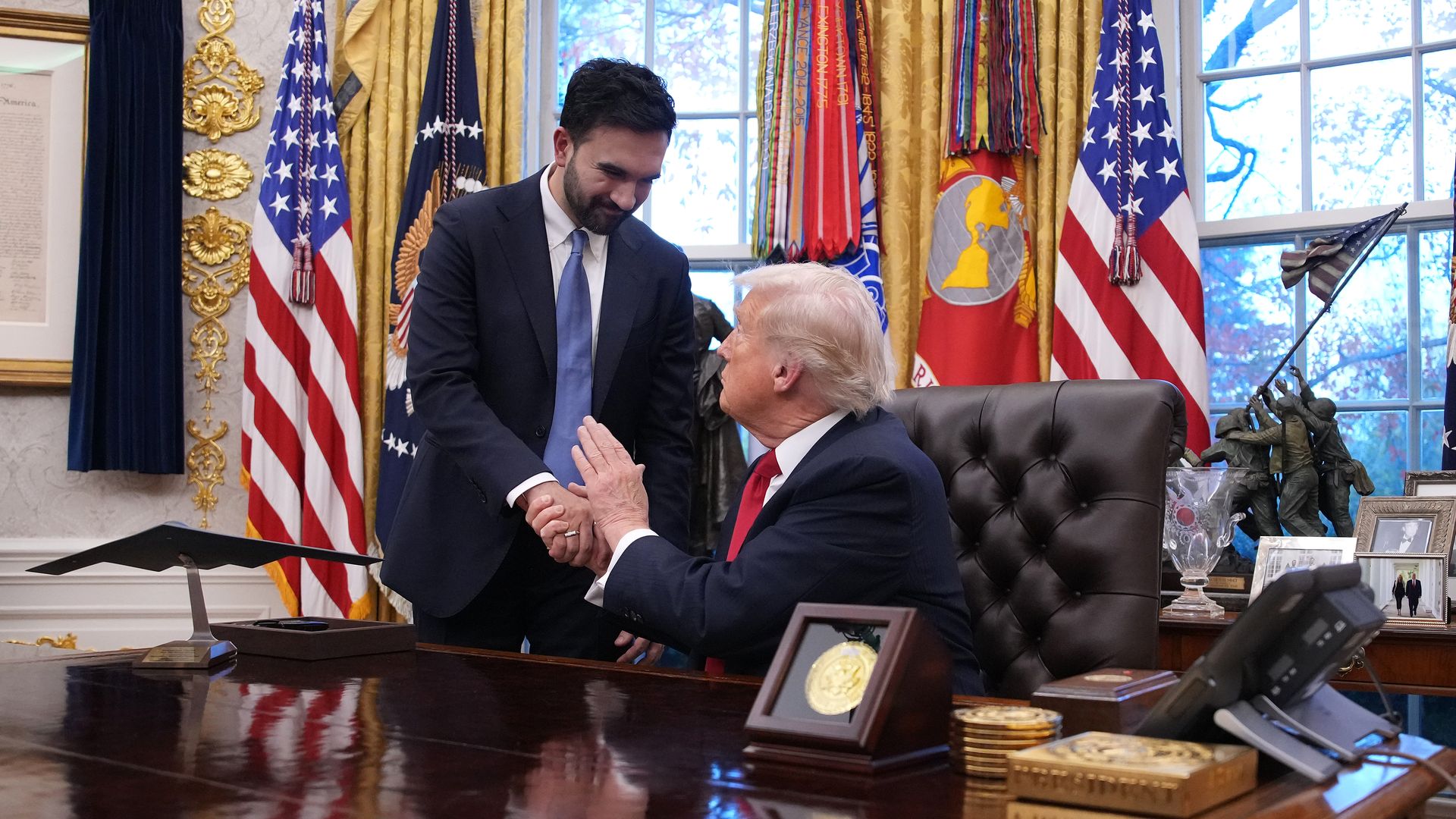
The White House is reassured by New York City Mayor-elect Zohran Mamdani, and President Trump doesn't appear inclined to cut the city's funding, National Economic Council director Kevin Hassett said Sunday.
Why it matters: Only three weeks ago Trump was threatening to largely block federal funds to America's largest city if Mamdani, a Muslim socialist immigrant, was elected mayor.
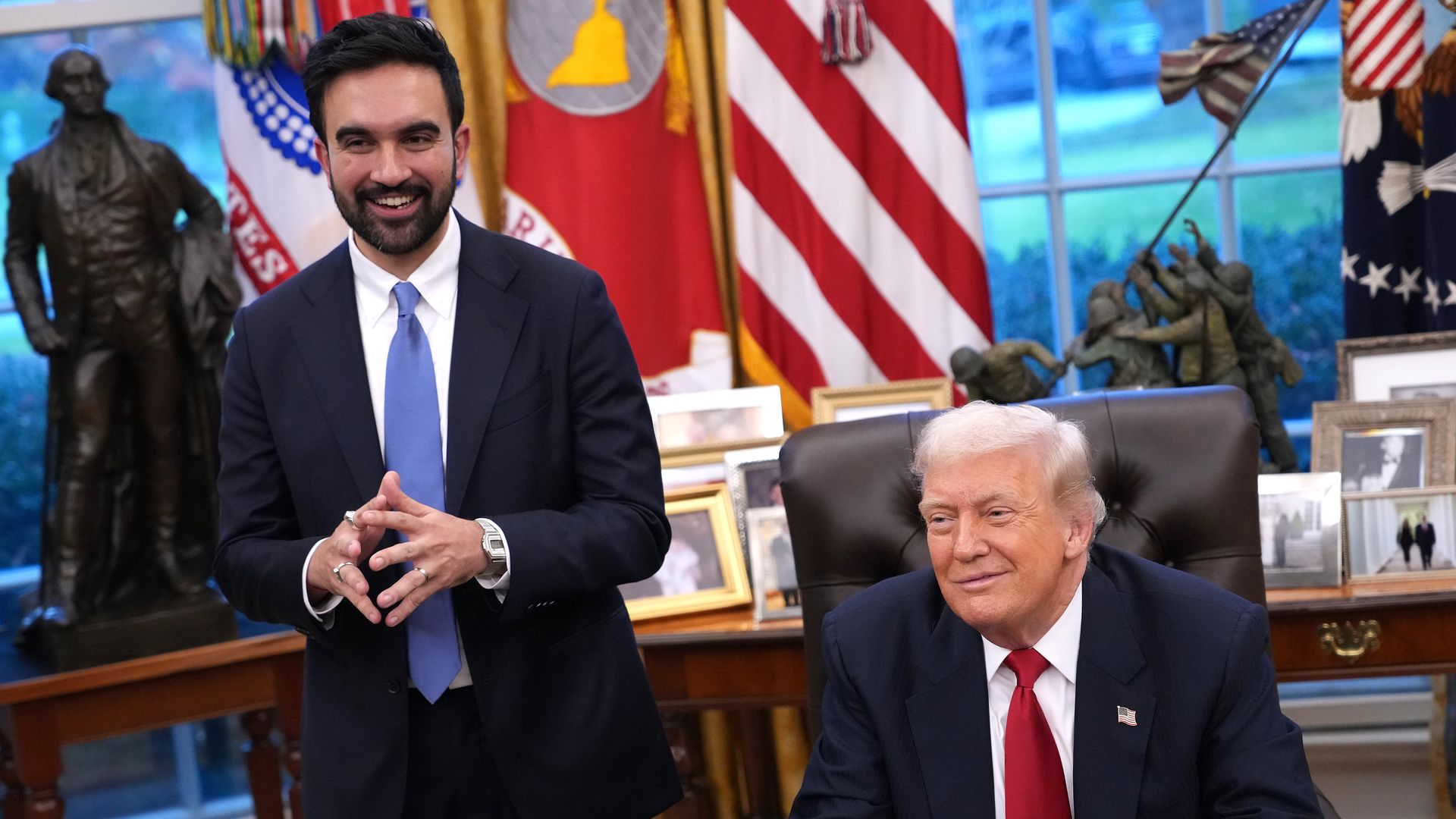
For all the hype of a conflict, President Trump and New York City's next mayor, Zohran Mamdani, had a surprising bond when they met Friday in the Oval Office: populist outsiders, lovers of the Big Apple, and two politicians who each want what the other has.
Mamdani, facing a city budget deficit, needs federal money and doesn't want Trump to send National Guard troops into New York City.
Trump, reeling from bad polling on the economy, sought to co-opt some of the shine from the charismatic Mamdani's message on affordability.
Why it matters: For a few minutes, Mamdani — whom Trump had called a communist — and Trump, whom Mamdani had called a fascist, gave a glimpse of how they might find common ground by putting aside vast partisan differences and working together, or at least appearing to.
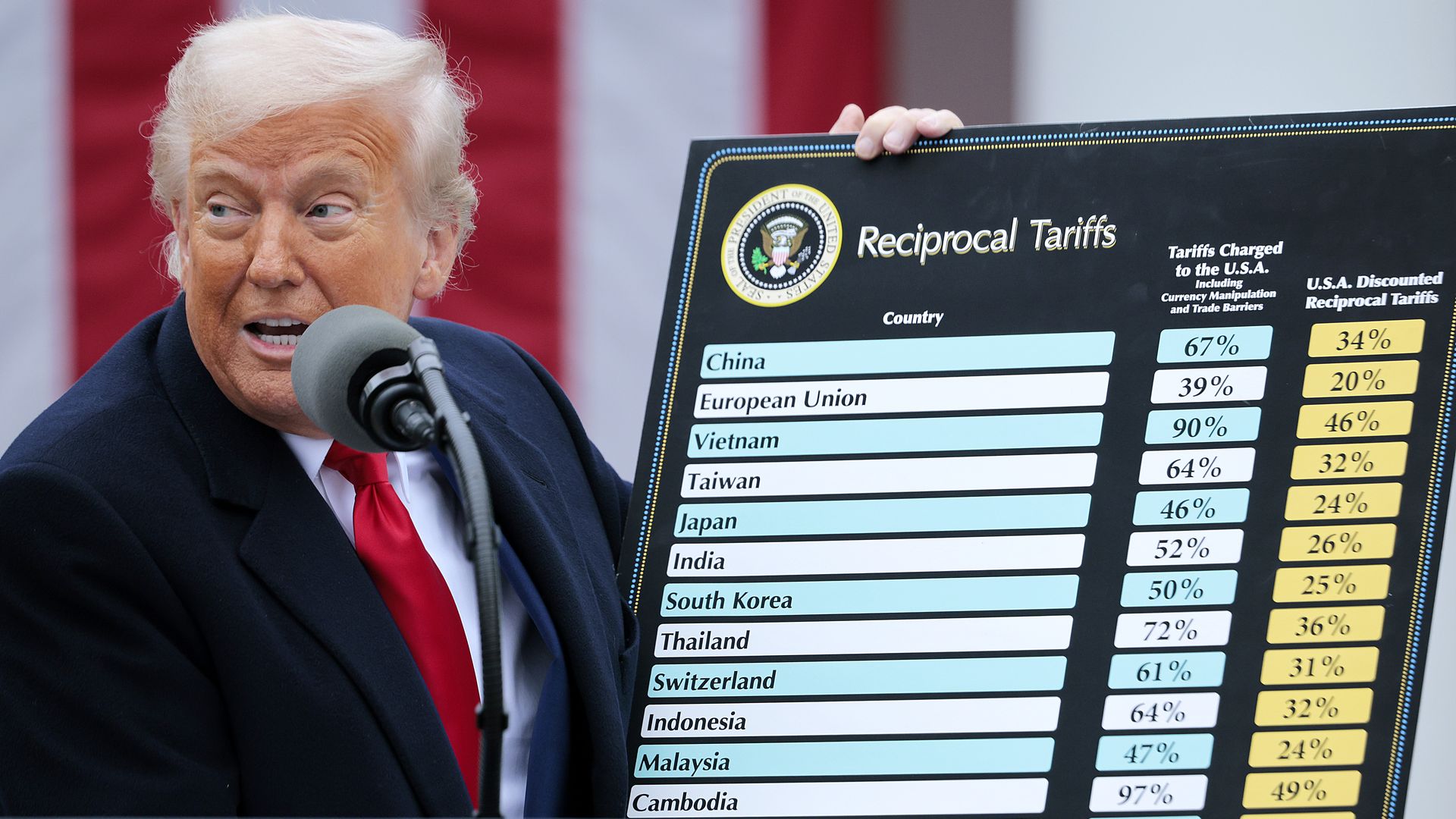
If you add up all of President Trump's plans for the tens of billions in tariff revenue the U.S. is collecting, the bucket of money has already dried up — and then some.
Why it matters: For the first time in decades, America is bringing in meaningful tariff revenue that could improve the nation's fiscal outlook, a bright spot from the administration's trade policy.
Artificial intelligence is struggling to understand accented English and non-standard dialects, creating problems that can cascade into biased hiring, grading or clinical records.
Why it matters: AI is deciding who gets a job interview, how students are graded, and what doctors record in a patient's chart. But major speech-to-text systems make far more errors for Black speakers than for white speakers.