Sunday's economy stories

Moguls cash in on record-high market

When the market is at record highs, that's a great time to convert paper wealth to cash dollars. Just ask JPMorgan's Jamie Dimon, Meta's Mark Zuckerberg, or Amazon's Jeff Bezos — all of whom have been selling a lot of stock of late.
Why it matters: It makes sense even for billionaires to diversify out of having the overwhelming majority of their wealth in a single stock. Now's a great time to do just that.

AT&T giving some customers credit for Thursday’s outage
AT&T customers affected by Thursday's outage will get an automatic $5 “make it right” credit, the average cost of a day’s service, the company announced late Saturday.
Why it matters: The outage of the nation’s largest wireless carrier left thousands unable to place calls, send texts or use the internet on their mobile phones for hours.
How Ukraine can monetize frozen Russian assets
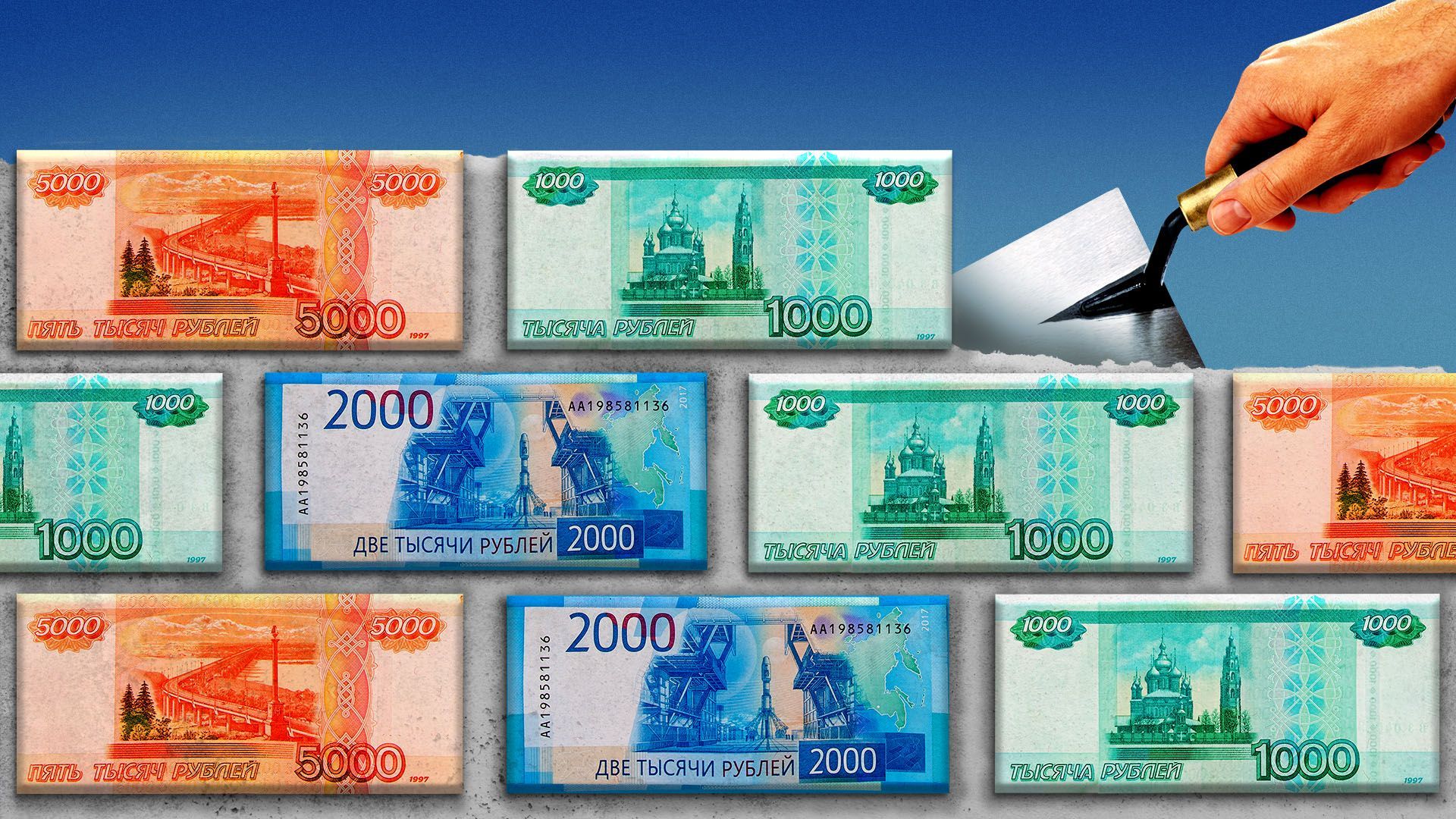
Ukraine can borrow money against seized Russian assets. That's the verdict of the doyen of all things related to sovereign debt, Lee Buchheit.
Why it matters: As my colleague Kate Marino reported earlier this month, there are many practical and legal obstacles to Ukraine being able to use the Russian money western governments have frozen.
The big picture: In a new paper he co-wrote with my former Reuters colleague Hugo Dixon and former U.S. Deputy National Security Advisor Daleep Singh, Buchheit seems to have found a way around those obstacles.
Zoom in: Under Buchheit's plan, Ukraine would borrow money directly from G7 governments, rather than issuing a bond to private-sector investors.
- The funding from G7 countries to Ukraine would be a "limited recourse" loan, with the Ukraine government itself having no repayment obligation and having to pay no interest.
- When an international court awards war damages against Russia, however, the G7 countries could foreclose on the loan and seize the collateral — Ukraine's claim for reparations against Russia.
- That claim would then belong to the G7, which could reduce the amount outstanding by the amount currently frozen, under the law of "set off." That would effectively repay the loan.
By the numbers: There are about $300 billion in frozen Russian assets, but the initial loan wouldn't need to be that big. Instead, there could be a smaller initial installment, with future tranches envisaged as they are needed.
Between the lines: One of the elegant aspects of this structure is that it gives the G7 an important seat at the table in any armistice negotiations — something private-sector bondholders would certainly not want.
- If the G7 wanted to allow Russia to access its frozen money in return for ending the war, they could do so — in the knowledge they would have to write off their loan to Ukraine.
The bottom line: This is a structure that allows governments to lend money to Ukraine without Ukraine ever having to pay it back out of domestic tax revenues.
A stock exchange for art
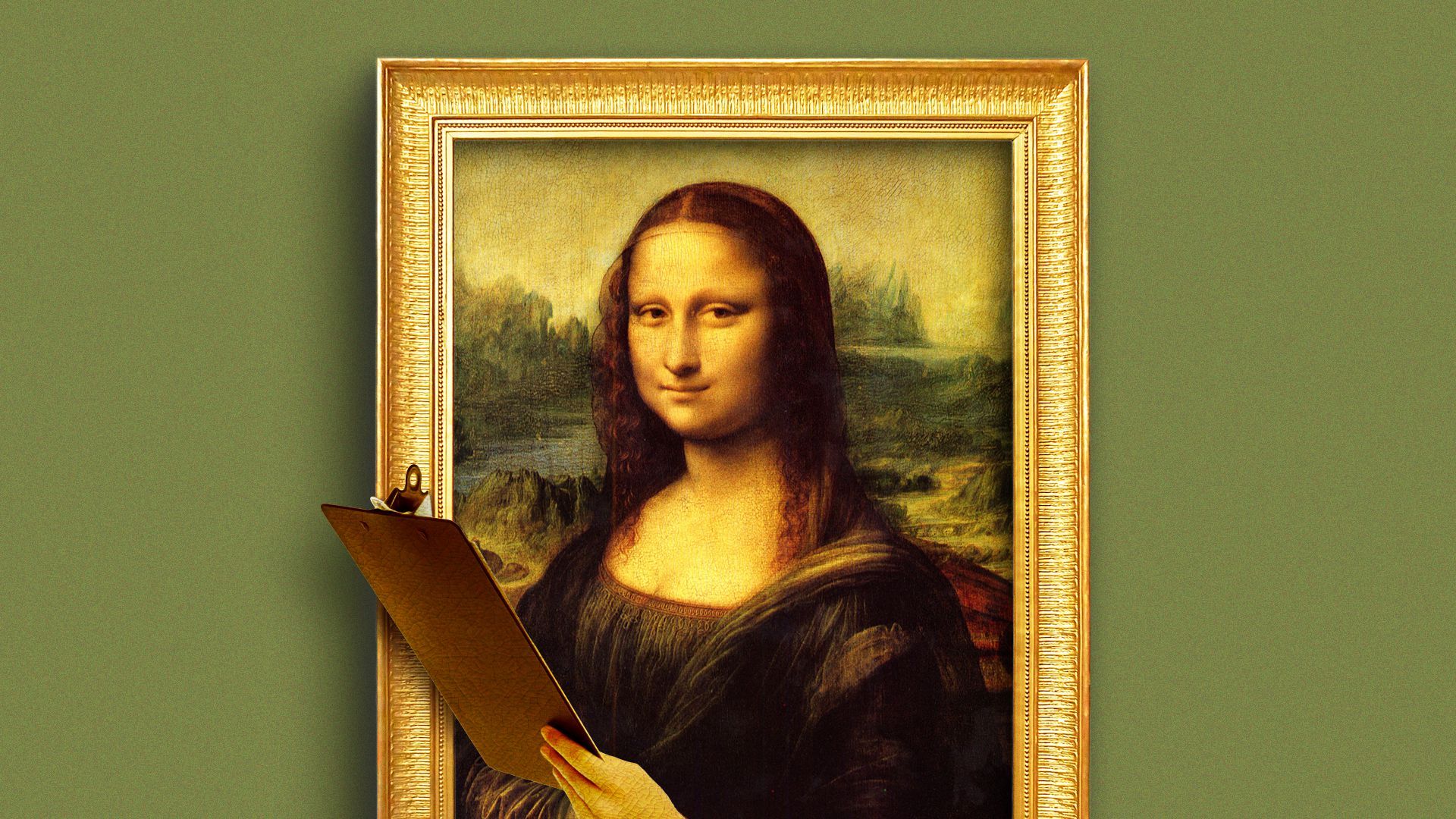
If Yassir Benjelloun-Touimi has his way, soon you'll be able to short Picassos and Modiglianis — or even a broad index of masterworks, each worth more than $50 million.
Why it matters: The art market has been characterized for centuries by its opacity and illiquidity. A new Liechtenstein-based stock exchange, Artex, hopes to change all that.
Driving the news: The exchange's first listing, a triptych by Francis Bacon, is now being offered for sale, with the final pricing set for February 29 (lucky!) and trading set to begin on March 8.
- The expected valuation is $55 million, slightly higher than the $51.7 million for which the work sold at Christie's in 2017.
What's next: After the Bacon comes to market, Artex intends to list another 10 artworks this year, per Benjelloun-Touimi, and eventually one every other week. At some point they will all be able to be aggregated into a single ETF.
- The costs of insuring and lending the artworks will be borne by Artex, which will charge a 3% listing fee, and then a 0.19% fee every time a share is traded.
- Artex has a market-maker lined up, Benjelloun-Touimi tells Axios, who's charged with ensuring a continuous bid-ask spread of no more than 0.1%.
How it works: The artworks can remain on the exchange in perpetuity, or anybody can make a takeover bid at any time, so long as the bid is at least 20% greater than the average trading price over the previous 20 days.
- At that point an auction process is triggered, and the piece ends up selling to the highest bidder. Shareholders then get paid out their share of the proceeds.
Reality check: Artex faces three big obstacles.
- Inventory: It needs a pretty steady stream of sellers looking to sell their $50 million-plus paintings. Those sellers aren't easy to find, and they tend to be assiduously cultivated both by auction houses and private dealers. Breaking in to that world won't be easy.
- Demand: Artex also needs a broad base of investors who are willing to buy a stock that pays no dividend and might never be acquired. Such outré investments tend to be sold rather than bought — and it remains to be seen whether Artex's relationships with Europe's private banks will be enough to drum up sufficient interest.
- Liquidity: Artex needs its stocks to be reasonably actively traded — in the context of an art world rife with secrecy and inside information, where the probability is reasonably high that your counterparty knows something you don't. How many people will want to play that game?
The bottom line: Benjelloun-Touimi helped build the credit platform ITRAXX, when he worked for BNP Paribas, and has the financial nous to make this work. Still, a lot of stars are going to have to align in order for Artex to be a success.