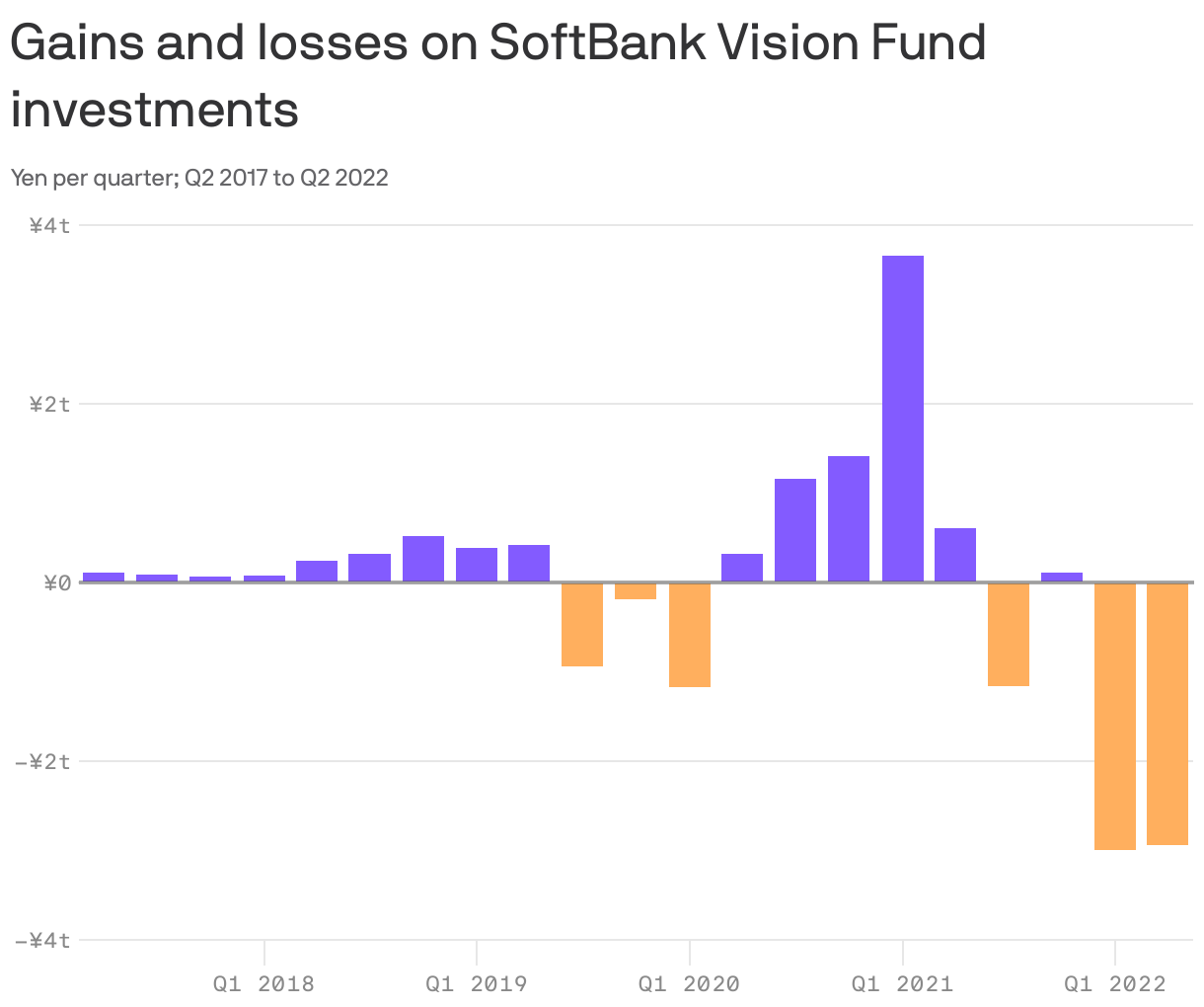
Tech's rout sent SoftBank's Vision Fund deep into the red last quarter.
Driving the news: The 5-year-old technology investment fund posted a $21.7 billion (2.9 trillion Japanese yen) loss — its second-biggest quarterly loss ever.
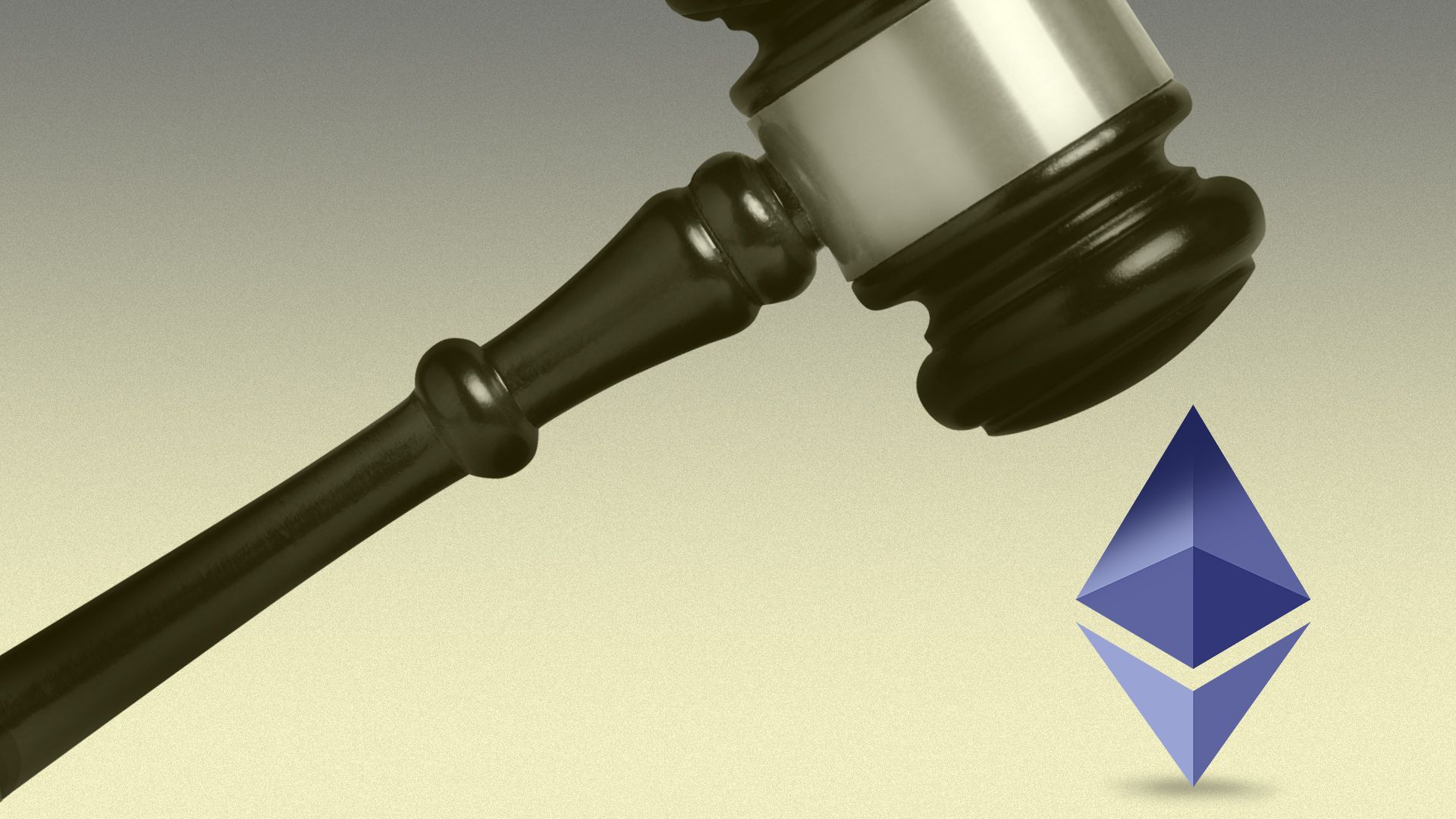
Tornado Cash has been added to Office of Foreign Asset Control's (OFAC) list of sanctioned internet services, shutting down a key privacy tool for Ethereum users, one frequently used by cybercriminals.
Why it matters: Tornado Cash is a non-custodial mixer that runs on the Ethereum blockchain. It allows an Ethereum address to receive funds without revealing who gave it to them (like cash does).
Americans' expectations for future inflation plunged in July, at least according to one closely watched survey out this morning. That's great news for anyone who doesn't want current prices to become the new normal.
Driving the news: The Federal Reserve Bank of New York's Survey of Consumer Expectations showed steep drops in how high respondents expected inflation to be across a variety of time horizons.
"Decentralization" is this abstract term that floats all over crypto. It comes off like one of those tedious buzzwords that business people favor (such as: "solutions," "bespoke," and "synergy").
The big picture: Attorneys who see a future in blockchains have gotten serious about articulating what decentralization really means in terms of keeping token projects on the right side of laws meant to protect investors.
Nouns is an NFT project that sells a new one every day for about $150,000. It just turned 1-year old today.
Why it matters: Nouns have never generated a lot of headlines, but the project has shown persistent interest from NFT collectors and seems to be a new model for building out an ecosystem around intellectual property.
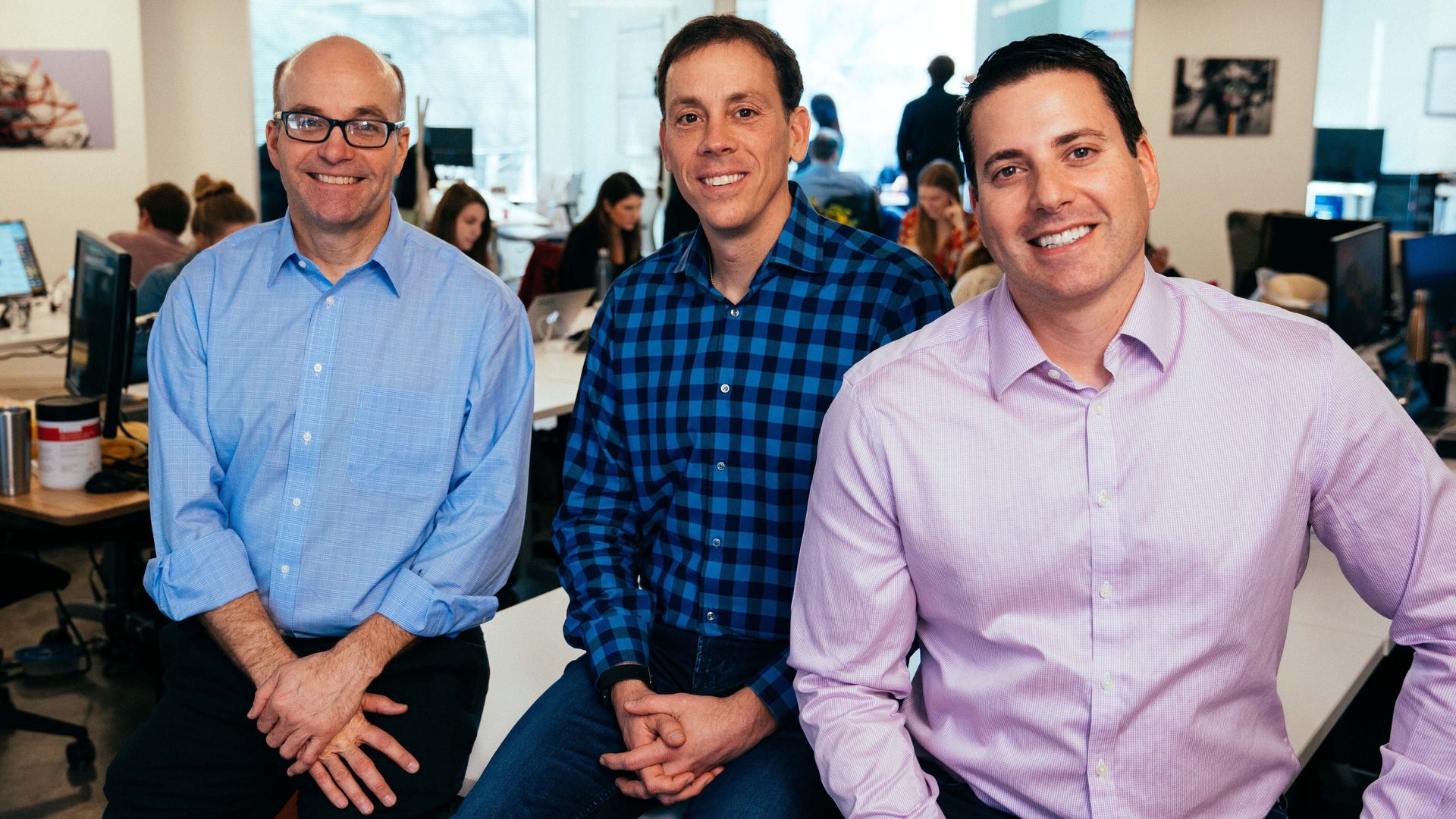
Axios has signed a deal to sell to its most recent lead investor, Cox Enterprises, the companies announced Monday. The cash deal values the company at $525 million, according to sources familiar with the deal.
Why it matters: The deal is structured to ensure investments will continue to flow into local news at a time when most commercial investors have abandoned local markets.
Americans nationwide will likely face higher electric bills to pay for the next stage of the country's electric vehicle (EV) charger buildout — even if they don't drive an EV.
Why it matters: The U.S. will need a massive investment in public charging infrastructure to match the anticipated spike in EV demand. But such capital outlays don't make economic sense for many companies until there are more EVs on the road — which won't happen until there are more chargers.