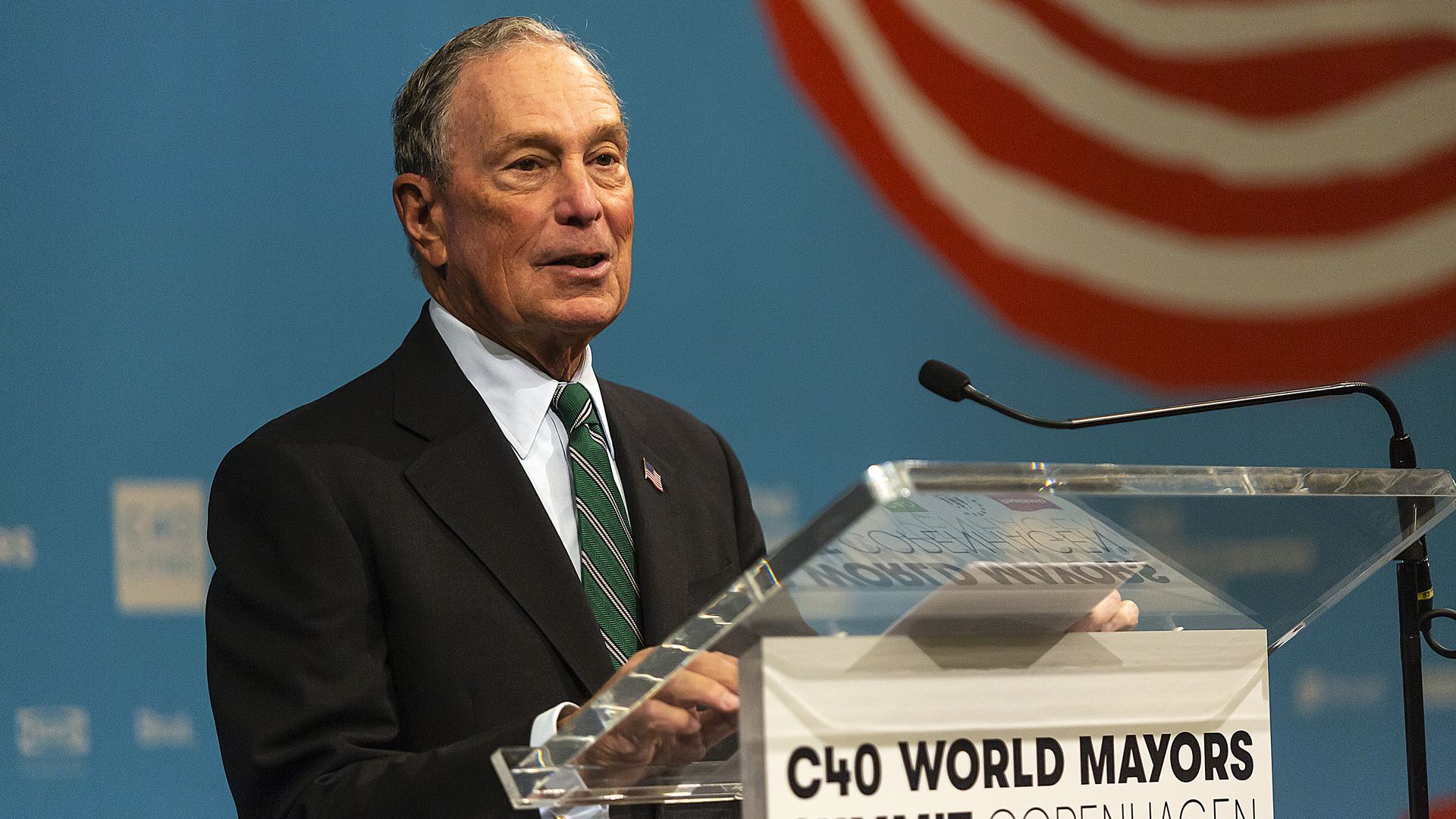
Former New York Mayor Michael Bloomberg dipped his toe into the 2020 election water last week, and some investors are already salivating.
What it means: Analysts at investment bank Cowen and Co. argue in a recent whitepaper that Bloomberg's policies would provide the market a big boost, even though they argue the billionaire is "unlikely to substantially ease regulatory policies" and " is actually likely to toughen some capital and consumer protection rules."
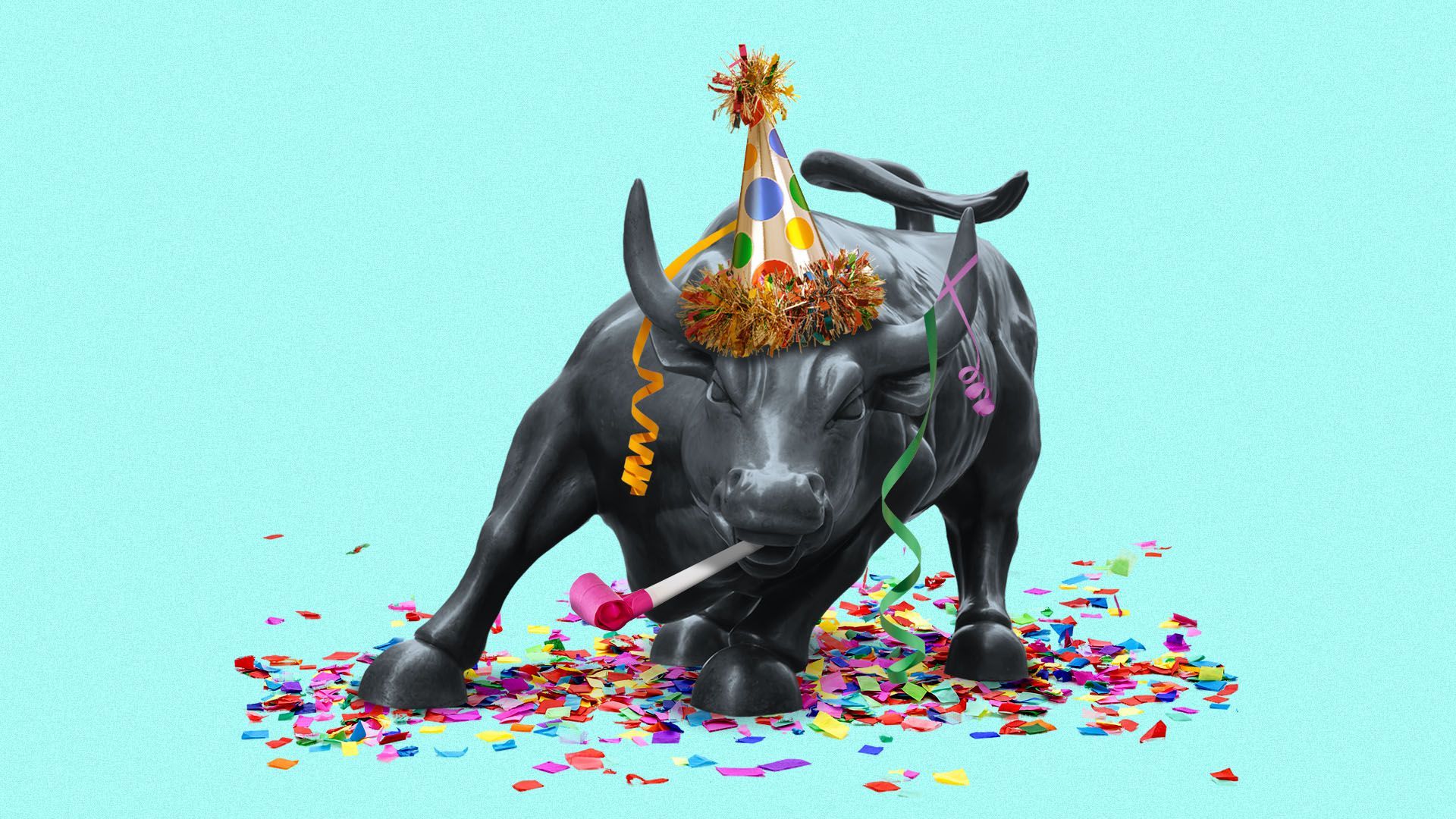
Investors put their recession umbrellas back in the closet last week and broke out their party hats, as all three major U.S. stock indexes hit fresh record highs. The market is bullish on the expected pause in President Trump's trade war with China and market participants have plenty of ammo to drive stocks higher.
What's happening: Investors are moving back into risky assets like stocks in a big way and selling out of traditionally safe ones.
In an interview with "Axios on HBO," Uber CEO Dara Khosrowshahi defended his company's position that drivers shouldn't be classified as employees, adding that pay is fair and that he wouldn't support a driver's union.
Why it matters: Uber and other gig economy companies are under increasing political pressure to provide higher wages and better benefits to their workers, and in California to stop classifying them as independent contractors.
Chinese e-commerce giant Alibaba Group reported on Monday that sales reached 91.2 billion yuan ($13 billion) within the first hour and two minutes of Singles' Day, an annual 24-hour shopping fest akin to Black Friday and Cyber Monday in the United States, according to Reuters.
Why it matters: Singles' Day is the world's largest online sales event. Last year, Alibaba reported $30 billion worth of Singles' Day sales, dwarfing the $7.9 billion of online sales for last year's Cyber Monday in the U.S.