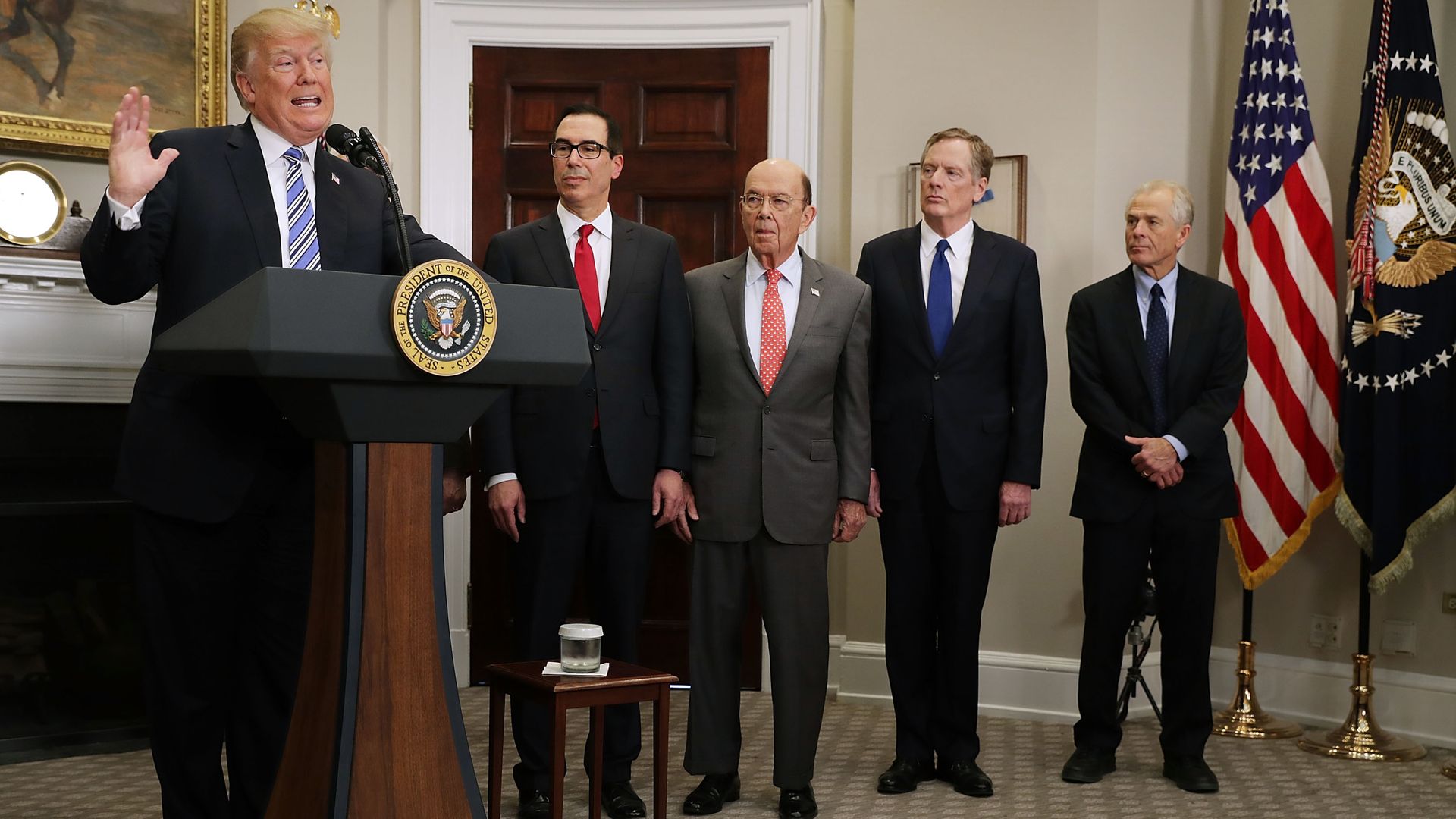
For months, President Donald Trump has been badgering his economic advisors to give him broad, unilateral authority to raise tariffs — a move that would all but break the World Trade Organization.
His favorite word: “reciprocal.” He’s always complaining to staff about the fact that the U.S. has much lower tariffs on some foreign goods than other countries have on the same American-made goods. The key example is cars: The European Union has a 10 percent tariff on all cars, including those manufactured in America, and China hits all foreign-made cars with 25 percent tariffs. But the U.S. only charges 2.5 percent for foreign cars we import.
AT&T’s $85 billion attempt to buy Time Warner and its way into the content business goes to trial on Monday, kicking off a courtroom battle with the Justice Department that could stretch on for two months.
Why it matters: When the deal was announced nearly 18 months ago, it was viewed as a fairly sure thing. But its prospects gradually dimmed as President Trump criticized it from the campaign trail and DoJ moved to block it. The outcome of the case will not only determine AT&T's future, but also the future of tech, media and telecom deals in general.