Thursday's economy stories

West Virginia county sues drug distributors over opioid crisis
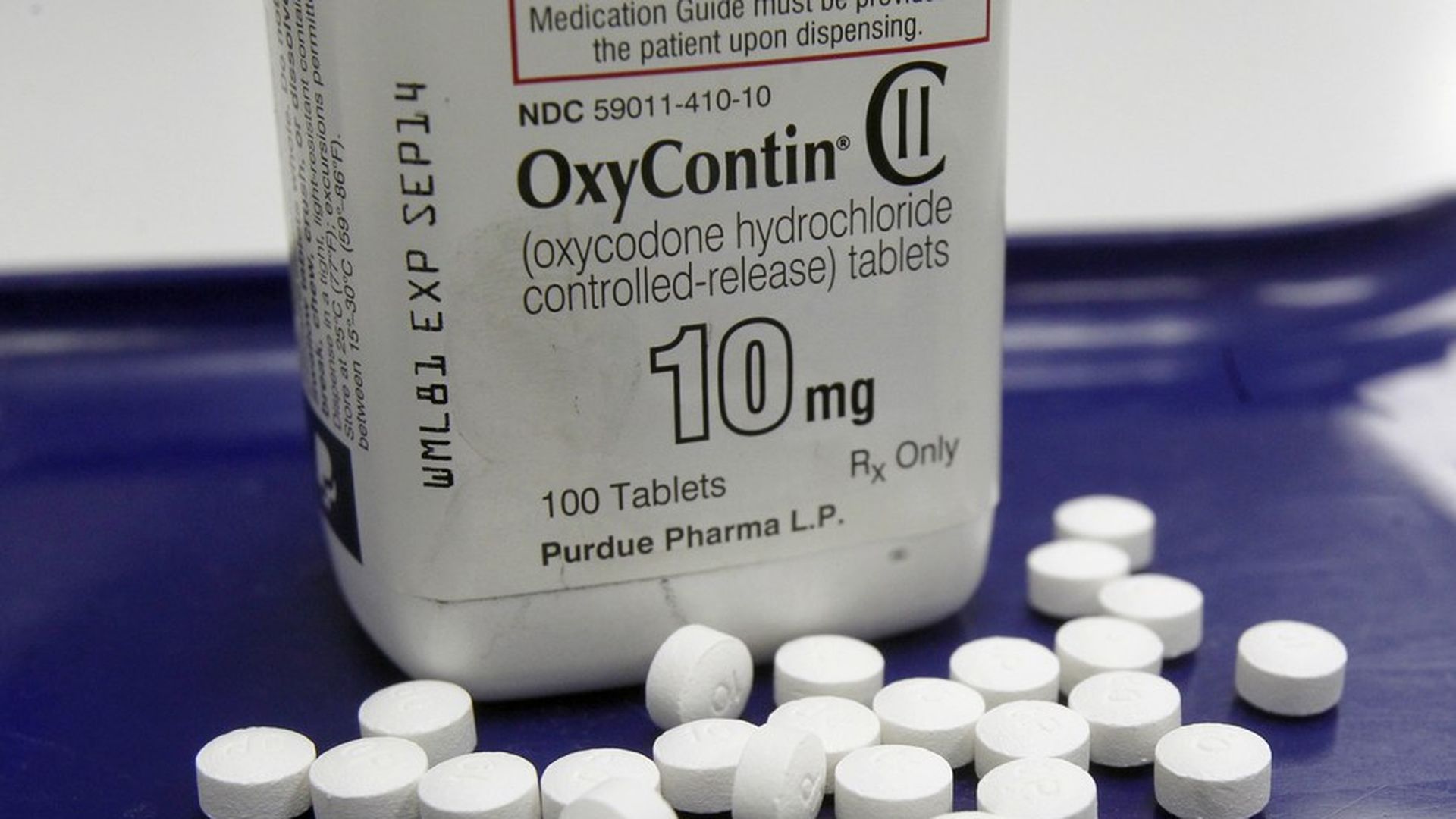
The Cabell County Commission in West Virginia is suing a handful of drug distributors, alleging they knowingly turned a blind eye to the opioid epidemic that is ravaging the state by delivering and selling mass quantities of pain medications.
The companies being sued: AmerisourceBergen, CVS, Cardinal Health, H.D. Smith, Kroger, McKesson, Rite Aid, Walgreens and Wal-Mart.
The federal lawsuit filed today said those companies collectively sold 40 million doses of hydrocodone and oxycodone to Cabell County pharmacies between 2007 and 2012. The county's population is less than 100,000. From the suit:
"The sheer volume of prescription opioids distributed to pharmacies in Cabell County is excessive for the medical need of the community and facially suspicious. Some red flags are so obvious that no one who engages in the legitimate distribution of controlled substances can reasonably claim ignorance of them."
Cabell County's lawsuit comes just a few months after the Charleston Gazette-Mail published an investigation that found drug distributors, including many of the defendants in the lawsuit, flooded the state with prescription opioids, equal to "433 pain pills for every man, woman and child in West Virginia," the newspaper wrote.
One of the drug distributors, Cardinal Health, responded by saying it would defend itself "vigorously" and that "these copycat lawsuits do not advance any of the hard work needed to solve the opioid abuse crisis."

AIG CEO announces plans to resign
American International Group announced Thursday that CEO Peter Hancock has informed the board of directors that he plans to step down, per CNBC. Shares of AIG rose 1.4% pre-market after the news.
Hancock, who was named chief executive of the global insurance organization in 2014, will remain CEO until a successor is appointed.
Samsung considers 500 new jobs, $300m U.S. investment
Samsung is planning to invest around $300 million in expanding its U.S. production facilities, and is in talks with at least 5 states to make this happen, reports the WSJ. The company will also shift some production of oven ranges to the U.S. from Mexico, a move which could generate around 500 jobs.
The South-Korean based company has had initial discussions with Alabama, Georgia, North Carolina, Ohio and South Carolina. Among those, South Carolina seems to be the leading contender, with Samsung expressing interest in a facility around Blythewood, S.C.
The move comes as Trump has increasingly sought to lure manufacturing companies to keep their plants and jobs in the U.S., while threatening those who leave with potential penalties, such as a border tax. But note that talks are continuing and no final decisions have been made, so the details may change.
What's coming next from Nest on smart home tech
Nest is working on modernized and cheaper versions of its self-learning smart home products that are expected to hit the market as soon as next year, reports Bloomberg. They include:
- Cheaper version of its staple iPhone-esque thermostat, which adjusts the temperature based on usage patterns, in addition to new remote sensors that will let users control the temperature of individual rooms.
- "End-to-end" home security alarm system, which would allow the homeowner to approve entry for a specific person.
- 2G version of its indoor security camera, that could potentially identify specific people in the frame.
- Digital doorbell system featuring a camera, so a resident could see the person they're allowing to enter.