Axios AM

October 06, 2026

1 big thing: The surveillance election

The 2026 midterms — a month from today! — will be the most intensely observed, recorded and dissected election in American history, Axios' Brittany Gibson writes.
- Why it matters: An army of partisan and nonpartisan observers will join a surge of Justice Department monitors, organizers looking for ICE, and citizen journalists broadcasting their search for illegal voting in real time.
Nonpartisan observation can bolster confidence in elections, studies show. But officials worry that activists expecting to find wrongdoing could misread routine events.
- After the 2020 election, claims from observers and activist sleuths helped fuel challenges.
- Those claims led to numerous lawsuits by the Trump campaign. The cases were almost all dismissed or denied relief.
🔎 Zoom in: DOJ plans to train 1,000 election monitors to deploy across the country, one of the largest-ever efforts from the agency. It builds on a significant increase in observers in 2024.
- Senate Democrats will use office staff to monitor the polls. That's in addition to a new 50-state recruitment program by a coalition of Democratic state parties, aiming to enlist at least 10,000 election watchers.
- The Republican National Committee is building on its election watch network set up in 2020 to counter perceived voter fraud. GOP partisans have signed up in record numbers to be poll workers, and the party is hosting virtual and in-person training for observers and challengers.
- A network of anti-ICE activists is transitioning ICE-watch training into poll-watch training, responding in part to the Trump administration saying ICE could make arrests at the polls. When asked about deploying agents, Trump told TIME he hadn't thought of it.
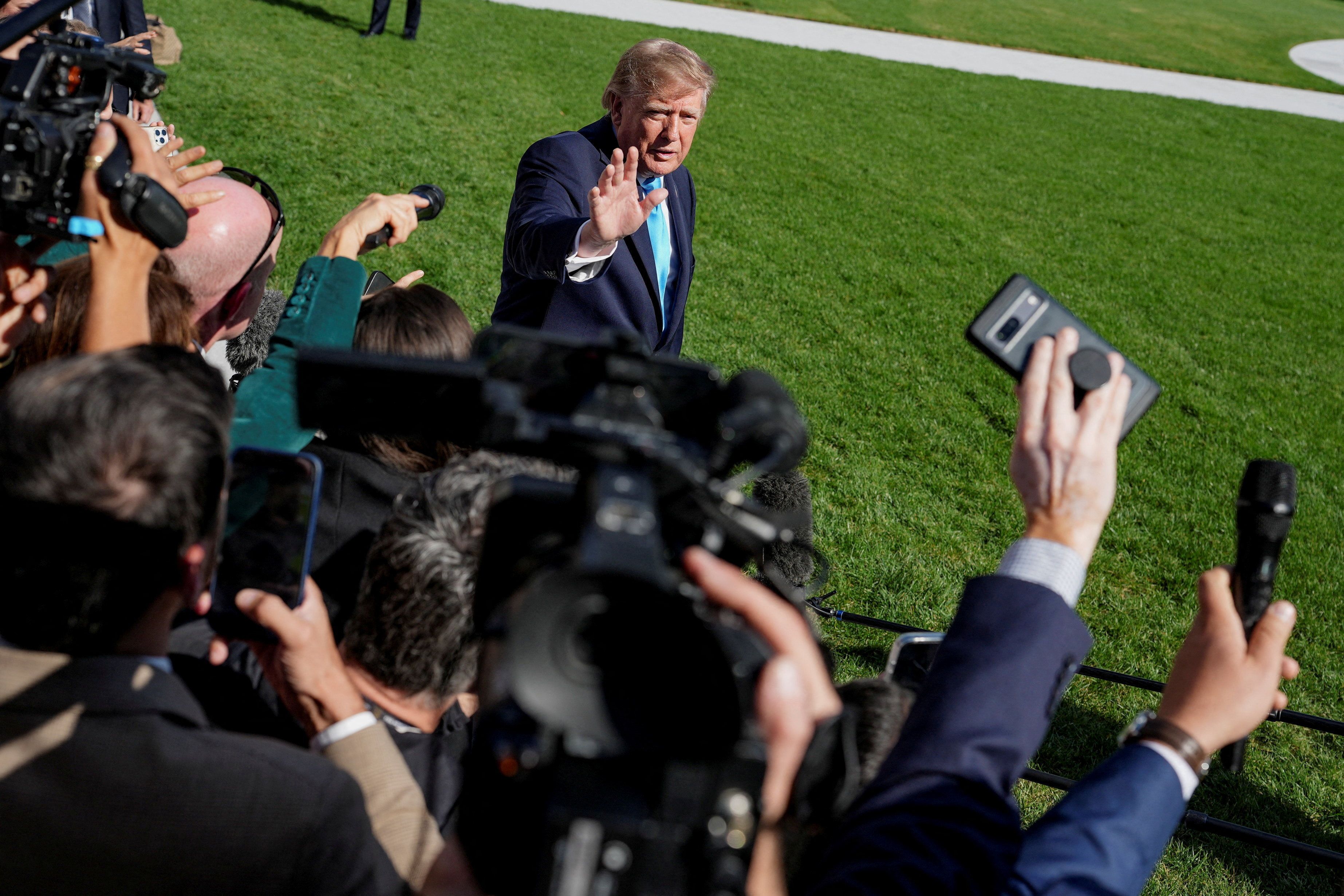
🔭 Zoom out: These efforts will coexist with a slew of nonpartisan observing efforts, from voter protection groups to international election observers.
- State party and campaign staffers regularly monitor polls for mundane issues like accurate opening and closing times.
White House spokeswoman Lauren Bis said: "Despite extreme Democrats and the media claiming it never happens, the evidence of voter fraud continues to pile up. Anyone who illegally votes in our elections will be held accountable."
- More than two dozen federal charges have been brought this year against people for voting when they're not eligible, according to the Justice Department. A review by the nonpartisan Center for Election Innovation & Research says instances of illegal voting are "extremely small."
2. 🌴 Scoop: GOP's surprise South Carolina fear

3. 🎥 The Axios Show: "People really want me to die"
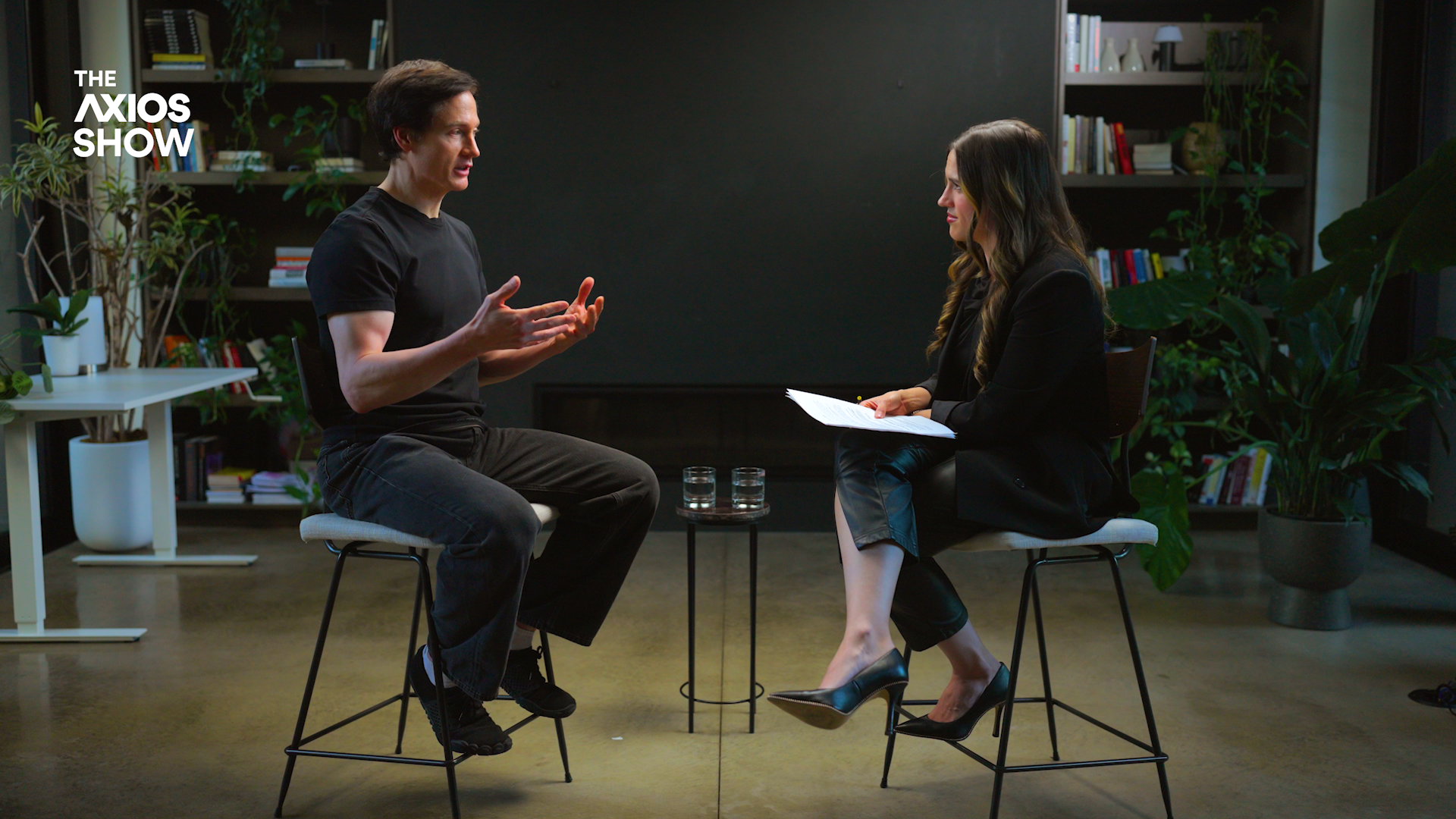
LOS ANGELES — Bryan Johnson — the face of the longevity movement, who believes he may never die — announced recently that he had an incurable autoimmune disease. Critics cheered, he said in a new episode of "The Axios Show," out later this week.
- "I mean, I think people really want me to die. Now I get it. It's funny. It's ironic. I push a lot of buttons that people don't like," he told Axios' Madison Mills at his L.A. home, which doubles as a lifespan lab.
- The founder of the "Don't Die" movement sees his diagnosis as rocket fuel for his mission to promote longevity, rather than a setback.
💡 Catch up quick: Johnson, 49, has autoimmune gastritis (AIG), a chronic condition in which the immune system attacks healthy cells in the stomach lining.
- Johnson said "there was joy all around the world" after he announced his diagnosis in July.
- He spends millions of dollars a year on extreme health interventions, documenting the experiments for an online following of 8 million.
🥊 Johnson views the diagnosis as just another test of his campaign against aging: "I like the challenge. I'm up for it. I think it's good timing. I'm going to get diagnosed with something at some point. Why not this?"
4. 💰 Charted: Wall Street's record profits
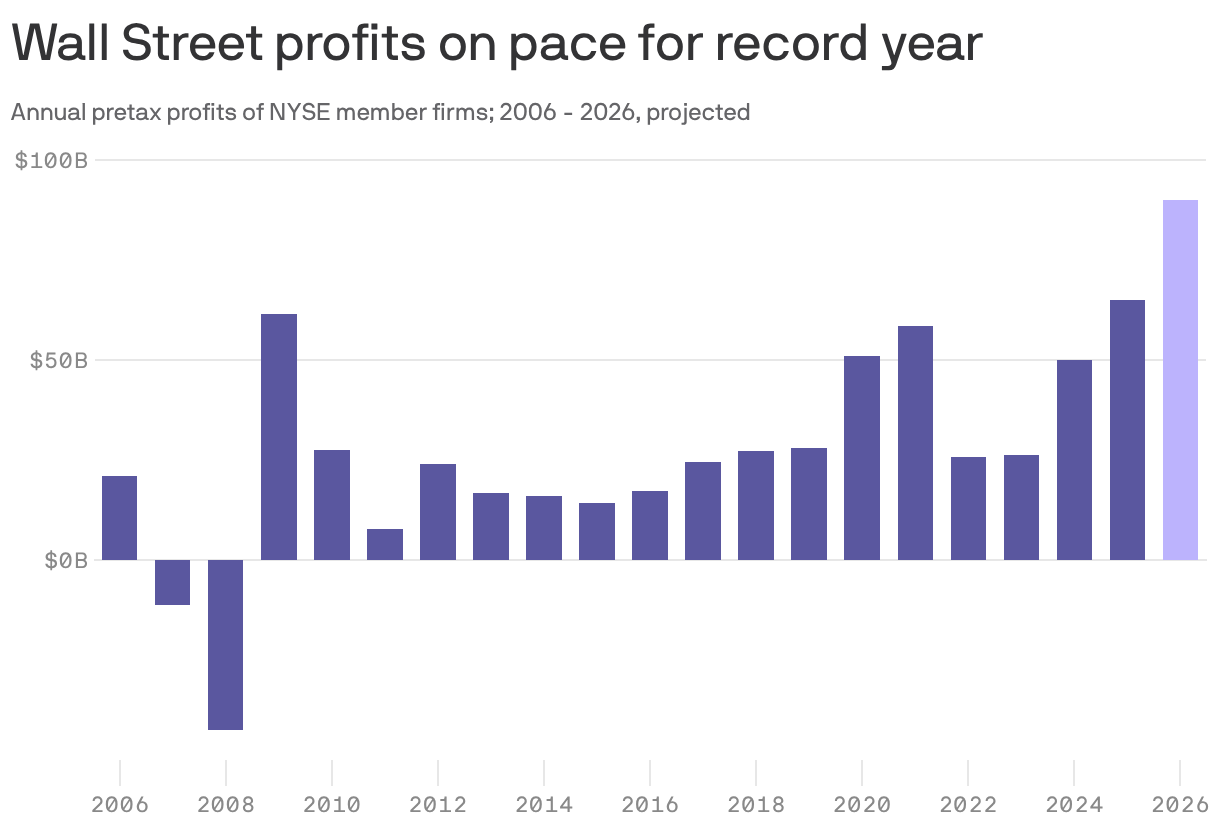
Wall Street profits are blowing past expectations this year and are on track for an all-time record, Axios' Emily Peck writes from a new report by the New York State Comptroller's office.
- In the first half of this year, Wall Street firms raked in $45.9 billion — 51.3% more than the same period last year.
5. 🤖 Inside Trump's new AI playbook

6. 🦠 Russian plague puzzle

7. 📚 First look: Big Labor's big shift
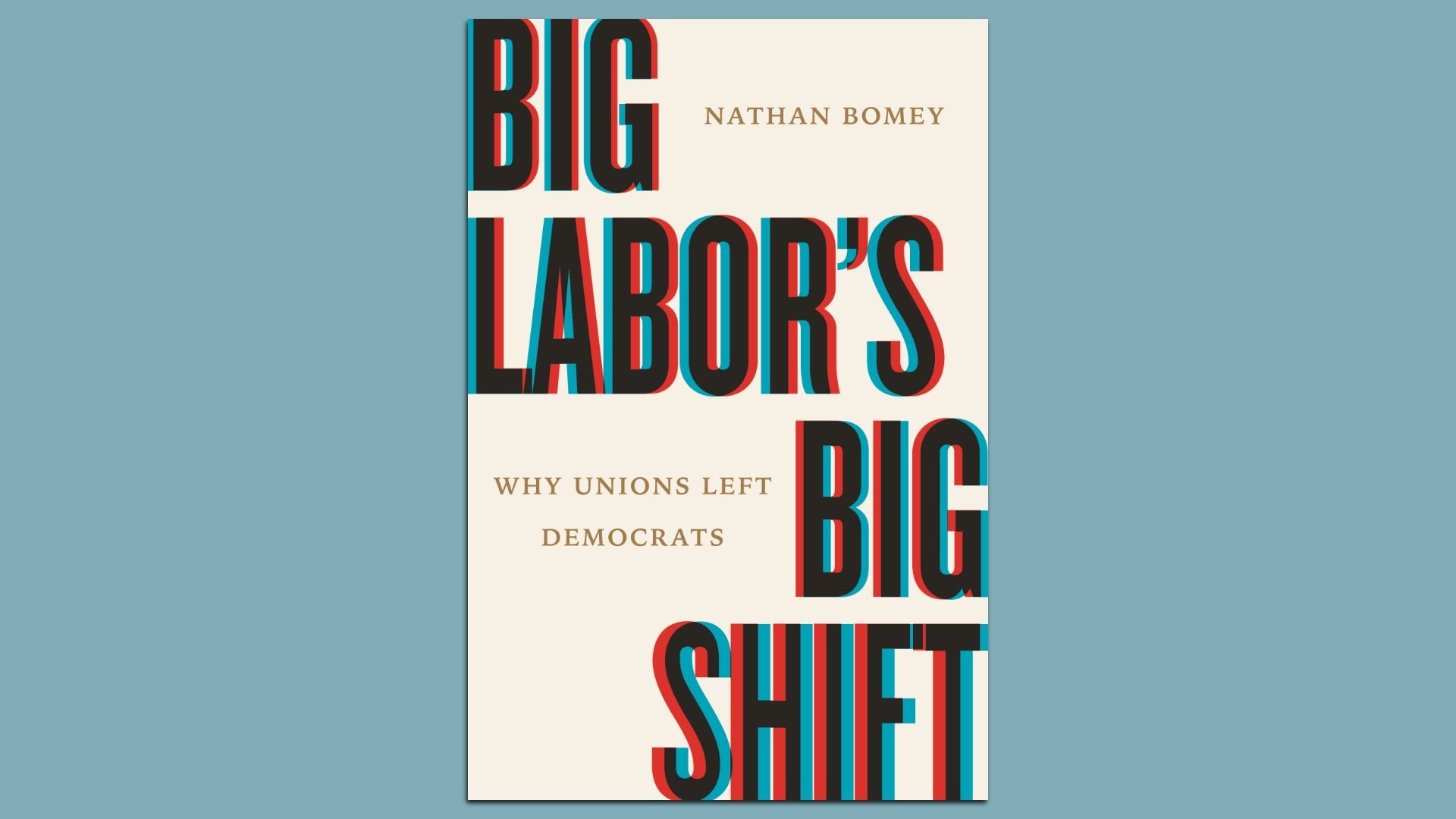
Axios' Nathan Bomey will be out April 27 with "Big Labor's Big Shift," chronicling the American union movement's resurgence and dramatic move to the right — a massive political realignment.
- Why it matters: The backdrop, Nathan tells me, is "an ongoing battle for the soul of the American working class over issues like immigration, trade and culture."
Based on original reporting and interviews, Bomey traces how the shift happened, including:
- Teamsters president Sean O'Brien, who has cozied up to Trump and delivered his message at the Republican National Convention.
- UAW president Shawn Fain, who has aligned with the White House on tariffs while blasting Democrats over their push for EVs.
8. 🏀 1 hoop thing: NBA to experiment with smart balls

Axios AM
Catch up with the most important news of the day