Nationalist leaders say U.K. union "coming to an end"

Add Axios as your preferred source to
see more of our stories on Google.
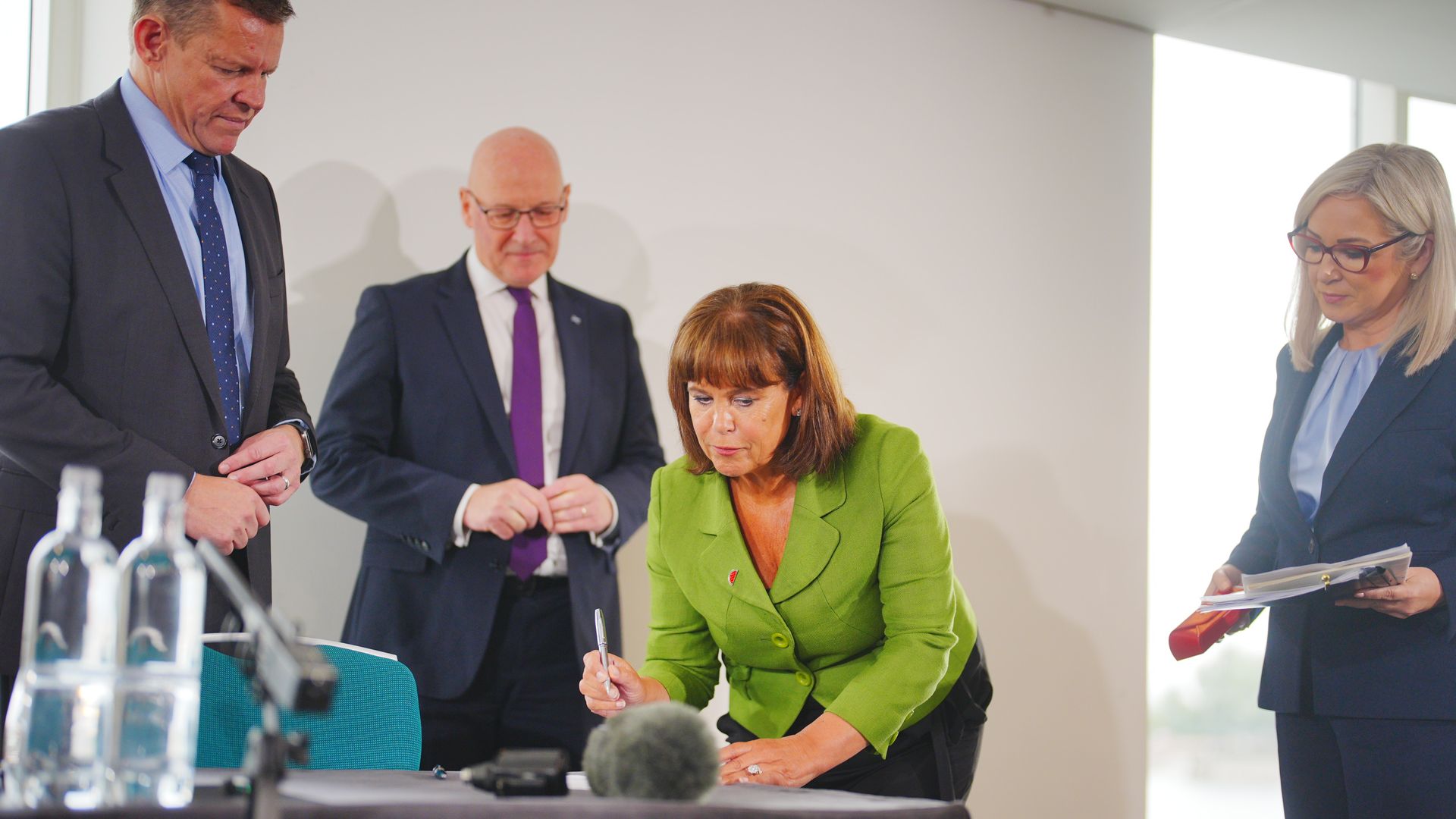
Welsh First Minister Rhun ap Iorwerth, Scottish First Minister John Swinney, Sinn Féin leader Mary Lou McDonald and Northern Ireland First Minister Michelle O'Neill in Cardiff, Wales, Monday. Photo: Ben Birchall/PA Images via Getty Images
The first ministers of Northern Ireland, Scotland and Wales united Monday behind calls to leave the United Kingdom in an unprecedented alignment of nationalist leaders.
Why it matters: For the first time, all three first ministers favor leaving the U.K. — and Northern Ireland First Minister Michelle O'Neill says President Trump's support for a united Ireland has taken the debate global.
Driving the news: The nationalist leaders of the Scottish National Party, Sinn Féin and Plaid Cymru met in Cardiff, Wales, on Monday to sign a memorandum of understanding declaring that the "political landscape across these islands is changing."
- The SNP's John Swinney, Sinn Féin's O'Neill and Plaid Cymru's Rhun ap Iorwerth met as leaders of their respective parties, not as representatives of their regional governments.
- Swinney and O'Neill called for referenda on independence from the U.K. during a news conference, but ap Iorwerth is pushing for similar regional powers as in Northern Ireland and Scotland and has ruled out holding a referendum during this term.
What they're saying: "For people watching across these islands – for people watching around the world – there could be no clearer sign that Westminster's time is coming to an end," the memo said.
- "Momentum is behind our movements; we believe that constitutional change is coming," it added.
- "We call for the British Government to prepare for, plan and facilitate constitutional change in each jurisdiction."
Zoom in: O'Neill told reporters that Trump's support for Irish reunification during a two-day visit over the weekend reflected a "growing conversation around constitutional change at home in Ireland."
- She said the debate was happening "not just at home, but obviously now internationally as well" and Trump's intervention showed Irish unification is "very much on the table."
Yes, but: A spokesperson for U.K. Prime Minister Andy Burnham has said Trump's comments don't change his stance that it's premature to call for independence referenda until public opinion clearly shifts.
- The 1998 Good Friday Agreement, which largely ended decades of conflict in Northern Ireland, requires a referendum on Irish reunification if the British government believes a majority would support it.
The other side: Trump's comments drew backlash from British lawmakers and unionists, including Northern Ireland's Deputy First Minister Emma Little-Pengelly who criticized O'Neill's attendance at the summit in an interview with the BBC.
- "She has not sought any agreement or permission from me to travel, attend or sign anything as first minister," the Democratic Unionist Party politician said.
- Little-Pengelly stressed that she and O'Neill jointly lead Northern Ireland's power-sharing government and O'Neill was not there on official government business.
Go deeper: Why Trump's united Ireland stance hit such a nerve
