Inside Lindsey Graham's final push for Saudi-Israel peace

Add Axios as your preferred source to
see more of our stories on Google.
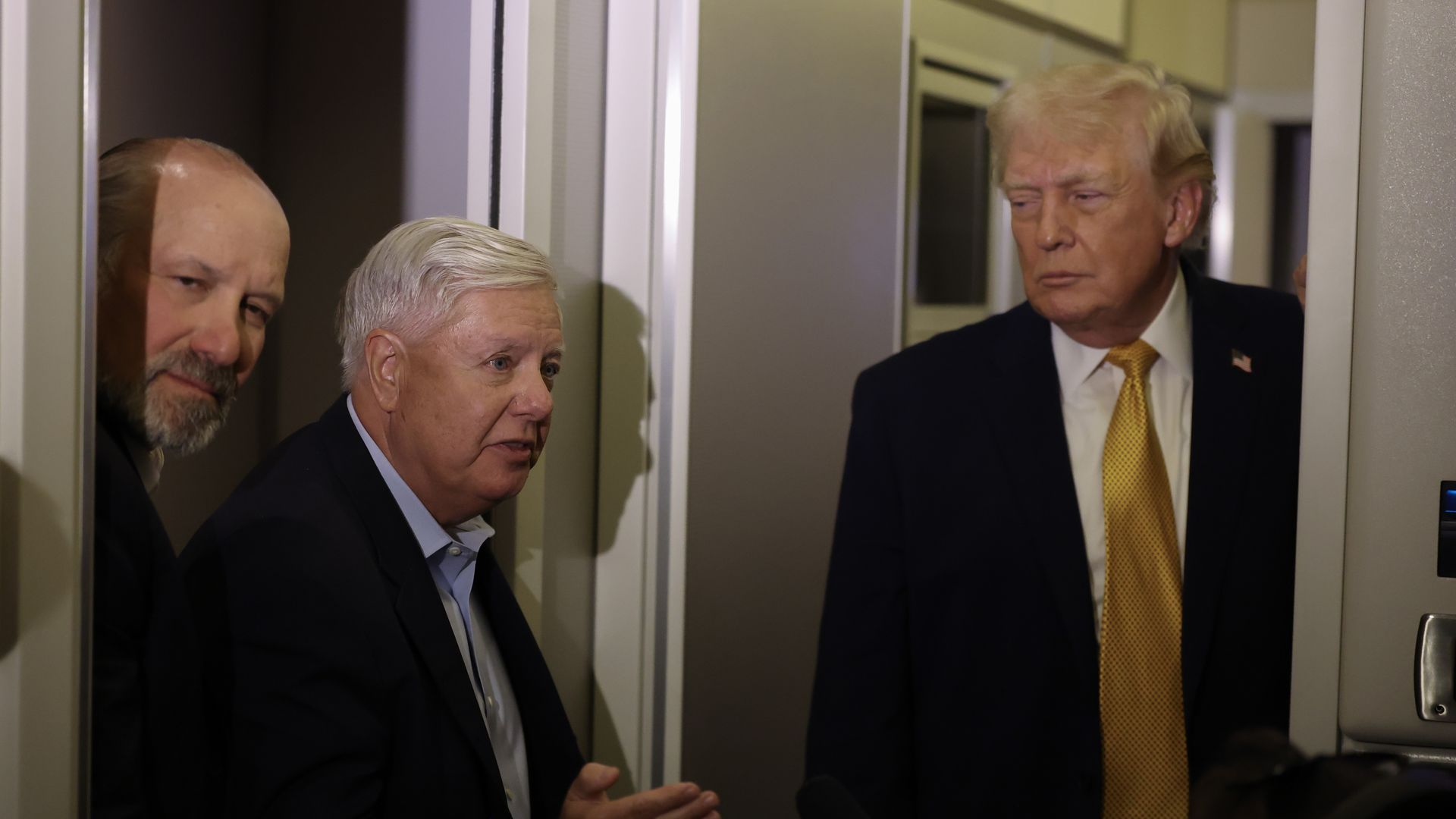
Photo: Joe Raedle/Getty Images
Sen. Lindsey Graham (R-S.C.), who died suddenly Saturday, spent his final weeks laying the groundwork for an ambitious new push to normalize relations between Saudi Arabia and Israel, he told me in multiple conversations over the past several weeks.
Why it matters: Graham was one of Washington's most influential and energetic foreign policy figures. He spent decades trying to shape America's role in the world and was still pursuing some of his biggest diplomatic ambitions in the final hours of his life.
Zoom in: Graham saw Saudi-Israel normalization as the defining prize of a broader postwar settlement in the Middle East — one that could outlast the military campaign against Iran and fundamentally reshape the region.
- He had worked on the issue for years, including with the Biden administration, and believed the opening created by Iran's weakening could give President Trump a rare chance to broker a historic agreement.
- Graham's plan was to begin an intensive diplomatic push after Israel's October elections and the U.S. midterms, with the goal of reaching a deal before the new Congress was sworn in in January.
Yes, but: Graham believed the war with Iran first had to be brought under control, especially the ongoing crisis in the Strait of Hormuz.
- He had urged Trump to authorize a short, overwhelming military operation to reopen the strait if diplomacy failed.
Zoom out: Graham was one of the key figures outside of the administration that Trump consulted with on foreign policy and national security, especially around the Iran war.
- He helped lead a group of hawkish advisers who backed the U.S. campaign and urged Trump to intensify military pressure on Tehran.
- In mid-May, Graham began urging Trump to make Saudi-Israel normalization the centerpiece of a broader regional "day-after" plan for the war.
A week later, Trump told the leaders of several Arab and Muslim countries during a conference call that he wanted them to establish relations with Israel if an agreement could be reached to end the war with Iran. His primary focus was Saudi Arabia.
- Saudi Crown Prince Mohammed bin Salman had previously shown a willingness to normalize relations with Israel, though his enthusiasm had cooled over the past year.
- Saudi officials continued to insist that any deal must include an irreversible, time-bound path toward the creation of a Palestinian state.
- Israeli Prime Minister Benjamin Netanyahu's far-right government rejected that condition, and it remains unclear whether Israel's political landscape after the October election will create room for such a move.
Behind the scenes: Graham told me in recent weeks he had discussed the initiative with Trump, as well as U.S. envoys Jared Kushner and Steve Witkoff, and that they had agreed to pursue it in a coordinated way.
- Graham also said he had spoken with Netanyahu confidant Ron Dermer, Saudi Ambassador to Washington Princess Reema bint Bandar and Saudi Foreign Minister Prince Faisal bin Farhan.
- He had been planning a trip to Saudi Arabia and Israel in the coming weeks to assess the appetite for reopening talks.
- Graham told me that, should there be an opening, he wanted intensive work to begin in September so the pieces of a deal could be in place by November.
Between the lines: Graham believed the effort faced two intertwined political challenges — securing enough votes in Congress and producing an Israeli government willing to meet Saudi Arabia's conditions.
- A central element of the proposed agreement was a U.S.-Saudi defense treaty whose text had largely been negotiated during the Biden administration.
- Such a treaty would require support from two-thirds of the Senate. Given the political climate in Washington, Graham believed the lame-duck session after the November midterms offered the only realistic window for ratification.
Winning enough Democratic votes would require the deal to include meaningful progress on the Palestinian issue — including an Israeli commitment to a future Palestinian state and concrete steps toward that goal.
- That created a parallel challenge in Israel: ensuring that the government formed after the October election was willing and politically capable of making those commitments.
- Graham told me he intended to work with Trump and his team to make clear to Netanyahu and other Israeli leaders that Washington expected the next government to move in that direction — and to press it hard to do so.
The final hours: Graham spoke with Trump by phone Saturday night and briefed him on his recent trip to Ukraine and the Russia sanctions bill he wanted the Senate to vote on soon.
- Trump told Graham he was preparing to launch fresh strikes against Iran after another attack on commercial ships in the Strait of Hormuz.
- A person who spoke with Graham shortly afterward said the senator complained that he was feeling unwell. When the person urged him to seek medical attention immediately, Graham said he would do so Sunday morning after his scheduled appearance on NBC's "Meet the Press."
- Graham then joked: "I can't die now. I still need to do the Russia sanctions, get Iran sorted out and do Israeli-Saudi normalization."
- He passed away several hours later.
