U.S. strikes Iran after attacks on vessels in Strait of Hormuz

Add Axios as your preferred source to
see more of our stories on Google.
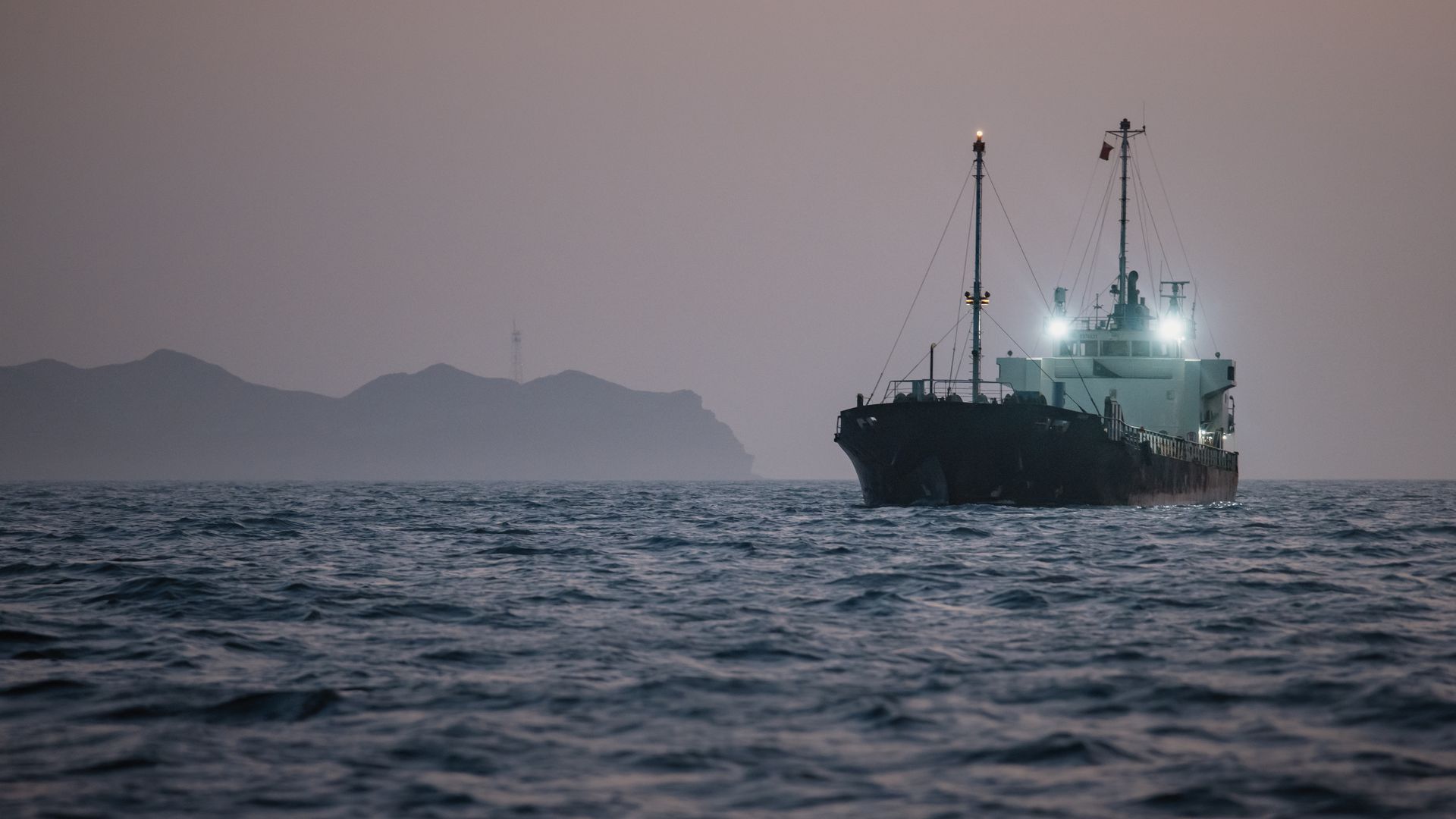
Oil tankers and cargo vessels remain anchored off Qaboos Port on June 21 in Muscat, Oman. Photo: Elke Scholiers/Getty Images
The U.S. military said it struck Iranian military targets in the area of the Strait of Hormuz on Tuesday in retaliation for renewed Iranian attacks on commercial ships.
Why it matters: The exchange of fire risks plunging the U.S. and Iran into a new cycle of retaliation, threatening the fragile memorandum of understanding signed by President Trump less than three weeks ago.
The latest: The Iranian military said it would deliver a "crushing response" to the U.S. strikes.
- The statement said Tehran would "not allow U.S. interference" in management of the strait and that the "only safe route" for commercial ships and oil tankers "is one set by Iran."
- Iran's top negotiator, Mohammad Bagher Ghalibaf, accused the U.S. of major violations of the MOU. "The era of bullying and extortion is over," Ghalibaf wrote on X. "It leads nowhere. We don't fold."
State of play: U.S. Central Command said on X just before 9pm ET Tuesday that American forces had "completed a new round of offensive strikes against Iran ... hitting over 80 targets with precision munitions as an immediate response to Iran's latest attacks on commercial vessels transiting the Strait of Hormuz."
- U.S. forces "struck Iranian air defense systems, command and control networks, coastal radar sites, anti-ship missile capabilities" and more than 60 small boats belonging to Iran's Islamic Revolutionary Guard Corps in and near the strait.
Meanwhile, the Iranian military launched drones at Bahrain, a U.S. official said.
Zoom in: A U.S. official said the targets included Iranian air-defense systems, coastal surveillance systems, surface-to-air missiles, anti-ship cruise missile sites, drone launch sites and port facilities.
- The U.S. strikes on Tuesday were four or five times bigger in scope and power than the previous strikes in Hormuz 10 days ago, the U.S. official said.
- Iranian state media reported that explosions were heard in the port cities of Bandar Abbas and Sirik, as well as on Qeshm Island.
Driving the news: Iran launched three separate attacks Monday and Tuesday against commercial ships in the Strait of Hormuz.
- The attacks shattered a brief pause in hostilities that followed last month's memorandum of understanding, which was aimed at restoring safe passage through the strait and launching nuclear talks.
- Shortly before the U.S. military retaliation, the Treasury Department announced it was revoking sanctions waivers that had allowed Iran to sell oil.
- Iran's Foreign Ministry condemned the U.S. decision to revoke the sanctions waivers, saying in a statement that the U.S. had breached the terms of the memorandum of understanding.
Behind the scenes: A U.S. official told Axios that Trump approved the strike plan and ordered it while in Turkey for this week's NATO summit.
- Trump held a meeting in Ankara in Turkey with Defense Secretary Pete Hegseth, Secretary of State Marco Rubio and Treasury Secretary Scott Bessent, who flew with him on Air Force One. They were joined by Joint Chiefs of Staff Chairman Gen. Dan Caine and other officials who were already on the ground for the NATO summit.
- "This response is a direct result of the acts of international terrorism that have been perpetrated by Iran on innocent ships transiting the Straight of Hormuz. The Iranians know the consequences to their ridiculous actions, yet they still chose to carry out these attacks," the official said.
What they're saying: CENTCOM said in an earlier statement that the "powerful strikes" were aimed at imposing "heavy costs for targeting and attacking commercial shipping crewed by innocent civilians in an international waterway."
- "Iran's demonstrated aggression was unwarranted, dangerous, and a clear violation of the ceasefire," CENTCOM said.
- CENTCOM said in its later statement that the strikes were designed "to degrade Iran's ability to continue attacking international commerce flowing through the international trade corridor."
- The post added: "CENTCOM forces remain postured and prepared to hold Iran accountable when the agreement is not adhered to or obeyed."
What to watch: Hegseth will travel from Turkey to Israel on Wednesday, a U.S. official said. He's expected to meet with Israeli Prime Minister Benjamin Netanyahu to discuss Iran, as well as the talks Trump had with Turkish President Recep Tayyip Erdoğan.
- Hegseth's planned trip to Israel — his first as defense secretary — was first reported by CNN.
