Trump aims to defy gravity with Beijing friendship summit

Add Axios as your preferred source to
see more of our stories on Google.
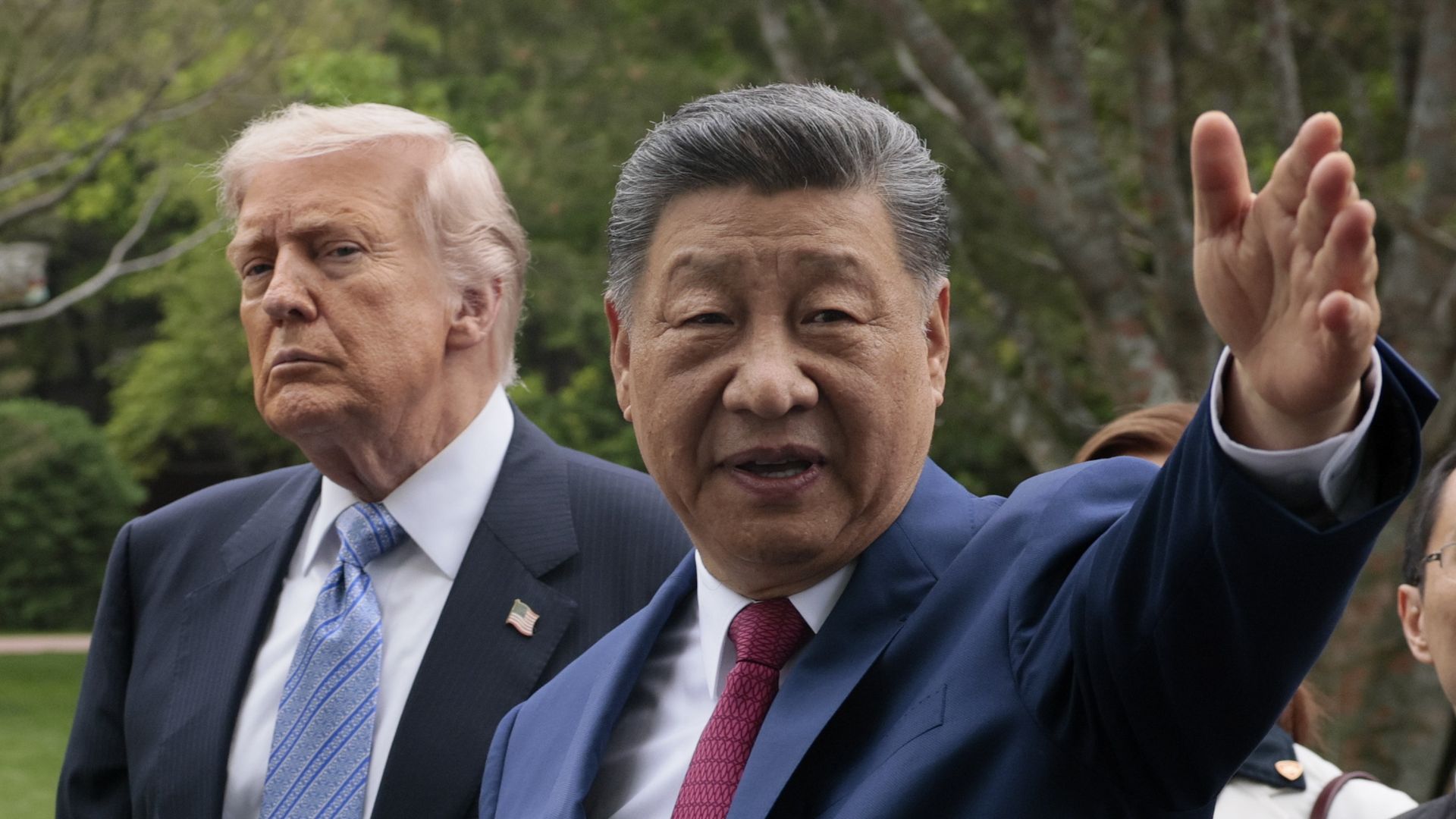
Photo: Evan Vucci-Pool/Getty Images
President Trump's summit with Xi Jinping was staged as a reunion between old friends, concluding Friday with a private tour of Zhongnanhai, the Chinese Communist Party's secretive leadership compound.
- Strolling the gardens, Trump declared the blooms around him "the most beautiful roses anyone has ever seen." Xi promised to send him seeds.
Why it matters: The warm public choreography of the past two days has masked a stubborn reality: Nearly every force shaping U.S.-China relations is pulling them apart.
- Trump spent the trip pitching closer ties with China after a decade of decoupling that he, more than any other American president, helped set in motion.
Driving the news: The summit seemed to produce a package of modest deliverables, though Trump's claim of "fantastic trade deals" did not include any details.
- He told Fox News that China had committed to buy 200 Boeing jets, while U.S. Trade Representative Jamieson Greer said the U.S. expects China to commit to at least $10 billion in annual agricultural purchases. China hasn't commented on either.
- The two sides are also negotiating a joint "Board of Trade" covering about $30 billion in nonsensitive goods, Greer said.
- Iran was discussed, but Trump's public characterizations of Xi's posture left more questions than answers. He told Fox that China wouldn't supply Iran with arms but "they buy a lot of their oil there, and they'd like to keep doing that."
Zoom in: China hawks in Trump's administration worked in the days and weeks leading up to the summit to undercut the case for rapprochement.
- The State Department sanctioned three Chinese firms for providing satellite imagery that helped Iran strike U.S. forces in the Middle East.
- The Treasury Department sanctioned multiple Chinese "teapot" refineries for buying billions of dollars of Iranian oil. Beijing responded by ordering companies not to comply with U.S. sanctions.
- A White House memo written by Trump science adviser Michael Kratsios accused Chinese entities of "industrial-scale" campaigns to steal frontier AI from American companies.
- Federal prosecutors unsealed charges against the mayor of Arcadia, California, for acting as an illegal agent of the Chinese government — 48 hours before Trump landed in Beijing.
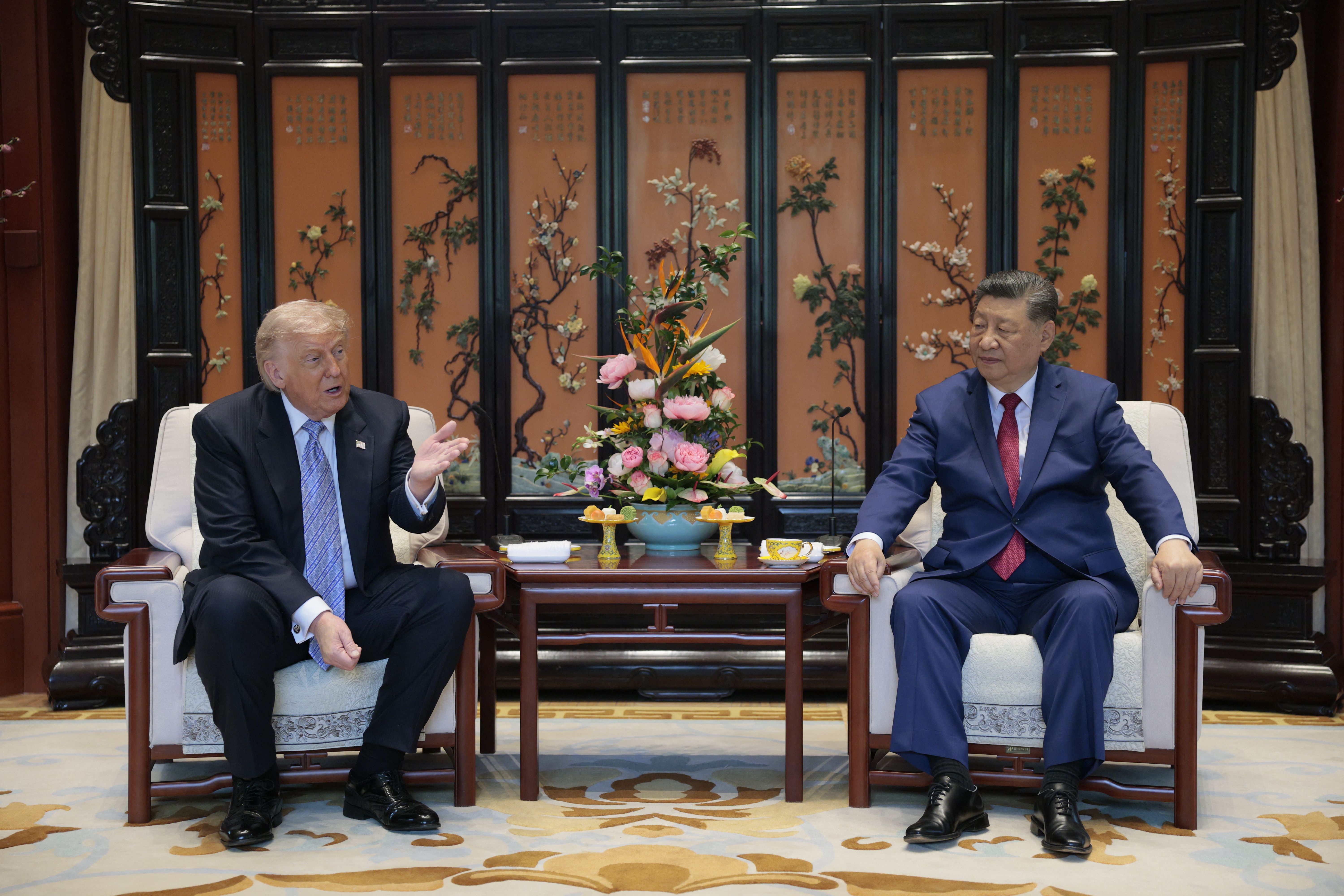
The intrigue: Leaks from inside the government paint an even more hostile picture of the U.S.-China rivalry.
- A U.S. intelligence assessment reported by the Washington Post found that China is exploiting the Iran war to gain ground over the U.S. diplomatically, militarily and economically.
- The New York Times reported Wednesday that Chinese companies are negotiating clandestine arms sales to Iran, routing weapons through third countries — including in Africa — to hide their origins.
The other side: Xi — while warning Trump that mishandling Taiwan could provoke "an extremely dangerous situation" — played his own part in the summit's friendly choreography.
- Beijing rolled out the red carpet for Secretary of State Marco Rubio, who remains sanctioned for his criticism of China's human rights abuses as a U.S. senator.
- At Thursday's state banquet, Xi told Trump that China's "great rejuvenation" — the Communist Party's signature political slogan — and "Make America Great Again" could go "hand in hand."
Between the lines: Both leaders have clear incentives to maintain the truce, for now at least.
- Trump doesn't need any more election-year economic shocks, particularly after Xi's crippling ban on rare earth mineral exports during last year's trade war.
- And Xi likely believes "strategic stability" with the U.S. will help China push ahead with its own priorities, from military modernization to high-tech dominance.
- As the leaders play nice, their governments are working furiously in the background to reduce their dependence on one another.
The big picture: Trump's push for closer economic ties is at odds with a U.S. political climate that has spent the last several years treating Chinese capital as radioactive.
- Amid growing security concerns, Chinese investment in the U.S. has collapsed from roughly $45 billion in 2016 to less than $3 billion last year, according to Rhodium Group.
- Treasury Secretary Scott Bessent said the two sides are discussing a framework for steering Chinese investment into nonsensitive sectors — a sign of how deeply national security fears have constrained economic ties.
The bottom line: Two aging nationalist leaders, presiding over the world's most dangerous rivalry, spent the week performing a friendship neither of their governments seems willing to sustain.
