Trump extends Iran ceasefire, citing "fractured" Iranian government

Add Axios as your preferred source to
see more of our stories on Google.
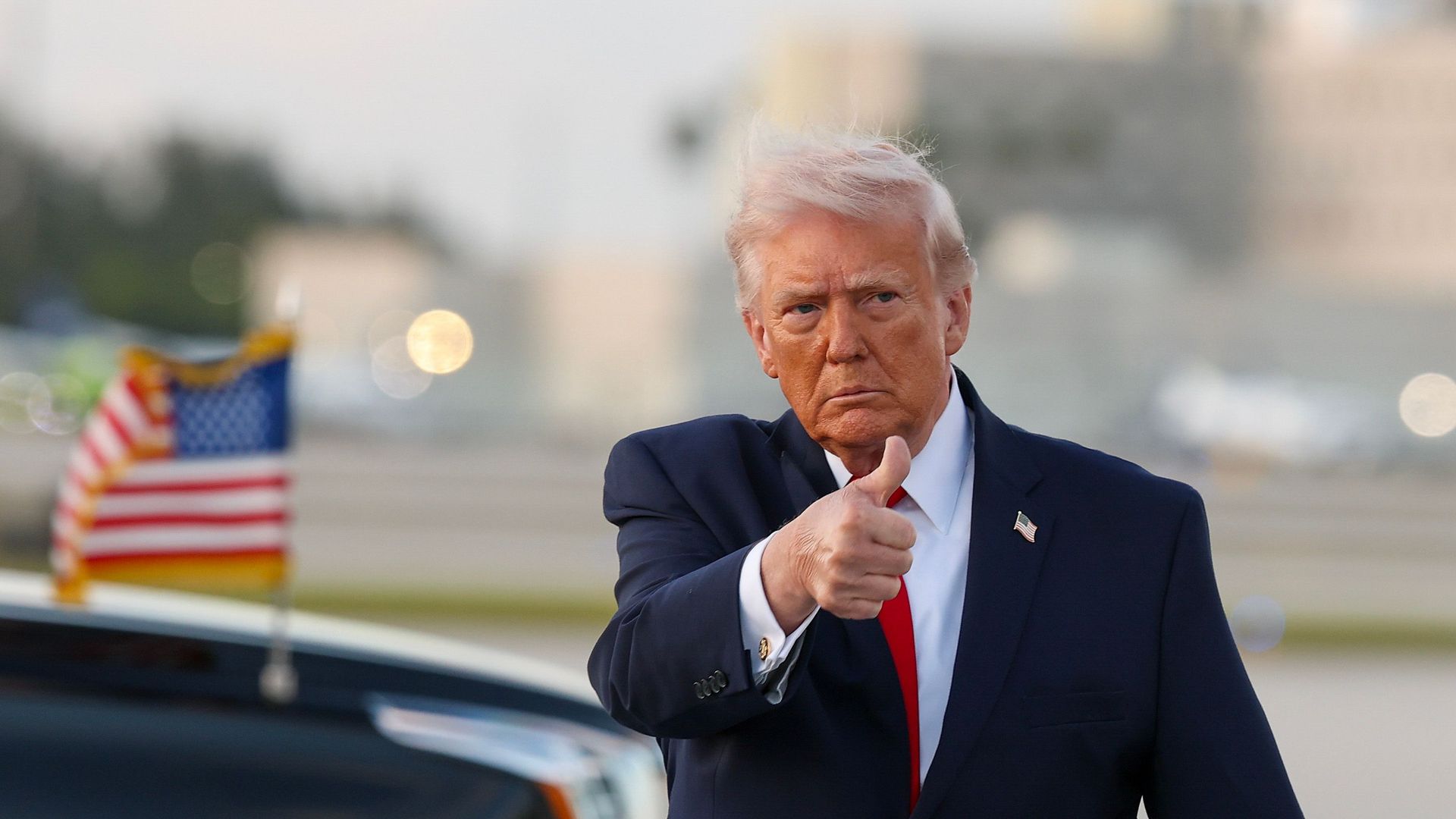
Photo: Tasos Katopodis/Getty Images
President Trump announced on Tuesday that he is extending the ceasefire with Iran, with no set deadline, giving diplomacy another chance to produce a deal.
Why it matters: The announcement, which came after a White House meeting with his national security team, landed hours before the ceasefire was set to expire — averting a potential resumption of the war and a massive regional escalation.
- It also came as Vice President Vance's planned trip to Islamabad on Tuesday was delayed — then postponed indefinitely — after Iran refused to participate in a new round of peace talks.
Between the lines: The extension contradicts Trump's own statement Tuesday morning that he didn't want to extend the ceasefire.
- While the move signals he is not ready to resume the war, it risks undercutting his leverage — both the pressure of a ticking deadline and the credibility of his military threat.
What he's saying: Trump wrote on Truth Social that he made the decision at the request of Pakistani mediators — military chief Field Marshal Asim Munir and Prime Minister Shehbaz Sharif.
- "Based on the fact that the Government of Iran is seriously fractured ... we have been asked to hold our Attack on the Country of Iran until such time as their leaders and representatives can come up with a unified proposal," Trump wrote.
- The ceasefire will last "until such time as their proposal is submitted, and discussions are concluded, one way or the other."
- Trump said he directed the U.S. military to continue the naval blockade on Iran's ports and "remain ready and able" to resume the war if needed.
The other side: Mahdi Mohammadi, a national security adviser to Iranian parliamentary Speaker and chief negotiator Mohammad Bagher Ghalibaf, wrote on X that the ceasefire extension "has no meaning."
- "The losing side cannot set conditions. The continuation of the blockade is no different from bombing and must be responded to militarily. Moreover, the extension of the ceasefire by Trump certainly means buying time in order to deliver a surprise strike. It is the time for Iran's initiative," he wrote.
- A spokesperson for Iran's armed forces said in a statement that Iran is "100% ready" for any surprise U.S. attack, warning that "in the event of aggression," its forces "will immediately and powerfully attack predetermined targets and will give America ... a harsher lesson than before."
Behind the scenes: One reason for Trump's decision is that the U.S. and Pakistani mediators have been waiting for Iranian Supreme Leader Mojtaba Khamenei to respond to the latest proposal and give a clear directive to his negotiators, according to a regional source familiar with the mediation efforts and an Israeli source with knowledge of the discussions.
- Khamenei is expected to give his response on Wednesday, the Israeli source said.
- "The Iranian negotiators said they are waiting for a green light from the supreme leader," the regional source said.
Zoom in: Iran's leadership has been engaged in an intense internal debate in recent days over how to proceed in talks with the Trump administration, according to a U.S. official and a regional source.
- Iran's civilian leaders — including Ghalibaf and Foreign Minister Abbas Araghchi — favored continuing talks to extend the ceasefire and reach a deal.
- But Islamic Revolutionary Guard Corps commander Gen. Ahmad Vahidi and his deputies refused to offer concessions and opposed negotiations as long as the naval blockade continues, the sources said.
- The U.S. seizure of an Iranian cargo ship in the Arabian Sea deepened the internal rift, with IRGC commanders accusing Iran's negotiators of being weak in their dealings with the Trump administration, a regional source said.
What to watch: Sharif said after Trump's announcement that Pakistan would continue pushing for a negotiated settlement.
- "I sincerely hope that both sides will continue to observe the ceasefire and be able to conclude a comprehensive 'Peace Deal' during the second round of talks scheduled at Islamabad for a permanent end to the conflict," the prime minister said.
- When that second round might happen remains unclear. A White House official told reporters that Vance's trip to Pakistan will not happen Tuesday in light of Trump's statement.
- "Any further updates on in-person meetings will be announced by the White House," the official said.
