How this rebel group complicates the Iran war for the U.S.

Add Axios as your preferred source to
see more of our stories on Google.
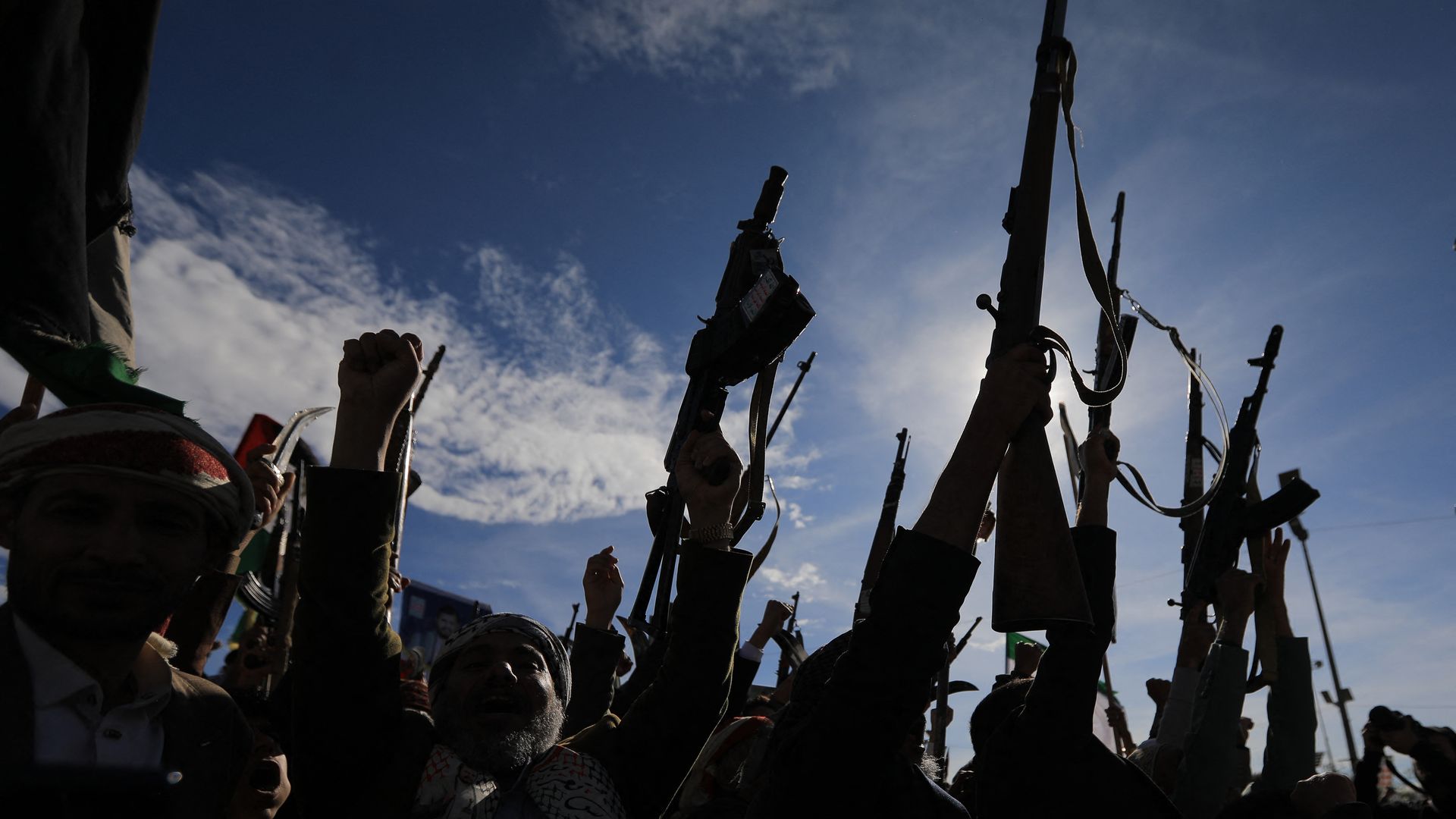
Houthis raise weapons during a rally in Sanaa, Yemen, on March 27 in support of Iran and Lebanon amid regional tensions. Photo: Mohammed Huwais/AFP via Getty Images
The Houthis — a military rebel group from Yemen — have joined the Iran war, massively complicating the road ahead for the United States.
Why it matters: Houthi involvement not only gives Iran another ally in the war but could exacerbate the global energy and shipping crises caused by closing the Strait of Hormuz.
Driving the news: The Houthi rebels in Yemen launched a missile at Israel on Saturday, which the IDF said it intercepted, Axios' Barak Ravid reports.
- The rebel group's military spokesperson Yahya Saree said in a statement that the strike was done in support of Iran and teased more attacks until the war ends.
The big picture: The Houthi involvement has already spooked the markets. On Sunday, oil prices climbed above $116 per barrel at the opening.
How Houthis complicate the Iran war
Friction point: The Houthis control territory along key Red Sea shipping routes — mainly near the Bab al-Mandeb Strait — meaning their involvement could potentially threaten global trading lanes.
- The Iran war has already disrupted oil exports and shipping lanes due to the closure at the Strait of Hormuz.
- Any disruption or attacks on the Red Sea would instantly increase the international shipping crisis and put a strain on exports of oil and liquefied natural gas in the region.
What they're saying: Iran signaled it would bottleneck more chokepoints outside the Hormuz Strait, like the Bab al-Mandeb.
- Shutting down the Bab al-Mandab Strait "is a viable option, and the consequences will be borne by the American and Israeli aggressors," Mohammed Mansour, deputy Information Minister in the Houthi government, told CNN on Friday.
Threat level: On Friday, the Houthis indicated they would join the war if the U.S. and Israel used the Red Sea for war operations. The Houthis attacked Israel the following morning.
- Houthis are already at odds with the United Arab Emirates and Saudi Arabia, too, which broadens the war and creates a new front in Yemen.
Between the lines: The Houthis are a longtime adversary of the U.S. and Israel, which has attacked the Houthis and their military and political leaders.
- Any attack by the U.S. or Israel against the Houthis could lead to retaliatory strikes.
- The group could also attack other countries in the Gulf, such as Saudi Arabia and the United Arab Emirates.
What to know about the Houthis
Zoom out: The Houthis are one of the members of the Iranian-led "Axis of Resistance," which includes Hezbollah in Lebanon and Hamas in the Gaza Strip.
- The group rose to prominence in the 1990s as a religious movement aligned with Zaydism, a branch of Shia Islam followed by about one-third of Yemen's population.
- The Houthis have sought to control Yemen, defend their religious identity and gain leverage in the Gulf. They've generally opposed U.S. and Israeli influence in the Middle East, too.
- They overthrew the Saudi-backed Yemen government in 2014.
U.S. relationship with the Houthis
The United States and the Houthis have had a fraught relationship for the last few decades.
- President Trump designated the Houthis in Yemen as a terrorist group in 2025.
- Trump targeted the group with airstrikes in Yemen in 2025 after the Houthis downed a U.S. military drone.
- The U.S. and the Houthis reportedly agreed to a ceasefire in May 2025 after those attacks.
The bottom line: The Houthis aren't just another player in the war — they could supercharge the global shipping and energy crises.
Go deeper: This military rebel group could join the Iran war next against the U.S.
