Scoop: Trump claimed in G7 call that Iran is "about to surrender"

Add Axios as your preferred source to
see more of our stories on Google.
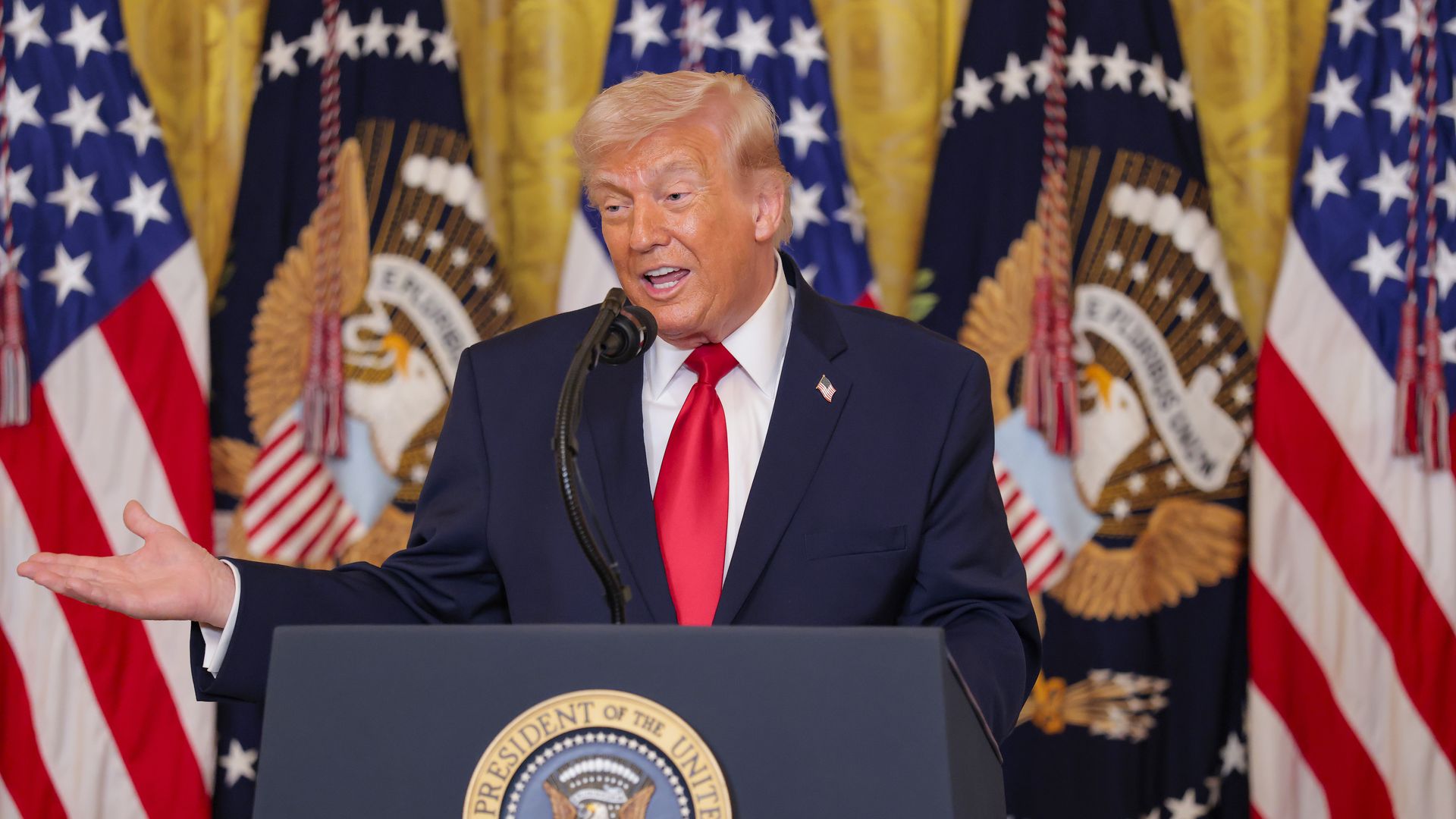
Photo: Heather Diehl/Getty Images
President Trump told G7 leaders in a virtual meeting Wednesday that Iran is "about to surrender," according to three officials from G7 countries briefed on the contents of the call.
- 24 hours later, Iran's new supreme leader issued his first public statement vowing to keep fighting.
Why it matters: Trump is as confident about the war's outcome in private as he is in public. But his assessment is colliding with a more complex reality on the ground.
- The Iranian regime has shown no signs of imminent surrender or collapse — and on Day 14 of the war, is moving to gain more leverage by choking off the Strait of Hormuz.
Behind the scenes: Trump boasted about the results of Operation Epic Fury on the G7 call Wednesday morning, telling allies, "I got rid of a cancer that was threatening us all."
- While claiming Iran was about to surrender, he also suggested there were no officials left alive in Tehran with the power to make that decision.
- "Nobody knows who is the leader, so there is no one that can announce surrender," Trump said, according to two officials briefed on the call.
Trump has mocked Iran's new supreme leader Mojtaba Khamenei as a "lightweight," previously telling Axios that Ayatollah Ali Khamenei's son would be "unacceptable" to the U.S.
- In a message read out on state television Thursday, Mojtaba Khamenei vowed to avenge Iranian "martyrs" and open new fronts in the war "where the enemy has little experience and is highly vulnerable."
- Khamenei said Iran will continue to threaten the Strait of Hormuz, where attacks on tankers have already pushed oil prices above $100 a barrel and triggered fears of a global economic crisis.
State of play: The call took place amid grave concern among G7 leaders over the war's growing economic fallout.
- All of the other leaders urged Trump to end the war quickly, stressing that the Strait of Hormuz must be secured as soon as possible, two officials briefed on the call tell Axios.
- Trump said the Hormuz situation is improving and that commercial ships should resume operations in the area, an official briefed on the call said. At least two tankers were set ablaze off the coast of Iraq that night.
The big picture: Trump was "ambiguous and noncommittal" on his objectives and timeline for ending the war, sources said. Some participants left the call believing he wants to wind it down — others felt the complete opposite.
- Trump said the main question he is working through is timing. He gave no deadline but said "we need to finish the job" to avoid another war with Iran in five years.
- The White House declined to comment.
Between the lines: As the Hormuz crisis drives oil prices above $100, Russia — a major oil producer — stands to benefit.
- German Chancellor Friedrich Merz, British Prime Minister Keir Starmer and French President Emmanuel Macron urged Trump on the call not to allow Moscow to exploit the war or receive sanctions relief, two officials said.
- Hours later, Putin envoy Kirill Dmitriev met in Florida with Trump advisers Steve Witkoff and Jared Kushner to discuss the global energy crisis.
On Thursday, despite the objections of the three European powers, the Treasury Department announced a one-month waiver on U.S. sanctions on Russian oil.
- The waiver applies only to oil already in transit and requires it have no connection to Iran, with the intended effect of stabilizing global energy markets.
- Treasury Secretary Scott Bessent stressed in a statement that the measure "will not provide significant financial benefit to the Russian government."
The intrigue: Two officials briefed on the call said Trump mocked U.K. Prime Minister Starmer for his initial refusal to allow the U.S. to use British bases for strikes on Iran.
- After Iran began striking Gulf states, Starmer reversed course and offered access to the bases for "defensive" strikes on Iranian missile sites.
- Trump told Starmer in front of the other G7 leaders that he no longer needed his help: "You should have proposed it before the war — now it is too late," he said.
