Trump officials: Ship escorts to start in Strait of Hormuz "soon"

Add Axios as your preferred source to
see more of our stories on Google.
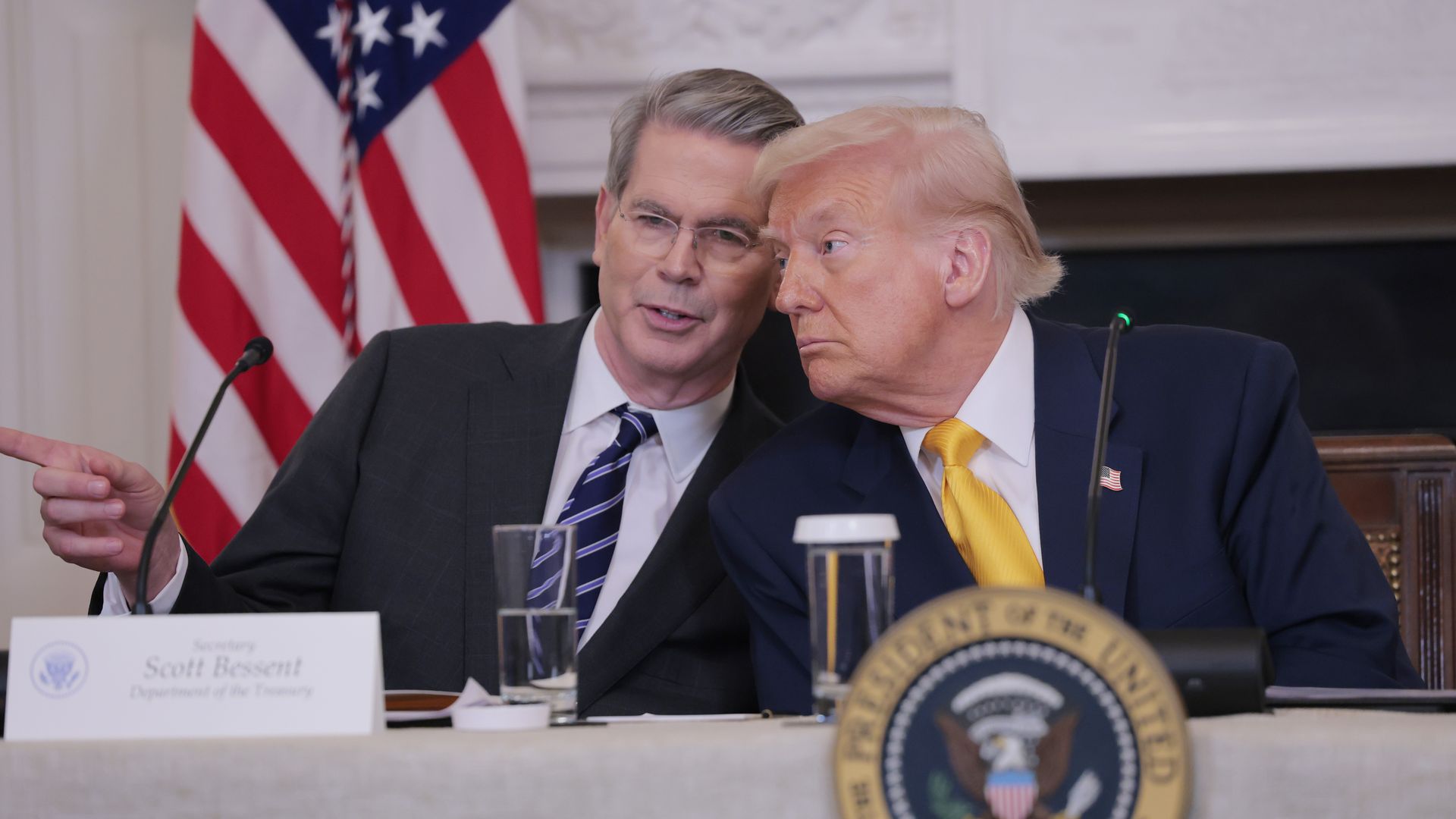
Treasury Secretary Scott Bessent and President Trump at the White House last year. Photo: Anna Moneymaker/Getty Images
The U.S. Navy will escort ships through the Strait of Hormuz, "perhaps with an international coalition," as "soon as it is militarily possible," Treasury Secretary Scott Bessent said in a Sky News interview broadcast Thursday.
Why it matters: The International Energy Agency said Thursday the global oil market is facing "the largest supply disruption" in history due to the Iran war, which Bessent told Sky News has cost the U.S. $11 billion thus far.
- Calls have been growing for a naval protection system in the strait amid concerns that Iran is laying mines in the narrow, strategically important waterway that typically handles about 20% of the world's oil supply, as soaring energy costs are felt at the gas pump.
Yes, but: Bessent told Sky News' Wilfred Frost that Iranian tankers and "some Chinese-flagged tankers have come through" the strait, so "we know that they have not mined" it.
What we're watching: Bessent told the British broadcaster that ships would be escorted through the strait "as soon as it is possible for safe passage," once the U.S. has "complete control of the skies" and Tehran's "rebuilding capabilities for the missiles completely degraded."
- Energy Secretary Chris Wright said during an interview with CNBC Thursday that naval escorts in the strait would "happen relatively soon," but added: "It can't happen now."
- "All of our military assets right now are focused on destroying Iran's offensive capabilities and the manufacturing industry that supplies their offensive capabilities," Wright said.
- It's "quite likely the case" that escorts might start by the month's end, Wright added.
Of note: ClearView Energy Partners in a Thursday research note responded to that timeframe by warning that global energy prices that have already topped $100 a barrel in recent days, including overnight, "could rise significantly in a month's time."
State of play: Since President Trump said five days into the war on March 3 that the U.S. Navy "will begin escorting tankers through the Strait of Hormuz, as soon as possible" if it's "necessary," traffic in the waterway has reached a virtual standstill amid Tehran's threats to attack vessels.
- The IEA said in its monthly report Thursday the "co-ordinated emergency" release of up to 400 million barrels of oil from member governments that Trump requested "provides a significant and welcome buffer."
- However, "it remains a stop-gap measure" in "the absence of a swift resolution to the conflict," the intergovernmental organization added.
Between the lines: The Strait of Hormuz has been effectively closed to non-Iranian energy cargoes for 14 days as of Friday and "Iranian officials show little sign of relenting," per ClearView Energy.
- In an "apparent recognition" of the prospect of oil price rises, Bessent confirmed on X that the U.S. was "providing a temporary authorization to permit countries to purchase Russian oil currently stranded at sea" to "increase the global reach of existing supply," it noted.
- U.S. reliance on Russia sanctions relief to shore up supply for Hormuz-reliant Asian importers underscores both the severity of market conditions and the limits of government strategic reserves, the research firm said.
- While volumes already in transit "can reach importers quickly," ClearView Energy noted that seaborne strategic stockpile releases "could take weeks to arrive, and it is not yet clear when some IEA Member countries will begin their releases."
More from Axios:
