War is the new get-rich-quick play on prediction markets

Add Axios as your preferred source to
see more of our stories on Google.
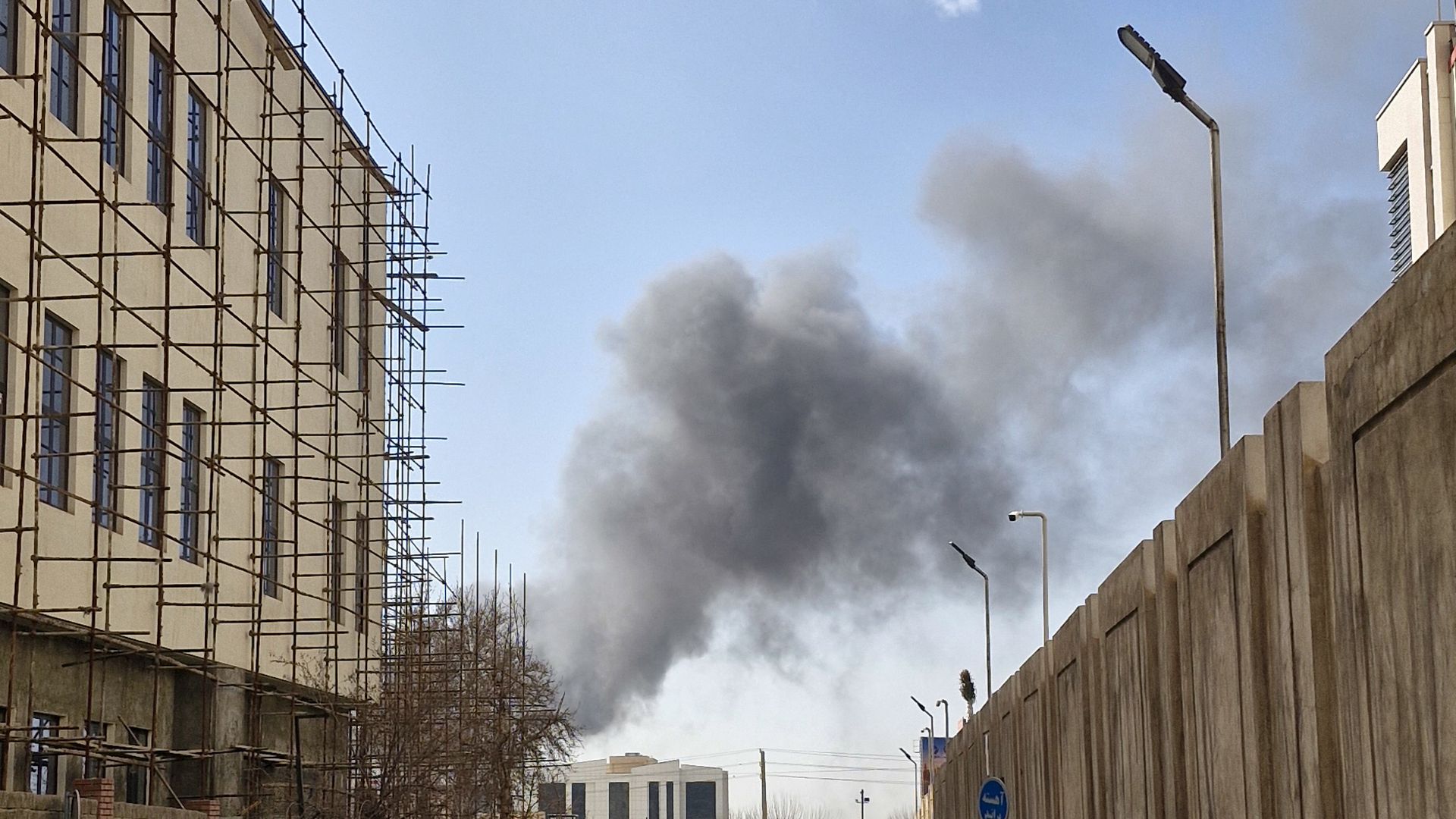
Smoke rises over Tehran on Feb. 28, 2026, after a reported explosion in the Iranian capital, as Israel said it carried out a "preemptive strike" on Iran and sirens sounded in Jerusalem. Photo: Ehsan/Middle East Images/AFP via Getty Images
Millions of dollars were poured into prediction markets centered on global war and an Iran regime change following the U.S. strikes against Iran Saturday morning.
Why it matters: Major world events — as seen through the Iran strikes and the capture of Venezuelan leader Nicolás Maduro in January — have created new get-rich-quick moments.
- "We have functionally created multi million dollar markets where a single rogue action is incentivized to the tune of tens to hundreds of millions dollars; representing a significant risk for global peace," Ryan Kirkley, co-founder of the digital market structure company Global Settlement Network, tells Axios.
State of play: The U.S. and Israel launched a massive joint military operation against Iran on Saturday in an effort to destabilize the country.
- The attack came after President Trump gave Iran roughly 10-15 days to strike a deal to end its nuclear weapons program.
- Speculation mounted throughout the week ahead of the strikes as prediction markets for strikes and invasions dipped and rose. There was another major surge Saturday morning in the hours after the strikes happened.
Case in point: As Washington Post reporter Drew Harwell points out, the market Kalshi saw $36 million in bet volume around an Iran regime shift question.
- On Polymarket, bets around if Supreme Leader Ali Khamenei would be out of his position by March 31 skyrocketed, with more than $22 million in trade volume.
- Other questions on Polymarket trending on Saturday morning (with millions at stake) included whether the Iran regime would fall, when a U.S.-Iran ceasefire would be announced and when the U.S. could invade Iran.
Flashback: Maduro's capture in January — unlike the attack against Iran, which had been teased for weeks — came out of the blue. Some users, appeared ahead of the curve, though.
- Traders on Polymarket appeared to anticipate Maduro's capture in January — with a newly created account appearing to invest $30,000 hours before it happened, netting more than $436,000.
- The war in Ukraine has also been the subject of fast-moving prediction markets and bets — with some bad actors manipulating markets.
The big picture: The relationship between prediction markets and war will likely renew longstanding questions about inside information and access to these markets.
What they're saying: Critics warn that prediction markets centered around war could create harmful incentives where thousands of dollars are on the line with people's lives also at risk.
- Kirkley, of GSN, says: "Prediction markets around war represent a significant breach of ethics and fundamentally dehumanize the horrors of war.
- "Not only that but they significantly increase the risk of intelligence leaks endangering those serving abroad," he says.
- Ronald Stutes, an investment operations expert, wrote on LinkedIn: "Prediction markets continue to evolve beyond elections and sports into geopolitical risk, offering a real-time window into how traders handicap emerging global events."
Reality check: Prediction markets have faced scrutiny about if the platforms enable people with inside information to financially capitalize on their knowledge.
- Kalshi suspended two users — an editor for MrBeast on YouTube and an ex-California gubernatorial candidate — for allegedly violating inside trader information.
The bottom line: War — what is it good for? Prediction markets, apparently.
More from Axios:
- Israel targets Khamenei, top leaders in bid to bring down Iran's regime
- How Iran attack could shake energy markets and prices
- Trump strikes Iran again. Why presidents skip Congress to use military force
Editor's note: This story has been updated with additional statements on prediction markets.
