Trump strikes Iran again. Why presidents skip Congress to use military force

Add Axios as your preferred source to
see more of our stories on Google.
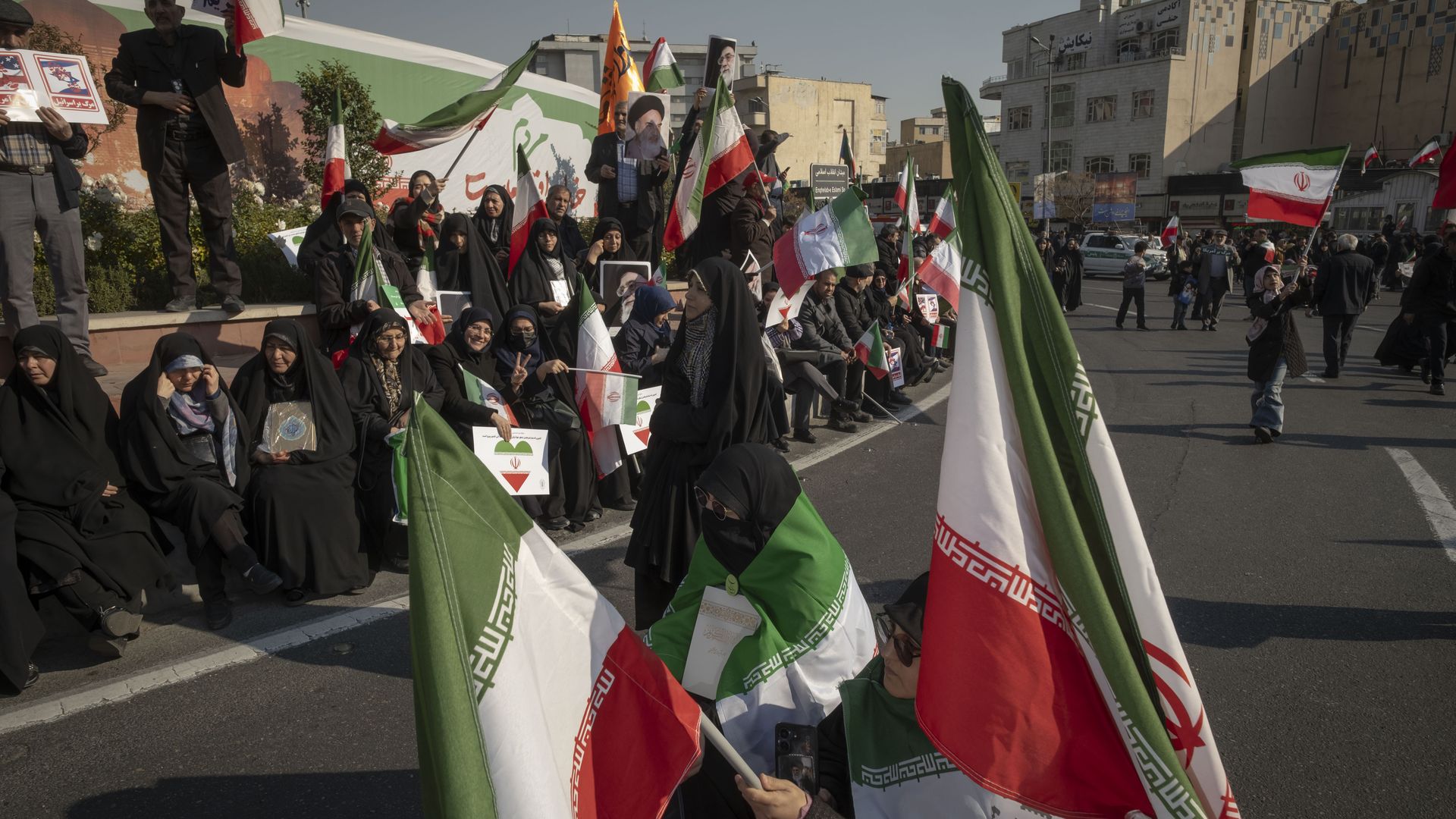
Iranians carry flags at a pro-government rally in Tehran on Jan. 12. Photo: Morteza Nikoubazl/NurPhoto via Getty Images
The U.S. struck Iran overnight in the latest example of a president bypassing Congress to order military action.
Why it matters: The Constitution says only Congress can declare war — but Democratic and Republican presidents alike have ordered military force without authorization for more than 75 years.
Driving the news: The U.S. and Israel launched strikes on Iranian senior commanders and political leaders, including Supreme Leader Ali Khamenei, in an effort to destabilize the regime.
- "We're going to destroy their missiles and raze their missile industry to the ground," Trump said in a video statement.
- The White House did not immediately respond to a request for comment.
Catch up quick: Trump floated strikes on Iran for weeks, citing support for Iran protesters, a desire for regime change and concerns over the nation's nuclear ambitions.
- Trump had ordered a massive buildup of troops to pressure Tehran.
Here's what to know about presidential uses of force:
Who can declare war?
Only Congress can declare war, per Article 1 of the Constitution.
- However, Congress has interpreted that language to allow presidents to deploy troops into "hostile circumstances" without a war declaration if the U.S. is attacked or if Congress authorizes the use of force.
The U.S. hasn't officially declared war since World War II.
What military powers do presidents have?
Presidents argue they have broad powers as commanders-in-chief of the armed forces, particularly when they deem operations time-sensitive.
Zoom in: "Congress is not quick. It's slow, it's deliberative," Julian Zelizer, a history professor at Princeton University, tells Axios.
- "Sometimes the president has to be more nimble and send troops when the president believes that troops are necessary."
- Trump justified not notifying Congress about the raid to capture Nicolás Maduro in Venezuela because leaks might have compromised the operation.
Between the lines: It's often politically convenient for lawmakers to let presidents take the heat for military decisions.
- "There's a long history of presidents struggling with these situations. Many members of Congress are happy to wash themselves of this responsibility, even if they lose a little credit," Zelizer said.
Flashback: Former President Obama asked Congress in 2013 to authorize strikes on Syria after the Assad regime deployed chemical weapons, but the bill never received a vote.
- The mission had bipartisan support, but Congress could not agree on whether or how to authorize it.
- Obama eventually sent troops to Syria to fight ISIS without a new congressional authorization, relying on the 2001 and 2002 authorizations for use of military force passed after 9/11 as legal justification.
When have presidents deployed the military without Congress?
President Truman sent troops to South Korea in 1950, calling it an "international police action" that did not require congressional approval.
- The Korean War is the "high water mark" presidents cite to justify unauthorized uses of force, Scott Anderson, a former U.S. diplomat, tells Axios.
- Cold War operations like the Bay of Pigs invasion under President Kennedy and bombing Cambodia under President Nixon were also not approved by Congress.
- Like the Maduro operation, President George H.W. Bush did not receive congressional approval to invade Panama in 1989 to detain Manuel Noriega on drug-trafficking charges.
Congress has not passed a new AUMF since 2002, but Presidents Obama, Trump and Biden ordered military actions in at least 10 countries since then.
- For example, the Obama administration justified using military force in Libya in 2011 because it was a "limited" operation in the "national interest." U.S.-backed Libyan rebels ultimately killed leader Muammar Gaddafi.
- Critics say presidents have stretched the wide-ranging 2001 Authorization for Use of Military Force (AUMF) far beyond its original goal of fighting 9/11-related terrorism.
Go deeper: Trump brings American interventionism roaring back
