Why Trump can't revoke native-born U.S. citizenship

Add Axios as your preferred source to
see more of our stories on Google.
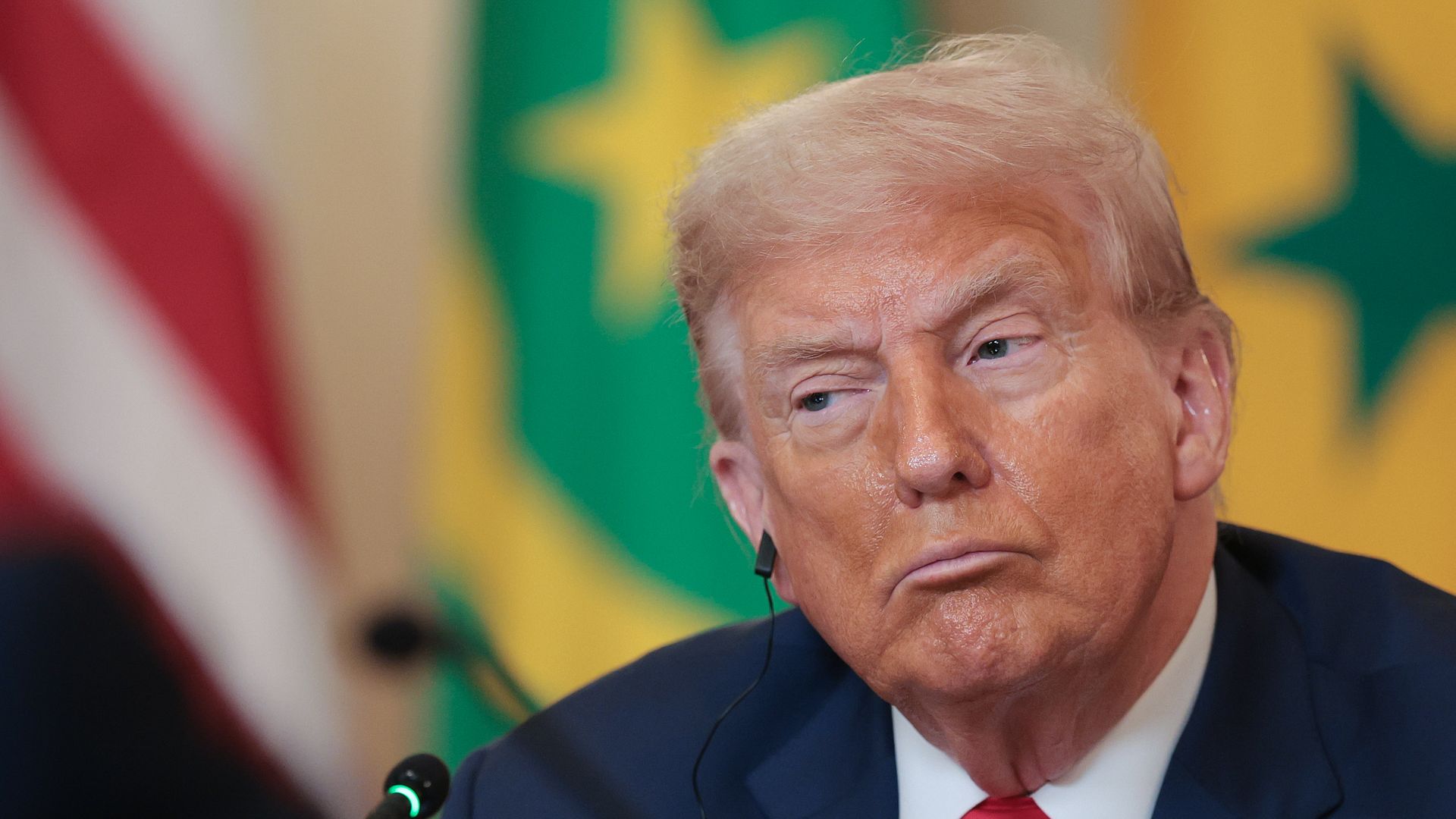
President Trump listens as African Leaders deliver remarks during a multilateral lunch in the State Dining Room of the White House July 9. Photo: Win McNamee/Getty Images
President Trump on Saturday floated revoking comedian Rosie O'Donnell's U.S. citizenship, though he has no clear constitutional avenue to do so.
The big picture: His Saturday Truth Social post, in which he called his longtime critic a "Threat to Humanity," marked a major escalation in the way the president targets his foes.
Zoom out: Trump has made similar threats in the past, notably toward his former ally, Elon Musk.
- Asked earlier this month whether he'd consider deporting Musk after their once-friendly relationship turned sour, Trump said he'd have to "take a look."
- He's also baselessly questioned New York mayoral candidate Zohran Mamdani's citizenship status.
- Musk and Mamdani are naturalized U.S. citizens. And O'Donnell, who was born in New York, has a constitutional right to U.S. citizenship.
Catch up quick: "Because of the fact that Rosie O'Donnell is not in the best interests of our Great Country, I am giving serious consideration to taking away her Citizenship," Trump wrote, adding she "should remain in the wonderful Country of Ireland, if they want her."
- O'Donnell moved to Ireland earlier this year.
Has the Trump administration denaturalized anyone?
The Trump administration, during its immigration crackdown, has sought to restrict pathways to citizenship and revoke people's status.
- The Department of Justice under Trump has begun prioritizing denaturalization when naturalized citizens are charged with crimes, and the administration has moved to restrict birthright citizenship, though doing so faces several legal hurdles.
Zoom in: The Justice Department in June announced it had "secured the denaturalization" of a convicted collector and distributor of child sexual abuse material.
- "If you commit serious crimes before you become a U.S. citizen and then lie about them during your naturalization process, the Justice Department will discover the truth and come after you," Assistant Attorney General Brett A. Shumate said in a statement about the case.
Yes, but: The president does not have the authority to strip a native-born U.S. citizen of their citizenship, University of Virginia School of Law professor Amanda Frost told the Associated Press.
Can Trump constitutionally revoke O'Donnell's citizenship?
The 14th Amendment guarantees citizenship to anyone born in the U.S. — though the Trump administration has sought to chip away at those rights.
- It states, "All persons born or naturalized in the United States, and subject to the jurisdiction thereof, are citizens of the United States and of the State wherein they reside."
Citizens can relinquish their U.S. nationality, according to the State Department, but it must be voluntary.
- Naturalized citizens can have their citizenship revoked, but there are specific requirements and a process that must be followed.
How did the Supreme Court protect people from losing their citizenship?
The Supreme Court in 1967 ruled that the government can't usually strip citizenship without the person's consent.
- The high court left open the door for cases that involved fraud in the citizenship process, but denaturalization became rare after the decision, law professors Irina Manta and Cassandra Burke Robertson write.
Yes, but: The number of denaturalization cases has surged in recent years, Axios' Jason Lalljee reported.
- "Denaturalization is no longer so rare," said Cassandra Burke Robertson, a professor at Case Western Reserve University's law school, in 2019, noting that the rise began under the Obama administration.
- She continued, "But the Trump administration, with its overall immigration crackdown, is taking denaturalization to new levels."
Go deeper: Trump ramps up deportation spectacle with new stunts and ICE funding
