Trump casts doubt on Iran's ceasefire request, says Israel is "winning"

Add Axios as your preferred source to
see more of our stories on Google.
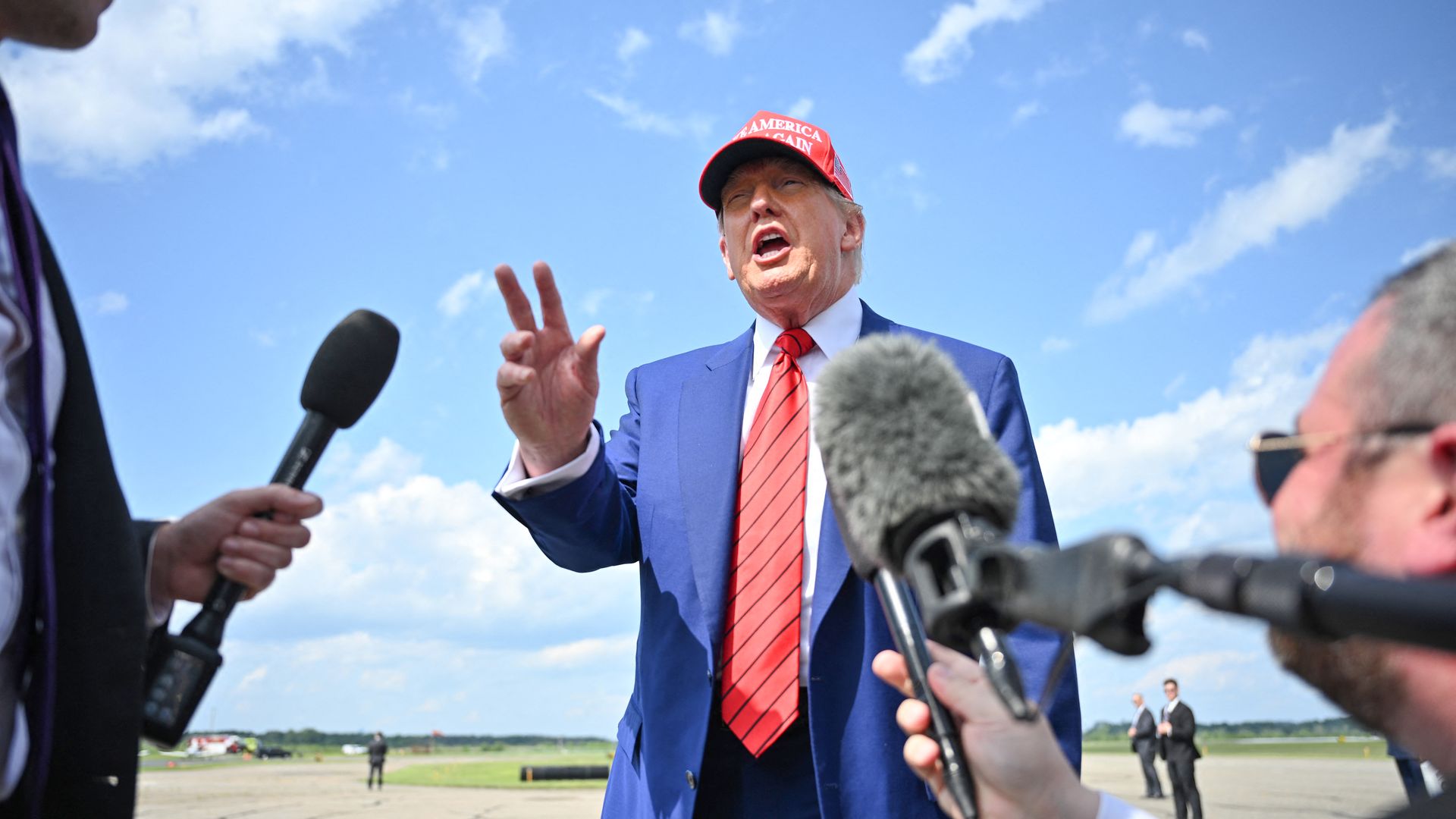
Photo: Mandel Ngan/AFP via Getty Images
President Trump said Friday that it will be "very hard" to pause Israel's war against Iran in order to allow for direct negotiations with the U.S., noting that Israel is "doing well" in its efforts to take out Iran's nuclear program.
Why it matters: Iranian Foreign Minister Abbas Araghchi told his European counterparts Friday that Iran will not negotiate directly with the U.S. as long as Israel continues its military campaign, according to two European diplomats with direct knowledge of the discussions.
What they're saying: "I think it's very hard to make that request right now. If somebody is winning, it's a little bit harder to do than if somebody is losing," Trump told reporters on the tarmac outside Air Force One.
- "But we're ready, willing and able, and we've been speaking to Iran, and we'll see what happens," he added, referring to White House envoy Steve Witkoff's direct contacts with Araghchi.
- Trump said he "might" support a ceasefire "depending on the circumstances," but stressed that it may not be achievable because Israel is "doing well, in terms of war, and Iran is doing less well."
Driving the news: Araghchi's meeting in Geneva with top diplomats from the European Union, France, the U.K. and Germany marked the first in-person engagement between Iran and Western powers since Israel launched its war a week ago.
- It came a day after Trump announced he would make a decision "within the next two weeks" on whether to strike Iran's nuclear program, leaving the door open to a diplomatic solution.
- The EU, U.K., France and Germany spoke to the Trump administration to coordinate ahead of the meeting, but the president was dismissive of the Europeans' diplomatic efforts.
- "Iran doesn't want to speak to Europe. They want to speak to us. Europe is not going to be able to help in this one," Trump told reporters.
State of play: The two-hour meeting with the Iranians on Friday did not produce a diplomatic breakthrough, with neither side presenting a new proposal.
- The talks were described as an initial engagement, and the parties agreed to meet again next week, the European diplomats said.
Behind the scenes: The European diplomats told Axios that the Iranians appeared more open than in previous talks to discussing not just limits on their nuclear program, but also a range of non-nuclear issues.
- Those include Iran's missile program, its regional proxy network, military assistance to Russia, and European detainees held in Iran.
- Araghchi told the European ministers that Iran is willing to restrict its uranium enrichment in a manner similar to the 2015 nuclear deal, which Trump withdrew the U.S. from in 2018 — but made clear Iran will not agree to the U.S. demand for zero enrichment.
- The European foreign ministers urged Araghchi to engage directly with the Trump administration and proposed including U.S. representatives in future talks — but Araghchi refused, the diplomats said.
Between the lines: Although the Iranian foreign minister has maintained direct contact with Witkoff since the war began, he reiterated in Geneva that Iran will not negotiate with the U.S. as long as Israeli strikes continue.
What they're saying: "E3 Ministers and the High Representative of the European Union reiterated their longstanding concerns about Iran's expansion of its nuclear programme," the European ministers said in a joint statement after the meeting.
- "They discussed avenues towards a negotiated solution to Iran's nuclear programme, while emphasising the urgency of the matter."
The other side: Araghchi told Iranian media after the meeting that Tehran remains committed to diplomacy and is prepared to meet again with the European foreign ministers.
- He stressed that Iran will not negotiate on its defensive capabilities.
What's next: The European diplomats said they made clear during the meeting that time is running out to reach a diplomatic solution.
- Araghchi is scheduled to travel to Istanbul on Saturday for a meeting of the Organization of Islamic Cooperation.
- On Monday, he is expected to visit Moscow to meet with Russian President Vladimir Putin and discuss the war, according to the diplomats.
- A follow-up meeting with the European foreign ministers is likely to take place only after those two stops — potentially narrowing Trump's "two-week" window.
