Columbia University president resigns over response to Gaza protests


Add Axios as your preferred source to
see more of our stories on Google.
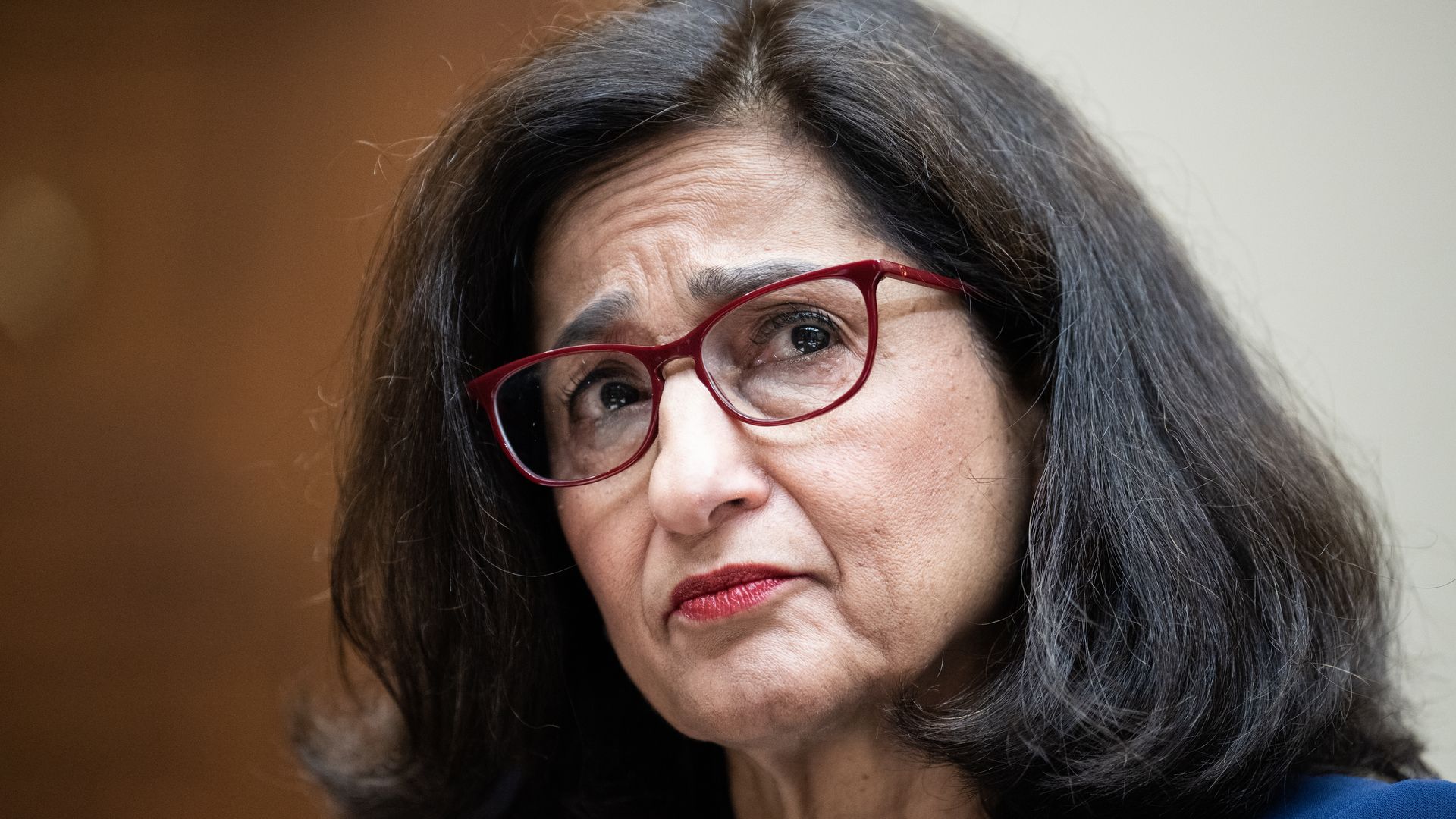
Columbia University president Minouche Shafik on April 17. Photo: Tom Williams/CQ-Roll Call, Inc via Getty Images
Columbia University president Minouche Shafik resigned on Wednesday following months of criticism from students, donors and members of Congress over how she handled pro-Palestinian protests on campus, she announced in a letter addressed "to the Columbia community."
Why it matters: Shafik is the third Ivy League president to step down following backlash to congressional testimony earlier this year on alleged campus antisemitism. Elite colleges have struggled to balance the right to protest with student safety — none more so than Columbia, which became the epicenter of the student protest movement.
- The resignation comes after three other Columbia administrators resigned earlier this month for engaging in text messages that "touched on ancient antisemitic tropes," as Shafik previously put it.
What they're saying: "I have had the honor and privilege to lead this incredible institution, and I believe that — working together — we have made progress in a number of important areas," she said on Wednesday.
- "However, it has also been a period of turmoil where it has been difficult to overcome divergent views across our community. This period has taken a considerable toll on my family, as it has for others in our community."
- Shafik said her departure from the role "would best enable Columbia to traverse the challenges ahead."
- She will now chair a review of the U.K.'s work on international development. She will also return to the U.K. House of Lords.
What's next: Katrina Armstrong, who leads Columbia's medical school and medical center, will serve as interim president.
- "I am acutely aware of the trials the university has faced over the past year," she wrote on Wednesday. "We should neither understate their significance, nor allow them to define who we are and what we will become."
State of play: Shafik and other Columbia leaders testified to a GOP-led congressional committee in April that the college had taken steps to rein in unauthorized protests.
- In earlier testimony, Harvard President Claudine Gay and University of Pennsylvania President Liz Magill were criticized sharply for not directly answering whether "calling for the genocide of Jews" violated the schools' codes of conduct. They both eventually resigned.
- In her testimony, Shafik appeared more aligned with lawmakers — so much so that she called for the New York Police Department to disband student protestors on Columbia's campus the following day.
- Her handling of pro-Palestinian activism — arrests, suspensions, virtual classes — drew sharp criticism from the campus community, including faculty and staff.
- The Faculty of Arts and Sciences at Columbia University passed a vote of no confidence in Shafik in May.
Zoom out: Columbia was at the heart of the nationwide controversy over the student protests.
- As colleges became flashpoints of unrest over Gaza, Columbia's administration and police cracked down through a wave of arrests, suspensions and class cancellations.
- The university faced scrutiny for how it handled the demonstrations, and was met with investigations into alleged antisemitic and anti-Palestinian discrimination.
Go deeper:
