Locking up items to deter shoplifting is pushing shoppers online

Add Axios as your preferred source to
see more of our stories on Google.
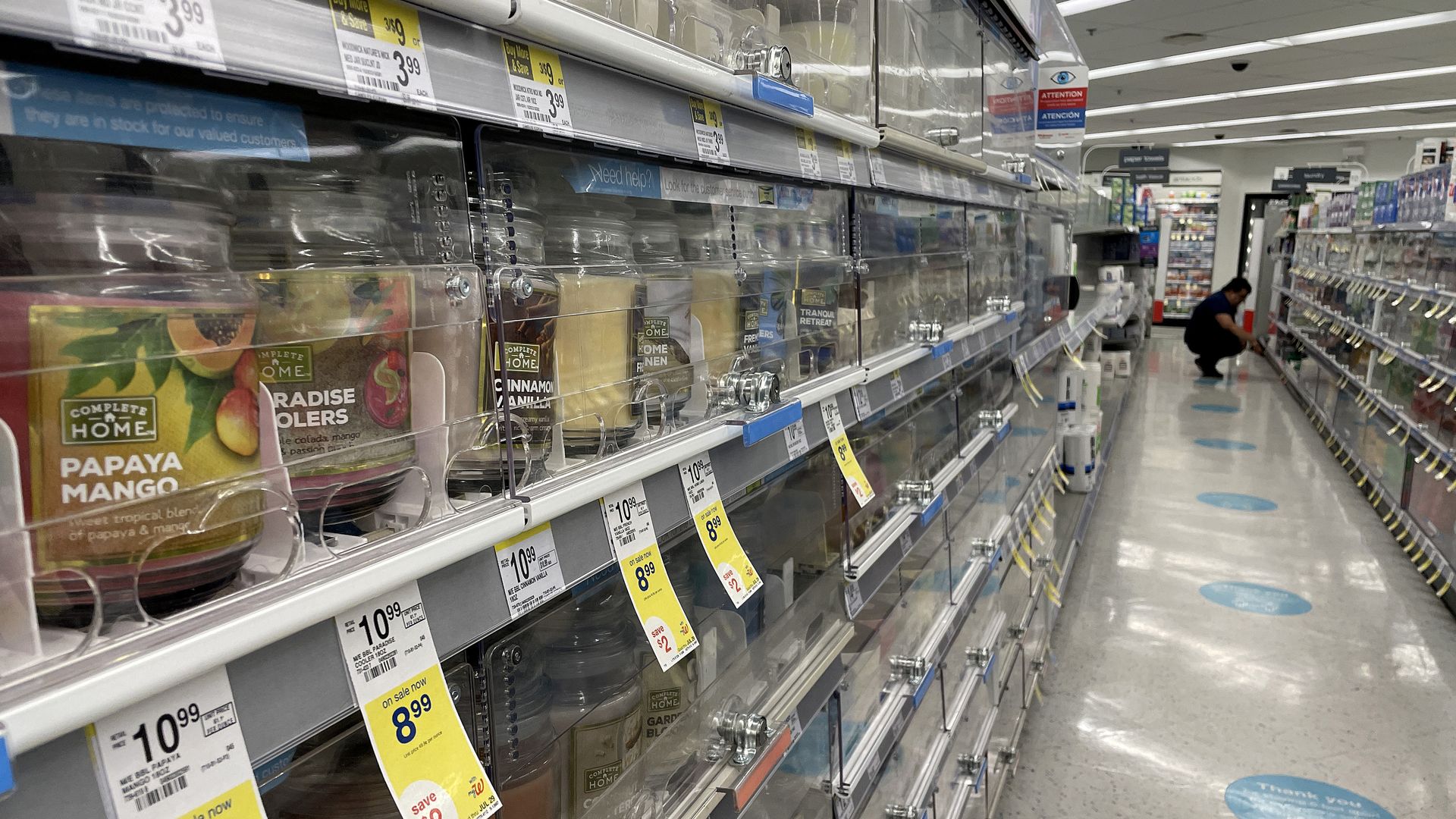
More stores are putting merchandise under lock and key to deter theft, which also makes it harder for consumers. Photo: Justin Sullivan/Getty Images
Locking up merchandise at drugstores and discount retailers hasn't curbed retail theft but is driving frustrated consumers to shop online more, retail experts tell Axios.
Why it matters: Retail crime is eating into retailers' profits and high theft rates are also leading to a rise in store closures.
- Secured cases can cause sales to drop 15% to 25%, Joe Budano, CEO of anti-theft technology company Indyme, previously told Axios.
- Barricading everything from razors to laundry detergent has largely backfired and broken shopping in America, Bloomberg reports.
The big picture: Aisles full of locked plexiglass cases are common at many CVS and Walgreens stores where consumers have to wait for an employee to unlock them.
- Target, Walmart, Dollar General and other retailers have also pulled back on self-checkout to deter shoplifting.
- "Locking up products worsens the shopping experience, and it makes things inconvenient and difficult," GlobalData retail analyst Neil Saunders said, adding it pushes shoppers to other retailers or to move purchases online.
Driving the news: Manmohan Mahajan, Walgreens global chief financial officer, said in a June earnings call that the retailer was experiencing "higher levels of shrink."
- Amazon CEO Andy Jassy spoke of the "speed and ease" of ordering online versus walking into pharmacies on a call with investors last week.
- "It's a pretty tough experience with how much is locked behind cabinets, where you have to press a button to get somebody to come out and open the cabinets for you," Jassy said.
Context: Retail crime accounted for $112.1 billion in losses in 2022, according to the National Retail Federation's 2023 security survey.
- Organized retail crime — where gangs of thieves swarm stores for products they can resell online — has become increasingly brazen and led to huge losses for companies.
- Razors, deodorant, body wash, technology items and alcohol are among the items locked up, but it can vary by store and region.
- More inventory is behind locked cases in cities and large metro areas where theft has been higher than rural areas.
What they're saying: CVS spokesperson Amy Thibault told Axios that the chain uses "a variety of different measures to deter or prevent theft and locking a product is a measure of last resort."
- "Different products experience different theft rates, depending on store location and other factors, and our product protection decisions are data driven," Thibault said.
- "Actions like installing anti-theft devices are to deter theft and ensure safety and security in our stores," Walgreens spokesperson Fraser Engerman told Axios.
- "These steps are taken in response to theft data and for that reason only, and these additional security measures allow us to improve on-shelf availability of products to customers," Engerman said.
Yes, but: There is some debate about how deep the problem is and if retailers are using theft as a scapegoat for other challenges.
- "Maybe we cried too much" about theft, then-Walgreens CFO James Kehoe said on an earnings call in January 2023, adding that the problem had "stabilized."
More from Axios:
