White House publishes rule for employers to curb heat illnesses and deaths

Add Axios as your preferred source to
see more of our stories on Google.
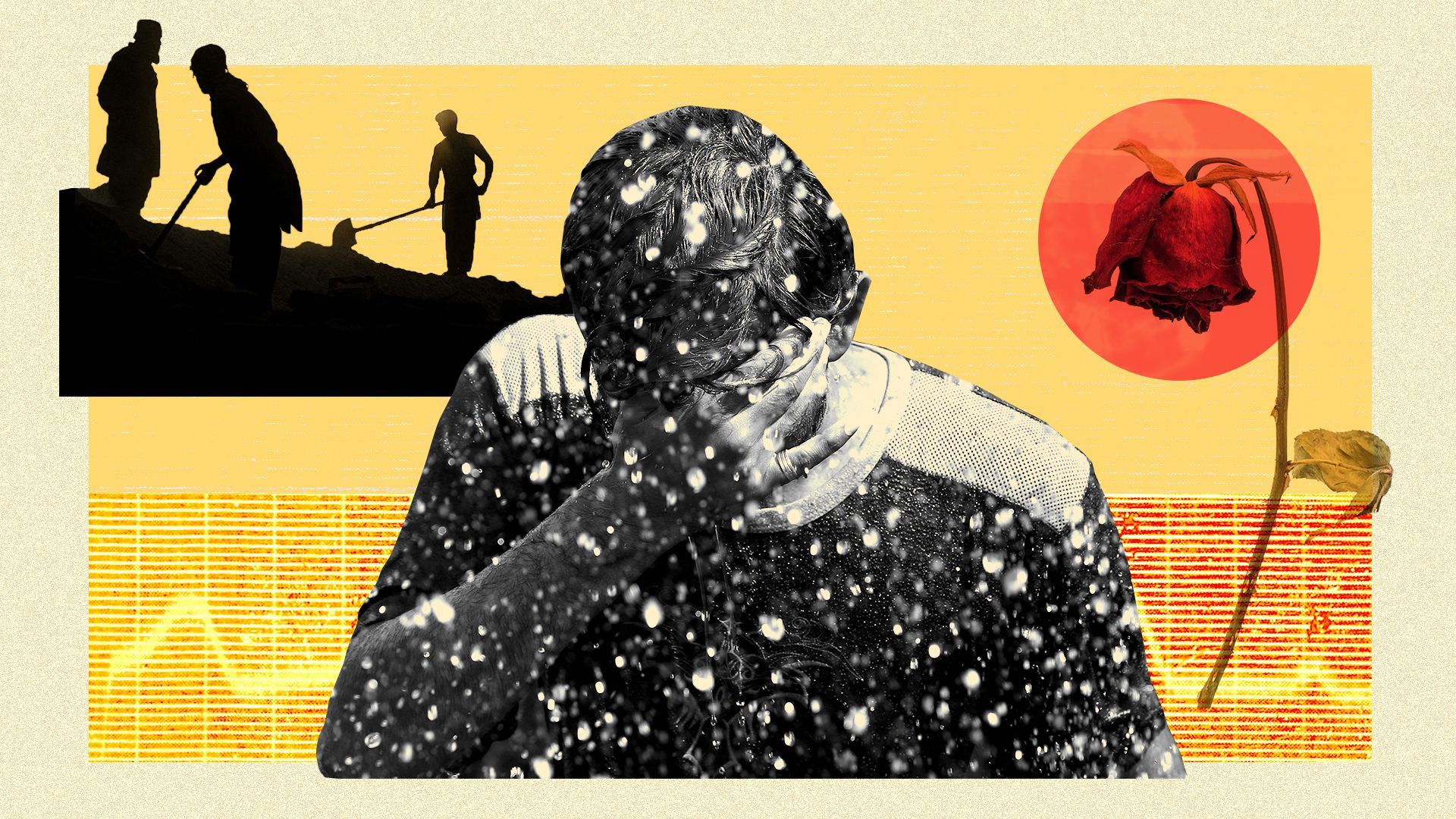
Photo illustration: Shoshana Gordon/Axios. Photos: Aamir Qureshi/AFP, Str/Xinhua via Getty Images
The Biden administration on Tuesday published a new rule for employers that aims to help protect about 36 million workers from heat-related illnesses and death.
Why it matters: The rule, if finalized, would establish the country's first federal safety standard addressing excessive heat in the workplace — at a time when large swaths of the country are experiencing extreme heat.
- There were 33,890 work-related heat injuries and illnesses between 2011 and 2020, according to the latest data available from the Bureau of Labor Statistics,
State of play: The federal Occupational Safety and Health Administration's proposed rule for employers to protect workers in heat situations was sent to the federal register on Tuesday. It is now open for public comment.
- Under the proposed rule, employers in certain jobs would have to establish a heat safety coordinator for the workplace and develop procedures for responding to symptoms of heat illness.
- They would need to evaluate their plans annually.
- Employers will also be required to monitor heat levels for outdoor workers.
Zoom in: The rule would apply to indoor and outdoor workers who engage in physical activity and are exposed to a heat index of 80°F or higher.
- The rule is meant to protect workers "whether they are making deliveries, carrying mail all day, working construction, picking vegetables, repairing power lines, doing landscaping," a senior White House official said during a press call on Monday.
- "The purpose of this rule is simple — it is to significantly reduce the number of worker related deaths, injuries and illnesses suffered by workers who were exposed to set excessive heat and exposed to these risks while simply doing their job," the official said.
- The proposed rule does not cover people who have to take short trips outside for their jobs or emergency responders or teleworkers.
What they're saying: Greg Sizemore, vice president of health, safety, environment and workforce development for Associated Builders and Contractors (ABC), said in an email statement that the organization "continues to believe employers should equip their employees and leadership teams to develop their own safety plans, unique to their job sites."
- Sizemore added that protections must be flexible "in response to the fluid nature of the construction environment" and that "some of the unworkable provisions in the proposed rule could weaken contractor efforts to prevent heat stress for workers."
- U.S. Rep. Greg Casar (D-Tex.) lauded the new rule. Casar spent years as an activist calling for required rest and water break protections.
- "For decades, workers have been organizing for federal protections from the extreme heat. Despite opposition from big corporations, these working families are finally winning the protections they deserve," Casar said in a statement.
What we're watching: Trade industry groups who have opposed federal regulations and Republican governors who have signed laws banning cities from adopting heat safety regulations are likely to sue against the proposed rule.
- But the White House is confident the rule has legal standing and won't be impacted by the recent Supreme Court decision that significantly reduced the government's federal regulatory authority, a senior official said.
The big picture: Human-caused climate change is making heat waves more likely, more intense and longer lasting—in some cases quintupling the odds of extreme temperatures, writes Axios' Andrew Freedman.
Editor's note: This story has been updated with comments from Associated Builders and Contractors and Rep. Casar.
Subscribe to Axios Latino to get vital news about Latinos and Latin America, delivered to your inbox on Tuesdays and Thursdays.
